
- This topic is empty.
-
AuthorPosts
-
2026-11-18 at 4:59 pm #10455
Published: December 2026 | By JOINWIT Engineering Team
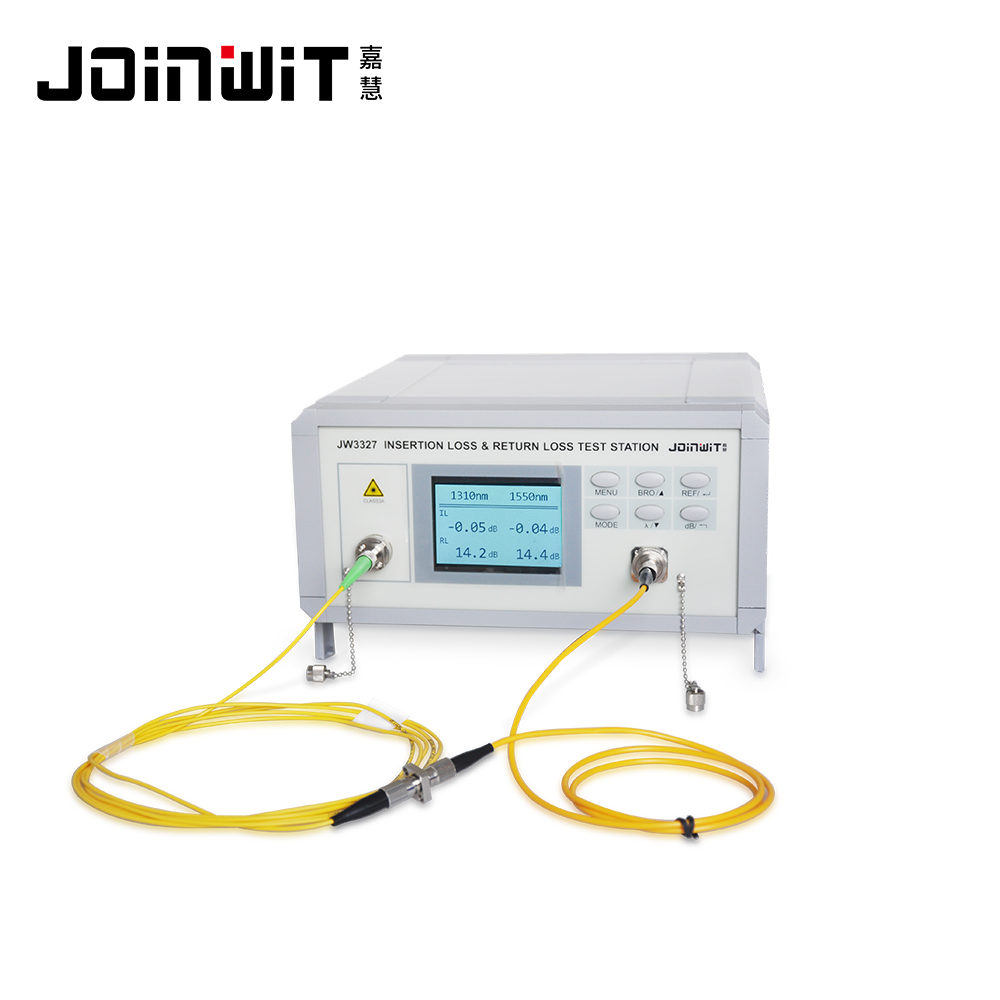
A mandrel wrap suppresses far-end reflection by bending the fiber; a wrap-free station does the same job with an internal optical switch and no hands. Both certify the same cord on paper, yet on the production floor they differ in four places that decide your throughput: cycle time, operator skill, fiber compatibility and repeatability. This article walks through mandrel wrap vs wrap-free return loss testing the way a line engineer actually meets the choice — cord by cord, shift by shift.
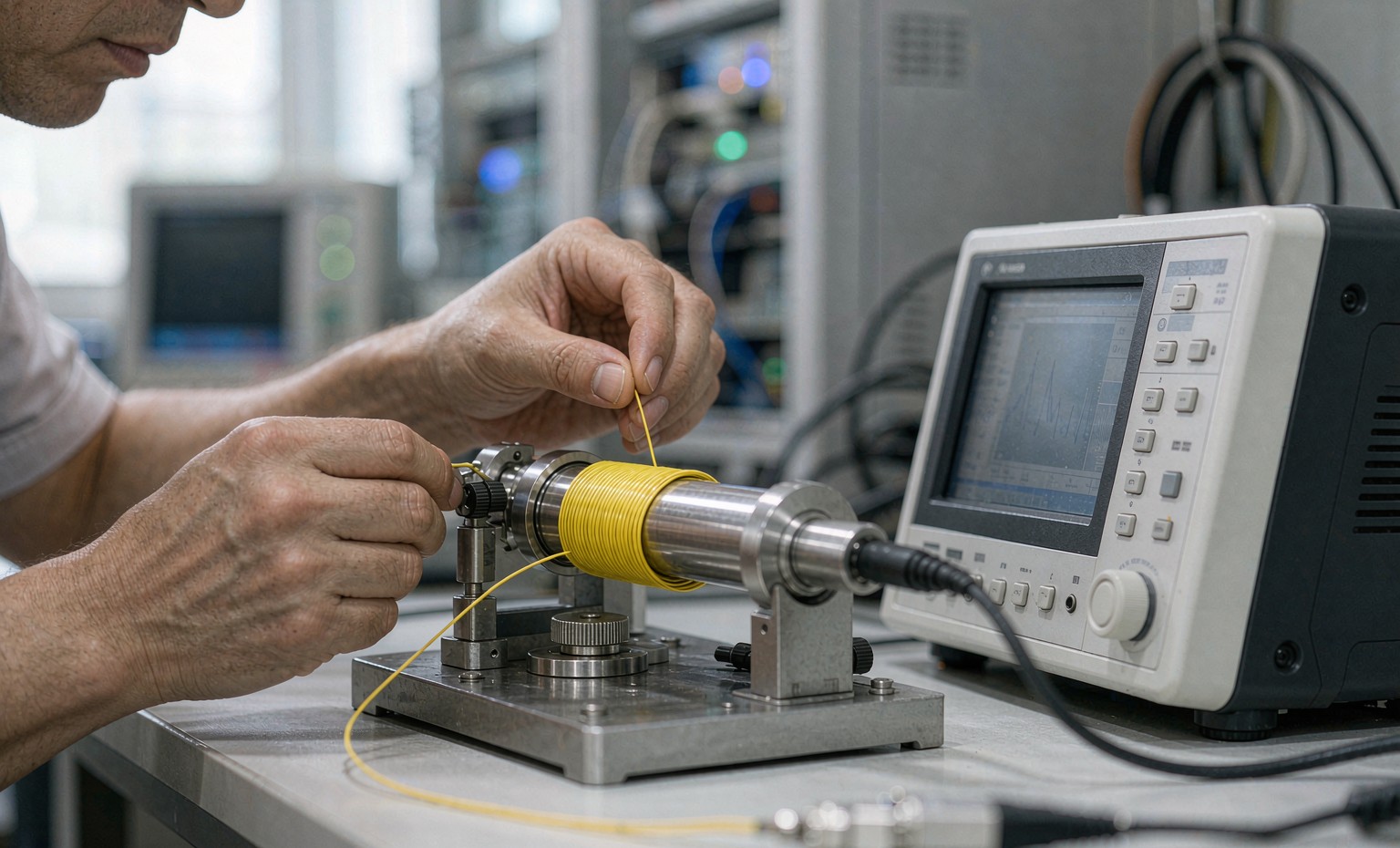
First, why the far end matters at all. A return loss meter only sees what comes back down the fiber, and an unterminated connector end reflects roughly 3.5% of the light — about 14.7 dB — which swamps the small connector reflection you are trying to measure. The far end must be killed. The traditional way is to wind the fiber through several tight turns around a mandrel so back-traveling light is attenuated on the way out and again on the way back. The modern way removes the winding entirely. Everything else in this comparison follows from that one difference.
1. What the Mandrel Wrap Does — and What It Costs
The mandrel is elegant physics at zero hardware cost:
• Suppression. Tight bends add 20–30 dB of attenuation per pass, and the far-end reflection crosses the bend twice, so the echo arrives suppressed by 40 dB or more.
• Cost. A polished rod and a trained hand. It works with any instrument you already own — including every JOINWIT bench.
• Standards fit. Wound far-end termination is an accepted practice under the IEC 61300-3-6 measurement logic, so auditors recognize it.The costs are labor and physics limits. Winding and unwinding adds roughly 45 seconds to every cord, the suppression floor depends on wrap tension, so two operators produce slightly different return loss readings on the same cord, and new hires need time to reach the house method. Then there is the hard wall: bend-insensitive fiber. G.657 fibers are engineered to keep bend loss low at small radii — the exact property the mandrel depends on — so suppression can collapse and readings sit suspiciously high with poor repeatability. Most crews who search for how to test return loss without winding the fiber are already stuck on G.657 cords or on the queue that 45 seconds per cord creates.
✅ Bottom line: The mandrel is free and it works — until the fiber is designed not to bend, or the volume makes 45 seconds per cord expensive.
2. What Changes on the Floor When You Go Wrap-Free
A wrap-free station replaces the winding with an internal optical switch that terminates and switches the far end electronically. The measurable changes:
• Cycle time. From about 45 s per cord to about 1.4 s per channel on a dual-fiber station — the JW8307-2IRL class tests both fibers simultaneously and judges polarity automatically.
• Skill. No winding technique to teach, and no operator-to-operator variation in the suppression floor.
• Fiber compatibility. Suppression no longer depends on bending, so G.657 and bend-insensitive cords test normally — which is why how to test return loss without winding the fiber has become a purchasing question rather than a lab trick.
• Repeatability. The reference stays where calibration put it instead of drifting with wrap tension.What does not change: cleaning discipline, adapter inspection and the reference procedure. Wrap-free removes the winding step, not the habits that make IL/RL data trustworthy.
The decision rule is short. Below a few hundred cords a day, on legacy G.652 fiber, with occasional testing, a mandrel is still the honest answer. At volume, with G.657 in the product mix, or on MPO trunk lines where manual winding is not practical at all, a wrap-free IL/RL tester for patch cord factory production stops being a luxury and becomes capacity. In practice the mandrel wrap vs wrap-free return loss testing decision usually resolves on two inputs: cords per day and fiber type. Shanghai Joinwit Optoelectronic Technology Co., Ltd. builds both architectures on the same optical platform, with custom adapter heads for LC, SC, FC, MPO or non-standard connectors shipping from the same bench as standard units.
✅ Bottom line: The mandrel costs seconds, the wrap-free station costs budget — match the expense to the cords per day you actually run and the fiber you actually sell.
Frequently Asked Questions
Q: What is a wrap-free return loss tester?
A: A tester whose far-end termination is built in — an optical switch suppresses the far-end reflection internally, so the operator plugs the cord in and reads the result. That is the architecture behind a wrap-free IL/RL tester for patch cord factory use: no winding, no index-matching gel, and no operator technique anywhere in the measurement path.
Q: Can I keep using a mandrel with bend-insensitive fiber?
A: Not reliably. G.657 fiber tolerates tight bends by design, so the suppression you need may not materialize — readings run high and repeat poorly, and wrapping harder risks exceeding the fiber's minimum bend radius anyway. If G.657 is in your product mix, the dependable options are an optical-switch wrap-free station, or index-matching gel on the far end for occasional lab work.
Q: Does going wrap-free change the measured numbers?
A: It should not. In the mandrel wrap vs wrap-free return loss testing comparison, repeatability is actually the quiet winner for wrap-free: both methods terminate the same far end under the same IEC 61300-3-6 logic, so a properly referenced wrap-free station reads the same cord the same way — with nothing mechanical varying between measurements. Run a 100-cord correlation against your existing bench before cutover; a confident supplier will share the correlation data, and JOINWIT provides a comparison report on request.
Next Step
Send JOINWIT your fiber types (G.652, G.657 or both), connector mix and cords per day, and we will recommend mandrel or wrap-free for your exact line, with an itemized quotation — OEM/ODM configurations and factory direct support from Shanghai since 1998. The JW8307AL covers single-fiber lines, and the JW8307-2IRL adds simultaneous dual-fiber testing with automatic polarity judgment.
Related reading: the JW8307AL wrap-free IL/RL tester and the JW8307-2IRL dual-fiber wrap-free IL/RL tester.
http://www.jhoptoelec.com
Shanghai Joinwit optoelectronic Tech,co.,Ltd -
AuthorPosts

- You must be logged in to reply to this topic.