- This topic is empty.
-
AuthorPosts
-
2026-07-01 at 2:07 pm #8139
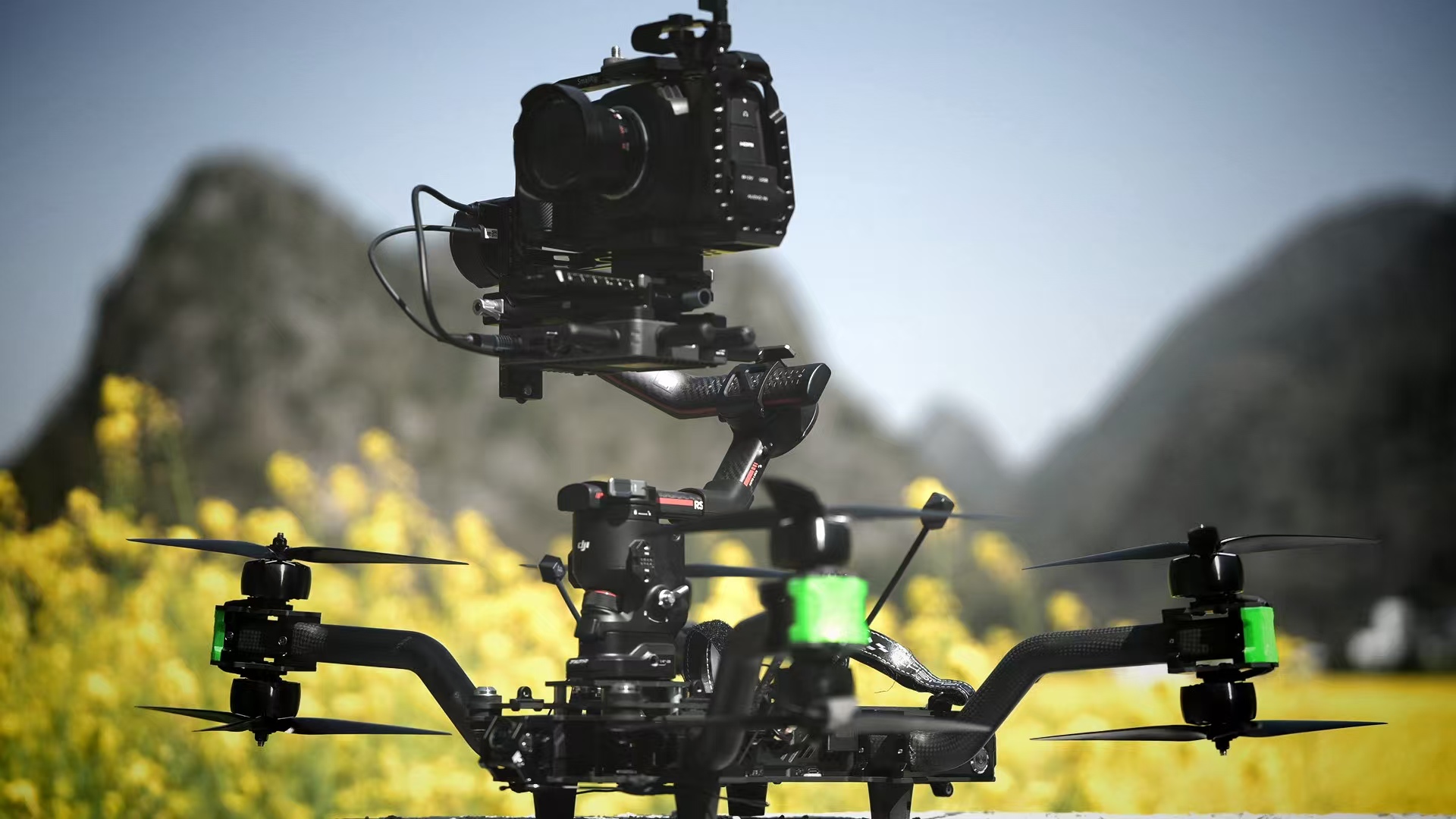
The aerial cinematography and industrial drone sectors face a persistent challenge: finding propellers that can handle heavy payloads while maintaining image stability and flight efficiency. As drones carry increasingly sophisticated camera systems and industrial equipment, the propeller becomes the critical component determining whether a mission succeeds or fails. The solution lies in advanced material science, specifically carbon nylon composite technology that addresses the fundamental limitations of traditional propeller designs.
Understanding the Heavy-Lift Propeller Challenge
Heavy-lift cinematography drones operating in the 3-10kg payload range encounter unique mechanical stresses. When carrying professional camera gimbals and stabilization systems, propellers must generate substantial thrust without introducing vibrations that compromise image quality. Traditional nylon propellers often suffer from aeroelastic deformation under load—the blades bend and twist during flight, disrupting the designed aerodynamic profile and reducing efficiency. This deformation creates a cascade of problems: decreased thrust efficiency, increased power consumption, shortened flight times, and most critically for cinematography applications, micro-vibrations that translate through the airframe to the camera system.
The core engineering challenge centers on the blade’s structural integrity during dynamic maneuvers. When a drone executes rapid directional changes or fights against environmental wind resistance, propeller blades experience significant bending moments, particularly concentrated at the hub attachment point. Standard materials lack the elastic modulus required to maintain the preset aerodynamic twist distribution under these conditions, resulting in thrust fluctuations and control response lag.
Carbon Nylon Composite Material Advantages
Carbon nylon composites represent a fundamental advancement in propeller material technology. By integrating carbon fiber reinforcement into a modified nylon matrix, manufacturers achieve a material with dramatically improved stiffness-to-weight ratio compared to standard glass fiber nylon. This enhanced elastic modulus serves a critical function: maintaining the blade’s designed aerodynamic geometry even under substantial thrust loads and centrifugal forces.
The material’s superior bending stiffness directly addresses aeroelastic deformation. When a heavy-lift drone hovers with maximum payload, carbon nylon blades retain their engineered twist distribution along the span, ensuring each blade section operates at the intended angle of attack. This consistency translates to predictable thrust output and eliminates the efficiency losses associated with blade flexing. For cinematography applications, the improved structural stability means higher bending mode frequencies that avoid resonance with gimbal stabilization systems—a common source of image jitter in heavy-lift platforms.
Beyond structural performance, carbon nylon composites offer enhanced fatigue resistance. Industrial drones conducting repetitive operations experience thousands of thrust cycles, and the hub area endures continuous bending stress. The reinforced material structure resists crack propagation and stress concentration, extending operational lifespan while maintaining performance characteristics throughout the component’s service life.
Propeller Design Considerations for Heavy-Lift Applications
Effective heavy-lift propeller design requires careful optimization of multiple aerodynamic and structural parameters. Diameter selection influences disk loading—the thrust generated per unit of rotor disk area. Larger diameters distribute thrust generation across a greater area, reducing the induced velocity through the rotor disk and improving hovering efficiency. For platforms in the 7-10kg class, propellers in the 13-15 inch range provide the disk area necessary for efficient heavy-load operations.
Pitch configuration determines the blade’s aggressiveness and operational envelope. Large pitch designs generate substantial thrust and support high forward speeds, but require greater motor torque. For cinematography applications involving dynamic filming with frequent acceleration and deceleration, a balanced pitch design maintains responsive control authority while preventing excessive motor current draw. Industrial applications with extended cruise segments benefit from optimized pitch settings that flatten the thrust-power characteristic curve, extending operational duration.
Blade count impacts both thrust smoothness and efficiency. Three-blade configurations have become standard for heavy-lift applications because they provide smoother thrust delivery compared to two-blade designs—critical for vibration control—while maintaining better efficiency than four-blade alternatives. The reduced blade interference of three-blade layouts preserves aerodynamic efficiency without sacrificing the thrust consistency required for stable heavy-payload flight.
Gemfan’s Heavy-Lift Propeller Solutions
Gemfan Hobby Co., Ltd. has developed a comprehensive range of cinematography-grade and industrial-grade heavy-lift propellers engineered specifically for the challenges of payload-intensive operations. Drawing on nearly twenty years of propeller development experience, the company implements full-process quality control encompassing material modification, precision mold manufacturing, and dynamic balance testing.
The professional cinematography product line addresses the 3-6kg platform segment with designs focused on image stability. The 1050W 3-Blade Propeller exemplifies this approach through structural modifications that increase bending mode frequency, eliminating resonance risk between the power system and gimbal stabilization. The thickened cross-sections at critical blade stations provide the structural stiffness necessary to prevent vibration transmission while the wide-blade chord distribution enables adequate lift generation at lower rotational speeds—further reducing noise and vibration.
For complex shooting scenarios requiring both load capacity and control agility, the 1170 3-Blade Propeller balances blade solidity with response sensitivity. The narrow large-pitch configuration supports dynamic filming maneuvers while providing the environmental wind resistance stability essential for outdoor cinematography work.
Industrial-grade offerings extend performance into the 5-10kg operational range with enhanced structural redundancy. The 1270 3-Blade Propeller features material reinforcement concentrated at the hub and root areas, directly addressing the bending moment concentration that causes structural fatigue under sustained heavy thrust. The increased propeller disk diameter lowers disk loading, improving hovering efficiency for long-endurance industrial missions.
At the upper end of the heavy-lift spectrum, the 1410 3-Blade Propeller targets 7-10kg platforms with specific focus on out-of-plane bending stiffness. This design priority ensures the blade maintains its designed angle of attack distribution during extreme load maneuvers—when aeroelastic deformation typically degrades performance. The optimization for 1000mm wheelbase platforms balances endurance efficiency with the jitter control standards required for professional operations.
The flagship 1507 3-Blade Propeller represents the pinnacle of heavy-load capability combined with high-sensitivity payload support. Extremely low residual imbalance control provides the micro-vibration suppression demanded by high-sensitivity photoelectric payloads. The 7-inch pitch combined with optimized structural distribution balances low-speed heavy-load takeoff capability with cruise efficiency, supporting platforms carrying the most demanding sensor equipment.
Material Quality and Manufacturing Precision
The performance advantages of carbon nylon propellers depend critically on manufacturing precision and quality control. Material modification processes must achieve consistent fiber distribution and matrix bonding to deliver predictable mechanical properties. Precision injection molding ensures dimensional accuracy, particularly at the hub interface where even minor tolerance variations introduce imbalance and vibration.
Dynamic balance testing represents the final quality gate. Residual imbalance—the uneven mass distribution around the rotational axis—generates centrifugal forces that manifest as vibration during operation. For heavy-lift applications, especially those involving cinematography or sensitive instruments, achieving extremely low residual imbalance is non-negotiable. Advanced balancing procedures identify and correct mass distribution irregularities, ensuring each propeller meets stringent vibration specifications.
Selecting the Appropriate Heavy-Lift Solution
Propeller selection for heavy-lift applications requires matching several key parameters to platform characteristics and mission requirements. Platform weight and typical payload define the thrust requirements and appropriate diameter range. Motor torque characteristics influence optimal pitch selection—higher torque motors can efficiently drive larger pitch propellers that provide better high-speed performance.
Mission profile significantly impacts design priorities. Cinematography applications demand vibration control and smooth thrust delivery, making designs with enhanced structural stiffness and careful balancing essential. Industrial operations prioritizing endurance benefit from larger diameter, lower pitch configurations that maximize hovering efficiency. Applications involving dynamic maneuvering require propellers that maintain aerodynamic precision under varying load conditions, necessitating the structural integrity that carbon nylon composites provide.
Environmental operating conditions also factor into material selection. Carbon nylon’s superior fatigue resistance and structural consistency across temperature ranges make it particularly suitable for professional applications where reliability cannot be compromised.
Conclusion
Carbon nylon composite propellers represent the current state-of-art solution for heavy-lift cinematography and industrial drone applications. The material’s enhanced elastic modulus addresses the fundamental challenge of aeroelastic deformation, maintaining aerodynamic precision under load while providing the structural integrity necessary for sustained heavy-thrust operations. When combined with optimized aerodynamic design and precision manufacturing processes, carbon nylon propellers deliver the performance characteristics—thrust efficiency, vibration control, and operational reliability—that professional heavy-lift applications demand.
Gemfan’s specialized heavy-lift propeller range demonstrates how focused engineering and material science advancement translate to practical solutions for payload-intensive drone operations. By addressing specific pain points through targeted design features and leveraging advanced composite materials, these propellers enable cinematography and industrial platforms to achieve their mission objectives with professional-grade performance standards.
http://www.gemfanhobby.com
Gemfan Hobby Co.,Ltd. -
AuthorPosts

- You must be logged in to reply to this topic.