
- This topic is empty.
-
AuthorPosts
-
2026-08-07 at 5:25 pm #8832
Modern construction projects are becoming increasingly complex, requiring scaffolding systems that provide strong load capacity, flexible configurations, fast installation, and reliable safety performance. Traditional scaffolding solutions often struggle when projects involve irregular structures, different working heights, limited site space, or frequent layout changes.
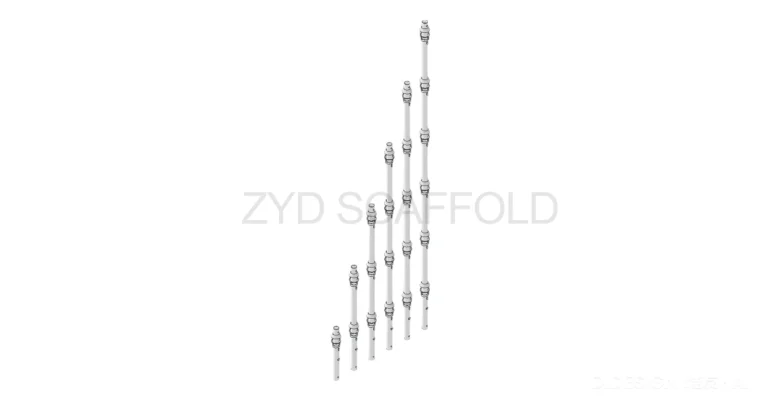
A versatile ringlock scaffolding system addresses these challenges by combining modular design, high structural stability, and flexible assembly options. Unlike conventional tube-and-clamp scaffolding, ringlock scaffolding uses standardized vertical standards, horizontal ledgers, diagonal braces, and rosette connection nodes to create a highly adaptable temporary structure suitable for construction, industrial maintenance, bridge projects, and large-scale infrastructure development.
This article explores the technical advantages of versatile ringlock scaffolding, the key performance factors that influence safety and efficiency, and how advanced manufacturing quality helps contractors achieve more reliable project outcomes.
Why Versatile Ringlock Scaffolding Is Becoming a Preferred Choice
Scaffolding is not simply a temporary access platform. It directly affects worker safety, construction efficiency, and project scheduling.
In large construction environments, scaffolding systems must support:
-
Different working elevations
-
Heavy construction materials
-
Multiple workers simultaneously
-
Complex building geometries
-
Repeated assembly and dismantling cycles
Traditional scaffolding methods often require extensive manual adjustment because each connection point must be individually tightened and aligned.
Ringlock scaffolding changes this approach through a modular connection system that allows components to be assembled quickly while maintaining structural integrity.
The result is a system that combines the flexibility of traditional scaffolding with the efficiency required for modern construction operations.
Structural Design of Ringlock Scaffolding
The core advantage of ringlock scaffolding comes from its engineered connection structure.
A typical ringlock system consists of:
-
Vertical standards with welded rosette nodes
-
Horizontal ledgers
-
Diagonal braces
-
Base jacks
-
Adjustable U-head supports
-
Steel planks or platforms
The rosette node is the key component. Each standard usually contains multiple connection points positioned at fixed intervals, allowing horizontal and diagonal members to connect at different angles.
This design provides several benefits:
-
Multi-directional connection capability
-
Improved load distribution
-
Reduced loose connections
-
Faster installation compared with clamp systems
-
Better overall frame stability
Because components are standardized, the same system can be adapted for different construction environments without requiring completely different scaffolding structures.
Load Capacity and Structural Stability
Load performance is one of the most important factors when selecting scaffolding equipment.
A high-quality versatile ringlock scaffolding system is designed to withstand significant vertical and horizontal forces generated by workers, tools, materials, and environmental conditions.
Load capacity depends on several engineering factors:
-
Steel grade
-
Tube diameter
-
Wall thickness
-
Connection design
-
Brace arrangement
-
Foundation conditions
-
Assembly accuracy
Common industrial ringlock systems use high-strength steel materials such as Q235 or Q355 steel.
Compared with lower-strength materials, higher-grade steel provides:
-
Improved load-bearing capability
-
Better deformation resistance
-
Longer service life
-
Enhanced safety margins
For heavy-duty applications such as bridge construction, industrial plants, and large concrete structures, structural strength becomes especially important because scaffolding may support formwork systems and significant temporary loads.
Faster Installation Reduces Project Costs
Construction efficiency is strongly influenced by scaffolding installation time.
Traditional scaffolding systems require workers to connect pipes using multiple clamps, resulting in more manual operations and longer assembly periods.
Ringlock scaffolding improves efficiency through:
-
Pre-engineered components
-
Standardized dimensions
-
Quick wedge-lock connections
-
Reduced loose accessories
-
Simplified inspection procedures
Experienced crews can install ringlock systems significantly faster than traditional scaffolding because fewer connection steps are required.
Faster installation creates several direct benefits:
-
Reduced labor requirements
-
Shorter project preparation periods
-
Faster access to working areas
-
Lower overall construction costs
For projects with tight schedules, installation speed can directly influence project profitability.
Flexibility for Different Construction Applications
One of the defining features of versatile ringlock scaffolding is adaptability.
Unlike fixed scaffolding structures, ringlock systems can be configured according to different project requirements.
Typical applications include:
Building Construction
Ringlock scaffolding provides safe working platforms for:
-
Exterior wall construction
-
Brickwork
-
Painting
-
Installation work
-
Maintenance operations
Its adjustable height and modular structure allow it to adapt to different building elevations.
Bridge and Infrastructure Projects
Infrastructure projects often involve irregular structures and demanding load requirements.
Ringlock scaffolding is commonly used for:
-
Bridge construction
-
Tunnel projects
-
Highway structures
-
Large concrete works
Its strong load capacity and three-dimensional configuration capability make it suitable for complex temporary support requirements.
Industrial Maintenance
Factories, power plants, and petrochemical facilities often require temporary access systems for inspection and maintenance.
Ringlock scaffolding allows rapid setup around:
-
Equipment platforms
-
Storage tanks
-
Pipelines
-
Processing units
The modular design helps maintenance teams create customized working platforms without major structural modifications.
Safety Performance Depends on Manufacturing Quality
Although scaffolding systems are temporary structures, their safety requirements are extremely high.
Manufacturing quality directly affects field performance.
Important quality factors include:
Welding Precision
Connection points must withstand repeated loading cycles.
Poor welding quality can lead to:
-
AuthorPosts
Viewing 1 post (of 1 total)- You must be logged in to reply to this topic.
-
