
- This topic is empty.
-
AuthorPosts
-
2026-04-20 at 6:00 pm #7052
In today’s water treatment and beverage manufacturing industries, ensuring consistently high water purity is a fundamental requirement. Even trace amounts of chlorine, organic substances, unpleasant odors, or residual chemicals can negatively impact both product quality and the service life of equipment. Among the various filtration methods available, activated carbon filtration is widely recognized for its outstanding adsorption performance. A clear understanding of how this technology functions—and how it can be incorporated into industrial production systems—helps manufacturers maintain stable, high-quality water output.
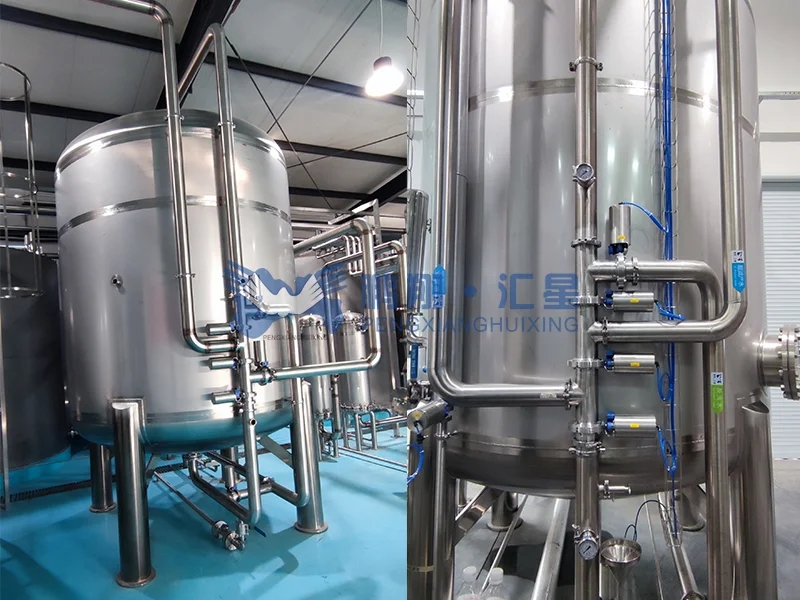
What Is an Activated Carbon Filter?
An activated carbon filter is a purification system that utilizes specially processed carbon material to eliminate impurities from liquids or gases. Through high-temperature activation, the carbon develops an extremely porous internal structure, greatly increasing its surface area. Remarkably, just one gram of activated carbon can offer a surface area exceeding 1,000 square meters.
This vast surface enables the material to capture contaminants through adsorption, a process in which molecules adhere to the surface rather than dissolving into the material itself, as in absorption.
Because of this strong adsorption capability, activated carbon filters are commonly used in:
-
Water purification systems
-
Beverage production lines
-
Pharmaceutical manufacturing
-
Food processing facilities
-
Industrial fluid treatment systems
In bottled water and beverage production, this filtration step is especially critical before filling and packaging.
How Adsorption Works in Activated Carbon
Activated carbon removes contaminants mainly through physical adsorption and chemical interaction, thanks to its highly porous structure.
1. Physical Adsorption
Physical adsorption is driven by weak van der Waals forces that attract molecules to the carbon surface. This allows a wide range of organic pollutants to be captured effectively.
Typical substances removed include:
-
Chlorine and chloramine compounds
-
Volatile organic compounds (VOCs)
-
Agricultural pesticides and herbicides
-
Industrial chemical solvents
-
Odor-causing compounds
In beverage production, chlorine removal is particularly important, as even minimal chlorine presence can alter taste and aroma.
2. Chemical Adsorption
Certain types of activated carbon are specially treated to enhance chemical reactions with specific pollutants. These modified carbons can neutralize or transform contaminants during filtration.
For instance, catalytic activated carbon is especially effective in breaking down chloramines compared to standard carbon materials.
3. Pore Structure and Filtration Efficiency
The effectiveness of activated carbon depends heavily on its pore system, which includes:
-
Micropores – capture very small molecules
-
Mesopores – trap medium-sized organic compounds
-
Macropores – act as channels guiding contaminants deeper into the structure
This multi-level pore network allows activated carbon to handle a broad range of impurities efficiently.
Main Advantages of Activated Carbon Filtration
Activated carbon filtration is widely adopted in industrial water treatment due to several key benefits:
Effective Taste and Odor Removal
It significantly improves water sensory quality by eliminating unpleasant taste and odor compounds—critical in beverage manufacturing.
Strong Organic Contaminant Removal
Many water pollutants are organic in nature, and activated carbon has a strong affinity for these substances, making it highly effective.
Compatibility with Multi-Stage Systems
Activated carbon filters are often integrated with other technologies such as sand filtration, ultrafiltration, or reverse osmosis to achieve deeper purification.
Environmentally Safe Operation
Unlike chemical dosing methods, activated carbon does not introduce additional substances into the water, making it an eco-friendly solution.
Role in Beverage Production
Since water is the primary ingredient in most beverages, its purity directly determines product quality. Activated carbon filtration is therefore a standard step in beverage processing systems.
Common applications include:
-
Pre-treatment in bottled water production
-
Chlorine removal before reverse osmosis systems
-
Flavor stabilization in soft drink manufacturing
-
Organic impurity removal in juice processing
By ensuring clean process water, manufacturers can improve both taste consistency and equipment protection.
Integration into Modern Beverage Production Lines
Modern beverage factories rely on highly automated and integrated systems. Activated carbon filtration is typically one component within a complete water treatment and production workflow.
Companies such as Pengxiang Huixing design integrated solutions that combine water purification, filling, and packaging technologies into unified production systems.
A standard beverage production line may include:
-
Raw water pre-treatment units
-
Activated carbon filtration systems
-
Reverse osmosis purification modules
-
Bottle blowing machines
-
Filling and sealing equipment
-
Labeling and packaging systems
-
Conveying and secondary packaging lines
This integrated structure ensures stable water quality and efficient production flow throughout the entire process.
More details about filtration solutions can be found at:
<a href="https://www.szpxhx.com/activated-carbon-filter.html">activated carbon filter</a>
Pengxiang Huixing: Comprehensive Beverage Engineering Solutions
Based in Shenzhen, China, Pengxiang Huixing has over 20 years of experience in beverage packaging machinery and liquid processing systems. The company integrates R&D, manufacturing, and engineering services to deliver complete production solutions for global clients.
Its main product range includes:
-
Fully automatic bottle blowing machines
-
Integrated filling and capping systems
-
Water treatment production lines
-
Gallon barrel filling equipment
-
Juice and carbonated beverage production systems
-
CIP cleaning systems
-
Industrial sterilization equipment
-
Labeling and conveying systems
These systems cover the entire production chain—from raw material handling to packaging, storage, and logistics.
The company also focuses on smart factory design, combining automation with advanced equipment to help manufacturers improve efficiency, reduce costs, and ensure consistent product quality.
Operating under ISO9000 quality management standards and recognized as a high-tech enterprise in China, its equipment is widely used across China and exported to regions including the UAE, Oman, Vietnam, the Philippines, and Malaysia.
Maintenance and Optimization of Activated Carbon Systems
Although activated carbon filters are highly efficient, their performance depends on proper operation and maintenance.
Regular Replacement of Carbon Media
As contaminants accumulate, adsorption capacity decreases. Periodic replacement or regeneration is necessary.
Use of Pre-Filtration
Installing sediment or multimedia filters upstream helps remove larger particles and prevents premature clogging.
Flow Rate Control
Maintaining appropriate flow speed ensures sufficient contact time between water and carbon, maximizing adsorption efficiency.
Cleaning and System Maintenance
Many industrial setups use CIP (Clean-in-Place) systems to maintain hygiene and ensure stable long-term performance.
Future Development Trends
Activated carbon technology continues to evolve alongside industrial demands. New innovations are improving efficiency and expanding application areas.
Key trends include:
-
Advanced catalytic carbon materials with higher reactivity
-
Optimized pore-structure engineering for improved adsorption
-
Smart monitoring systems for real-time filtration control
-
Integration with digital production management platforms
These developments are helping manufacturers achieve higher water quality standards while improving operational efficiency.
Conclusion
Activated carbon filtration remains a cornerstone technology in modern water treatment and beverage production. Its ability to remove chlorine, organic compounds, and odor-causing substances makes it essential for ensuring product consistency and system reliability.
By integrating advanced filtration systems into production lines, manufacturers can achieve stable water quality and efficient processing.
With decades of expertise in beverage machinery and water treatment solutions, Pengxiang Huixing continues to deliver integrated systems that support the full production chain—from purification to packaging—helping global beverage producers maintain high standards of quality and performance.
http://www.szpxhx.com
Pengxiang Huixing -
-
AuthorPosts

- You must be logged in to reply to this topic.