
- This topic is empty.
-
AuthorPosts
-
2026-06-24 at 8:56 pm #8086
Airports are among the most demanding environments for food and beverage services. Passengers expect fast, high-quality coffee at any hour, yet traditional cafés struggle with labor shortages, high operating costs, and inconsistent service quality. As global air travel continues to rebound, airport operators are increasingly turning to robotic coffee kiosks as a solution that addresses these pain points while delivering superior customer experiences.
The Airport Coffee Challenge
Modern airports face a unique set of operational challenges. Passenger traffic fluctuates dramatically throughout the day, creating unpredictable demand peaks. Traditional coffee shops require multiple employees per shift, yet finding and retaining qualified baristas in airport locations which are often far from residential areas with demanding schedules—proves exceptionally difficult.
Rent at airport locations commands premium rates, yet conventional coffee shops require 30 to 100 square meters of space for equipment, seating, and employee work areas. Food safety regulations in airport environments are stringent, requiring consistent compliance across every transaction. Meanwhile, passengers demand speed: a five-minute wait for coffee can mean a missed boarding call.
These factors combine to create an environment where conventional café models operate on razor-thin margins or lose money entirely. Airport operators need alternatives that maintain quality while dramatically reducing operational complexity.
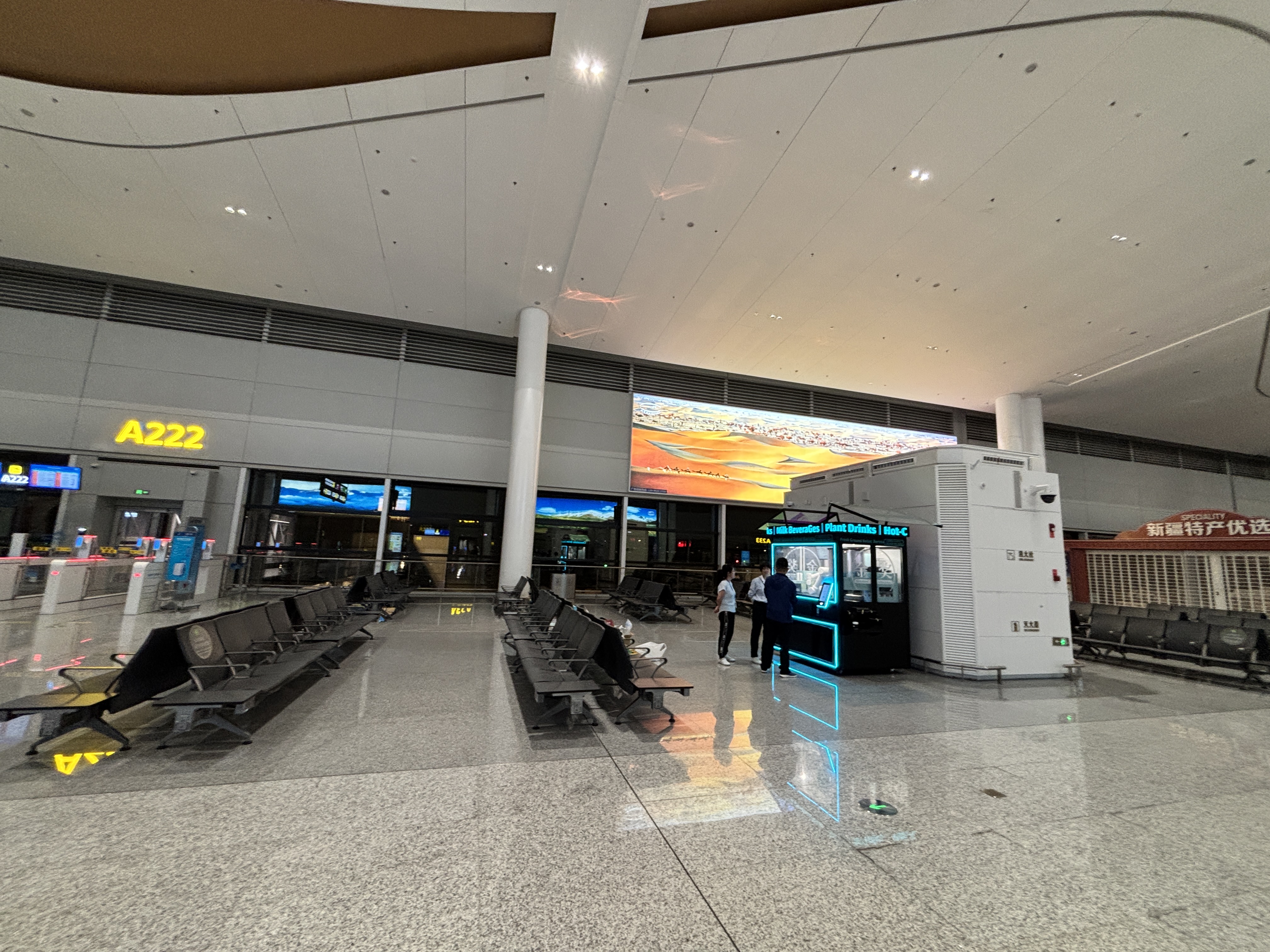
How Robotic Coffee Kiosks Transform Airport Service
Robotic coffee kiosks represent a fundamental reimagining of airport beverage service. These fully automated systems occupy minimal spaceo less than 2.35 square meters, while delivering coffee quality that rivals specialty cafés. The technology addresses each major pain point facing airport food service operations.
Labor Independence and 24/7 Operation
The most significant advantage of robotic systems is complete independence from human labor for core operations. A robotic kiosk operates continuously without shifts, breaks, or staffing concerns. This capability proves invaluable in airport environments where early morning and late-night flights create demand at hours when staffing proves most difficult and expensive.
Systems like the COFE+ Robot Coffee Kiosk exemplify this approach, requiring less than 30 minutes of daily maintenance—typically just restocking ingredients and basic cleaning. The rest of the time, the system operates autonomously, taking orders, grinding fresh beans, brewing espresso-based drinks, and serving customers without any human intervention.
Space Efficiency and Premium Location Access
Traditional coffee shops cannot justify the economics of premium airport locations due to high rent and space constraints. Robotic kiosks change this equation entirely. Occupying a footprint comparable to a vending machine, these systems can be placed in high-traffic corridors, near gates, or in concourse areas where conventional cafés would be impossible.
Shanghai Hi-Dolphin Robot Technology Co., Ltd., the company behind COFE+, has deployed its systems in over 21 international airports across 66 countries. These installations demonstrate how compact robotic systems can capture premium locations that maximize passenger convenience while minimizing real estate costs.
Consistent Quality Through Precision Engineering
One persistent challenge in airport food service is maintaining consistent quality across shifts and staff changes. Robotic systems eliminate this variability entirely. Every cup is prepared according to identical specifications, using precise measurements, controlled temperatures, and standardized timing.
Advanced robotic coffee systems employ6-axis robotic arms with precision comparable to champion baristas. The COFE+ system, for instance, uses proprietary smart algorithms to replicate professional barista techniques, grinding fresh beans for each cup and creating espresso-based drinks with consistent crema and flavor profiles. Some models even incorporate latte art capabilities, creating visual appeal that matches specialty café standards.
Speed That Matches Airport Pace
In airport environments, speed is non-negotiable. Passengers operate on tight schedules, and service delays create cascading problems. Robotic coffee systems deliver exceptional speed without sacrificing quality.
The latest generation of robotic baristas can craft drinks in approximately 50-55 seconds per cup, with advanced models capable of preparing five cups simultaneously. In comparative tests, the 7th-generation COFE+ system completed drinks in an average of 54 seconds versus 72 seconds for experienced human baristas—a 25% speed advantage that translates directly into shorter lines and better passenger experiences.
Economic Advantages for Airport Operators
Beyond operational benefits, robotic coffee kiosks deliver compelling economic advantages. These systems reduce operational costs by up to 90% compared to traditional cafés, primarily through elimination of labor expenses, reduced space requirements, and lower utility consumption.
The COFE+ system, for example, uses 80% less electricity than conventional coffee shop equipment while operating 24/7. Maintenance requirements are minimal, with automated cleaning cycles and remote monitoring systems that predict maintenance needs before failures occur.
For airport operators, this translates into stable, predictable revenue streams without the management complexity of traditional food service operations. The systems require no scheduling, no employee benefits, no training programs, and no turnover management.
Global Deployment and Proven Performance
The robotic coffee kiosk concept has moved well beyond proof-of-concept stage. Systems are now deployed in major international airports worldwide, with millions of cups served and operational track records spanning years.
COFE+ systems have been deployed at locations including Chisinau International Airport in Moldova and airports across the United States, Europe, the Middle East, and Asia Pacific. With over 200 million cups served globally and cumulative operational hours exceeding 60,000 hours, these systems have demonstrated reliability in demanding real-world environments.
The company’s 7th-generation systems are designed for a 10-year operational life, capable of producing over 500,000 cups before requiring major component replacement. This durability proves essential in airport environments where downtime creates immediate operational problems.
Customization and Menu Flexibility
Modern robotic coffee systems offer extensive customization capabilities, addressing diverse passenger preferences. Advanced systems support multiple coffee bean varieties, various milk options including plant-based alternatives, numerous syrup flavors, and adjustable parameters for temperature, sweetness, and strength.
The COFE+ platform, for instance, supports 4 milk types, 8 syrup varieties, and 47 topping options, enabling thousands of unique drink combinations. This flexibility rivals full-service cafés while maintaining the speed and consistency advantages of automation.
Safety and Certification for Global Operations
Operating in airport environments requires meeting stringent safety and food handling standards. Leading robotic coffee systems carry comprehensive international certifications, including FDA approval for the United States, CE certification for the European Union, and equivalent approvals for other major markets.
COFE+ holds the distinction of being certified by the US FDA, US FCC, EU CE, UK standards, and UN requirements—the only robotic coffee system to achieve simultaneous certification across all these jurisdictions. This comprehensive certification portfolio enables rapid deployment across international airport networks without regulatory barriers.
The Future of Airport Beverage Service
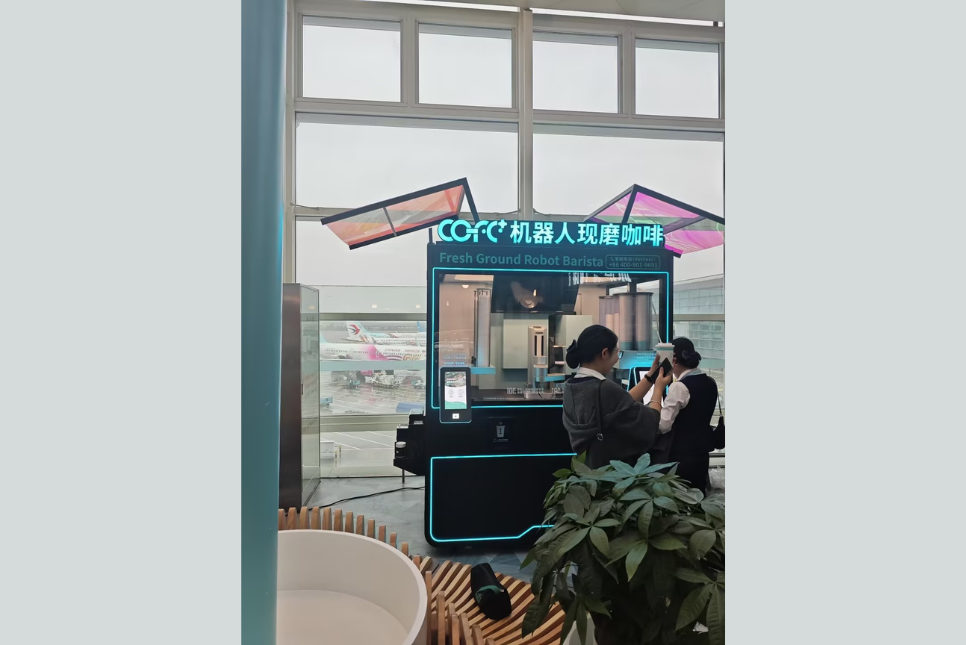
As labor costs continue rising and airport passenger volumes recover to pre-pandemic levels and beyond, robotic coffee kiosks represent not merely an alternative to traditional service models but an inevitability. The technology has matured to the point where quality, speed, and reliability match or exceed human-operated alternatives while delivering dramatically superior economics.
For airport operators evaluating beverage service strategies, robotic systems offer a pathway to improved passenger satisfaction, reduced operational complexity, and enhanced profitability. The technology has proven itself across diverse markets and demanding operational environments, establishing a track record that removes adoption risk.
The question for airport decision-makers is no longer whether robotic coffee kiosks can deliver on their promises, but rather how quickly they can be integrated into existing operations to capture their compelling advantages.
https://hi-dolphin.com/
Shanghai Hi-Dolphin Robot Technology Co.,Ltd. -
AuthorPosts

- You must be logged in to reply to this topic.