
- This topic is empty.
-
AuthorPosts
-
2026-09-24 at 7:29 pm #9528
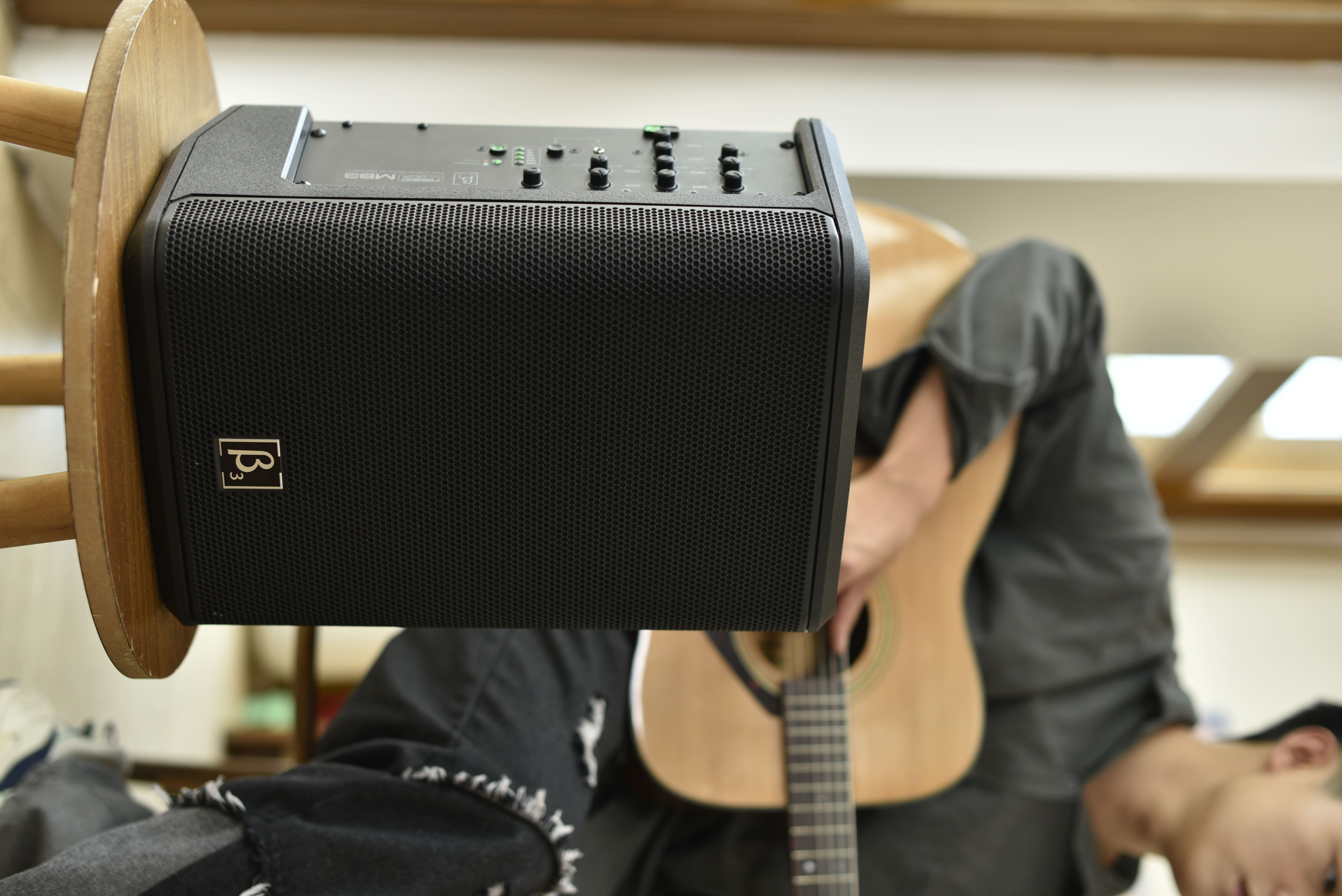
When musicians, performers, content creators, and speech-first venues evaluate battery-powered portable PA systems, one of the most practical questions is how driver size and cabinet design translate into real-world sound and portability. Within the Beta Three portable PA lineup — manufactured by Shenzhen Sanji Culture Co., Ltd. through its operating entity Dongguan 3G Audio Technology Co., Ltd. — the MB3 Magic Box (MB3) and the MB3-X (MB3 Magic Box-X) represent two distinct engineering approaches built around 8-inch and 6-inch driver architectures respectively. Understanding how these designs differ helps buyers match the right system to their venue, use case, and portability requirements.
Driver Architecture and Frequency Coverage
The MB3 is built around a true 3-way coaxial design: an 8-inch woofer paired with a 5-inch midrange driver and a 1-inch high-frequency coaxial unit. This three-way arrangement is engineered to deliver balanced lows, natural mids, and crisp highs from a single cabinet, with a frequency response of 60 Hz–20 kHz (-3 dB) and a dispersion pattern of 90° × 90°. Maximum SPL reaches 110 dB continuous and 116 dB peak at 1 meter, supported by an amplifier rated at 200 W RMS, 400 W music, and 800 W peak.
The MB3-X, by contrast, is built on a more compact two-driver configuration: a single 6-inch low-frequency driver (4 Ω) combined with a 1-inch high-frequency driver (4 Ω, silk diaphragm). Its frequency response is rated at 75 Hz–20 kHz (-10 dB), with a wider dispersion pattern of 140° H × 120° V averaged across 2–10 kHz. Maximum SPL is 109 dB continuous and 115 dB peak at 1 meter. Amplification is split by driver: the low-frequency section runs Class D at 43 W ±10% @ 4 Ω, while the high-frequency section runs Class AB at 15 W ±10% @ 4 Ω, with a crossover point at 1.7 kHz (-24 dB) and a low cut at 40 Hz.
The practical takeaway is that the MB3’s true 3-way layout is designed for balanced, full-range musical reproduction, while the MB3-X’s simpler two-way layout with a notably wider horizontal and vertical dispersion pattern is designed to keep voice intelligibility consistent across a room — a design choice that favors speech-first environments over instrumental low-end extension.
Portability, Weight, and Output Trade-offs
Cabinet size and driver count directly affect weight and portability. The MB3 weighs 7.5 kg net with dimensions of 259 × 292 × 390 mm, while the MB3-X is lighter at 5.2 kg net (6.2 kg gross) with smaller dimensions of 220 × 249 × 336 mm. Both units include an integrated top handle for one-hand carrying, but the MB3-X’s reduced weight makes it a grab-and-go companion to the larger 8-inch system, particularly for users who prioritize minimal setup effort over maximum output.
On output, the MB3’s larger driver set and higher-rated amplifier give it an edge in maximum SPL (110/116 dB versus 109/115 dB) and low-frequency extension (60 Hz versus 75 Hz), which matters for venues needing fuller bass reproduction from a standalone unit. The MB3-X compensates for its smaller footprint with wider coverage angles, making it well suited to rooms where consistent vocal clarity across a wide seating or standing area is more important than deep low-end output.
Feature Sets Built Around Each Design
Both systems share core connectivity: three combo XLR/TRS inputs plus a 3.5 mm AUX input, Bluetooth audio streaming, and XLR Main In/Out for wired linking between units. Beyond this shared foundation, each product’s feature set reflects its intended use:
- The MB3 includes integrated digital effects DSP with reverb and notch control, a Shape Switch offering Music and Speech EQ presets, TWS stereo pairing via Bluetooth 5.0 with SBC/AAC support up to 20 m, and battery operation rated for up to 8 hours — features aligned with musicians, performers, and prosumers who need one flexible unit for rehearsals, busking, or small live shows.
- The MB3-X adds a three-channel mixer with per-channel input editing, a 3-band EQ (LOW, MID, HIGH), built-in FX including Reverb, Delay, and Compressor, and Voicing Presets labeled LIVE, CLUB, and MONITOR for quick switching between performance, playback, and monitoring contexts. It also offers ECO/MAX battery modes to balance battery life against output needs, a 35 mm stand mount with multiple placement angles, and a USB 5 V / 500 mA power-only port for charging small auxiliary devices.
These feature differences reinforce the two products’ distinct positioning: the MB3 leans toward musical performance flexibility, while the MB3-X leans toward speech-led adaptability with finer per-channel control.
Matching the Design to the Scenario
Beta Three positions the MB3 for musicians and performers needing microphone, guitar, and keyboard inputs for rehearsal and small shows, street performance and busking with extended battery life, small venues and cafés requiring compact pole-mount or monitor placement, outdoor camping and creator events combining Bluetooth playback with live inputs, and weddings or pop-up events using wireless stereo and daisy-chain expansion.
The MB3-X is positioned for corporate AV, education, and worship settings that require intelligibility and wide room coverage, content creators and mobile performers working busking circuits, pop-ups, and small hospitality venues, and training and presentation rooms that may extend coverage to a second speaker via XLR Main In/Out linking. Both products also serve overlapping lifestyle scenarios, including camping and outdoor trips, and fitness or dance sessions requiring portable music playback.
Engineering Consistency Across the Product Line
Both the MB3 and MB3-X are developed under the same manufacturing and testing standards that define Beta Three’s broader professional audio operation, which has operated since 1988 with nearly 30,000 m² of manufacturing capacity, 4 production factories, and 100+ R&D engineers. Durability and reliability testing for the product line covers high temperature and humidity, salt spray corrosion, drop and vibration, and long-term power load — the same testing framework applied across the company’s full product chain from microphones to line arrays. This shared engineering discipline, combined with ISO 9001:2015, ISO 14000, and OHSAS 18000 certifications, means that whichever driver configuration a buyer selects, the underlying build and testing standards remain consistent.
For buyers deciding between the two, the choice ultimately comes down to whether the priority is full-range musical output with an 8-inch driver foundation, or a lighter, wider-coverage 6-inch design tuned for speech clarity and room-filling intelligibility — both delivered under the same Beta Three engineering standards and global distributor network spanning 123 countries and regions.
https://betathree.com/
Shenzhen Sanji Culture Co.,Ltd. -
AuthorPosts

- You must be logged in to reply to this topic.