
- This topic is empty.
-
AuthorPosts
-
2026-11-05 at 4:15 pm #10149
Commercial flaker ice makers are designed for businesses that need soft, moldable ice for food preservation, seafood displays, food preparation, and other temperature-sensitive applications. When evaluating flaker ice makers commercial solutions, buyers should look beyond nominal daily ice production and consider ice texture, actual output under site conditions, storage capacity, drainage, and cleaning requirements. A machine that produces sufficient ice in a laboratory rating may deliver less under a hot kitchen environment or when the water supply and ventilation conditions differ from the manufacturer's test conditions.
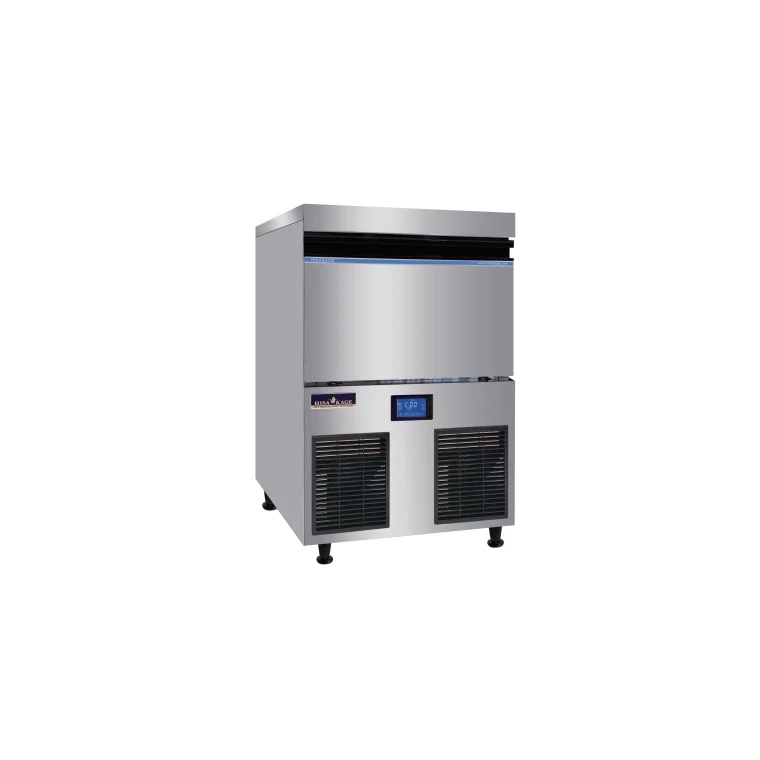
HISAKAGE specializes in commercial ice makers, refrigerators, and display cabinets, supplying products to more than 60 countries and regions. Its quality management system is certified to ISO 9001, and relevant products have certifications including CE, CB, RoHS, Saber, ETL, NSF, and ENERGY STAR. The applicable certification depends on the specific model and destination market, so product documentation should be verified during equipment selection.
Why Flake Ice Is Different from Cube Ice
Flake ice is generally produced by freezing water on a refrigerated surface and mechanically removing the resulting ice layer. The flakes are typically thin and irregular, creating a relatively large contact area when distributed over food or other products. This makes flake ice useful in applications where close contact and flexible coverage matter more than the long melting time often sought from larger, compact ice cubes.
Seafood counters are a common example. Flake ice can fill gaps around fish, shellfish, and other products, helping maintain contact between the ice and the displayed items. In food preparation, its loose texture can make it easier to distribute across containers or work surfaces. Depending on the machine design, flake ice may also be suitable for selected cooling and processing applications.
The same characteristics influence storage and handling. Loose flakes can compact when subjected to pressure, and their relatively high exposed surface area can contribute to melting when the ice is stored or transported in unsuitable conditions. Businesses should therefore size the machine and storage arrangement around actual usage patterns rather than assuming that all ice types behave identically.
Calculate Production Capacity Under Real Operating Conditions
The first selection decision is the required ice production rate. Commercial ice makers are often marketed by their rated output over 24 hours, but that figure should be interpreted according to the manufacturer's test conditions. Ambient temperature, incoming water temperature, condenser ventilation, and maintenance condition can all affect actual production.
Consider a seafood retailer that requires 150 kg of flake ice per day. A machine with a nominal rating of 150 kg per 24 hours would provide little operating margin if the rating is achieved only under favorable conditions. During hot weather, peak service periods, or periods of restricted ventilation, production may fall below the nominal figure. The appropriate capacity should account for these variations and the business's replenishment schedule.
A practical assessment should distinguish between average daily consumption and peak demand. A supermarket seafood counter may use most of its ice during preparation and display setup, while a restaurant may require several smaller batches throughout the day. If demand is concentrated into a short period, storage capacity and recovery time become as important as the daily production rating.
Before ordering, confirm the machine's rated production, the conditions under which that rating was measured, the expected output at the installation site, and the available storage capacity. If the supplier cannot provide a reliable estimate for the intended operating conditions, the capacity decision should remain provisional until the technical details are clarified.
Match Storage Capacity to the Ice Consumption Pattern
An ice maker and an ice storage bin perform different functions. The machine produces ice over time, while the bin provides a reserve for periods when demand temporarily exceeds production. A high-output machine paired with an undersized bin may still cause operational interruptions during peak service.
Storage should be assessed according to the volume of ice needed between replenishment periods, the amount of usable bin capacity, and the space required for access and cleaning. Nominal bin volume does not always equal usable ice capacity, so the supplier's specified storage capacity should be checked.
Flake ice also requires attention to drainage. As ice melts, water needs a suitable route away from the storage area and surrounding equipment. Poor drainage can leave standing water, create cleaning difficulties, and increase the risk of water reaching unsuitable areas. Installation planning should therefore include the drain connection, required slope where applicable, and compliance with local plumbing requirements.
Where the ice maker is installed beneath a counter or close to other appliances, confirm the overall dimensions, service clearances, bin configuration, and access to electrical and water connections before finalizing the layout.
Refrigeration System and Installation Environment
The refrigeration system must remove heat from the water as ice forms. Its performance depends on the machine design and the conditions in which it operates. Commercial installations commonly use air-cooled or water-cooled configurations, each with different site requirements.
Air-cooled machines reject heat into the surrounding air. They are often easier to install where suitable ventilation is available, but restricted airflow or elevated room temperatures can reduce performance. The installation must follow the manufacturer's clearance requirements, and hot discharge air should not be allowed to recirculate into the condenser intake.
Water-cooled configurations transfer heat through a water circuit. They may be suitable for certain installation environments, but water consumption, plumbing requirements, drainage, and local restrictions must be considered. The correct configuration depends on the site and the manufacturer's approved installation conditions.
Electrical compatibility is another essential check. Confirm the rated voltage, frequency, phase, power requirements, plug or connection arrangement, and applicable electrical approvals for the destination market. A model intended for one electrical system should not be assumed to be suitable for another without manufacturer confirmation.
Hygiene, Cleaning, and Maintenance
Flake ice is often used in direct contact with food or food-handling environments, making hygienic design and maintenance important. Water quality, storage-bin cleanliness, drainage, and the condition of internal components can all influence operational hygiene.
The cleaning procedure should follow the manufacturer's instructions, including the approved cleaning agents, cleaning frequency, and any required sanitizing steps. Strong chemicals or unsuitable descaling agents may damage internal surfaces or refrigeration-related components. Operators should also follow the specified procedure for removing scale where local water hardness makes mineral deposits more likely.
Preventive maintenance should include checks of the water supply, drainage, condenser condition, ice production, abnormal noise, and visible signs of leakage. Air-cooled machines may require more frequent condenser cleaning in dusty or grease-heavy environments. Water quality should be evaluated because mineral deposits can affect water-contact surfaces and, depending on the design, mechanical performance.
A machine that is easy to access and maintain can reduce service disruption. Before purchase, review the availability of consumable parts, maintenance instructions, warranty terms, and local service support.
Choosing a Commercial Flake Ice Maker Supplier
A suitable supplier should provide clear technical documentation rather than relying only on headline production figures. Relevant information includes rated output, test conditions, electrical requirements, cooling configuration, storage compatibility, installation clearances, cleaning procedures, and applicable product certifications.
HISAKAGE's commercial refrigeration and ice-making product range serves international markets. When evaluating a specific flaker ice maker, customers should confirm the model's production capacity, construction, cooling system, certification status, and suitability for the intended application. Certifications such as NSF, ETL, and ENERGY STAR should be checked against the exact model and the requirements of the destination market rather than assumed to apply to every product.
Conclusion
Choosing the right flaker ice makers commercial solution requires balancing production capacity, peak demand, storage, site conditions, hygiene, and maintenance. The best fit is the machine that can supply the required quantity of ice consistently under real operating conditions while fitting the available installation space and service arrangements. Confirming the technical specifications before ordering helps businesses avoid undersized equipment, installation conflicts, and unnecessary operating interruptions.
http://www.hisakage.com
HISAKAGE REFRIGERATION EQUIPMENT CO.,LTD. -
AuthorPosts

- You must be logged in to reply to this topic.