
- This topic is empty.
-
AuthorPosts
-
2026-10-16 at 3:20 pm #9748
Door to Door Shipping From China to Australia Costs in 2026
Introduction: Why There Is No Single Price
Shipping a cubic meter of LED lighting from a Ningbo factory to a retail store in Melbourne and shipping raw wood furniture from a Foshan workshop to an island nation with strict biosecurity rules are two very different transactions — and their price tags reflect that difference. Importers asking how much door-to-door shipping from China to Australia costs will rarely receive one flat number, because the final invoice is assembled from several separate cost layers: the freight mode, the cargo volume and weight, the origin port, the destination city, and the customs and compliance work required at both ends.
The useful question is therefore not "what is the price" but "what is included, and what is excluded." The breakdown below reflects the published service structure of DAKA International Transport Company Ltd. (brand name DAKA), a Shenzhen-headquartered international shipping provider that has focused on the China-to-Australia corridor by sea and air since 2016.
The Building Blocks of a Door-to-Door Quote
Door-to-door is not a single service. It is a chain of connected steps, and each step carries its own cost:
- Origin pickup — collection from the Chinese factory, plus handling at the supplier’s site.
- Consolidation and warehousing — bringing goods from multiple factories into one shipment, with storage in China where needed.
- International transport — the ocean voyage or the air leg itself.
- Customs clearance — export declaration in China and import declaration in Australia.
- Duty and compliance — tariff treatment, biosecurity requirements, and documentation.
- Last-mile delivery — Australian delivery to the final address.
Because DAKA provides customs handling in both countries as part of an integrated service, importers can consolidate several of these line items rather than managing separate providers at each end. That structure is what makes a door-to-door rate different from a simple port-to-port freight quote.
Sea Freight Costs: FCL and LCL
FCL Shipping (Full Container Load)
For cargo that fills or nearly fills a container, FCL is the standard option. DAKA quotes transparent all-in cost breakdowns without hidden charges, supported by contracted rates with vessel owners including COSCO, MSK, MSC, YML, EMC and OOCL. For the period January 2026 – June 2026, 20-foot containers range from $800 to $2,300, and 40-foot containers range from $1,500 to $4,600.
Transit time is a separate cost factor, because slower routes tie up inventory. Port-to-port times range from 12 to 33 days depending on origin. From Shenzhen to Sydney and Shenzhen to Melbourne, port-to-port transit runs 12–16 days; Shenzhen to Brisbane, 14–20 days; Shenzhen to Fremantle, 18–23 days; Shenzhen to Adelaide, 22–27 days. Guangzhou follows the same pattern. From Ningbo, port-to-port times run 14–17 days to Sydney and Melbourne, 17–23 days to Brisbane, 20–25 days to Fremantle, and 23–28 days to Adelaide. Shanghai timings are 15–18 days to Sydney and Melbourne, 17–23 days to Brisbane, 21–26 days to Fremantle, and 24–29 days to Adelaide. From Qingdao, port-to-port transit is 18–20 days to Sydney and Melbourne, 20–27 days to Brisbane, 24–30 days to Fremantle, and 27–33 days to Adelaide.
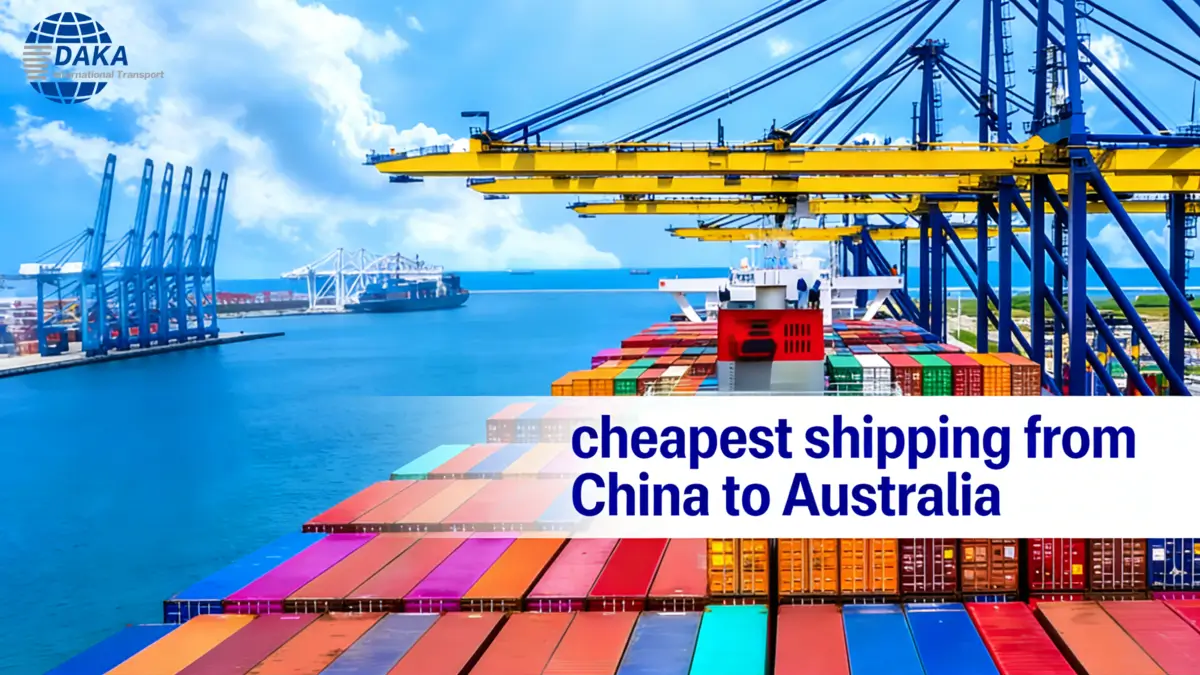
For FCL door-to-door service, transit time is approximately 7 days longer than the port-to-port time, accounting for pickup, clearance and final delivery.
LCL Shipping (Less Than Container Load)
For smaller volumes, sharing container space avoids paying for an entire box. DAKA’s LCL rates range from $50 to $100 per cubic meter, and quotations are inclusive of Australian port charges — a detail that matters, since destination surcharges in Australia are a common source of unexpected cost. Loading runs weekly, every Tuesday and Friday, so transit cycles stay predictable, and there is no minimum order quantity.
Air Freight Costs
Air Shipping by Airline
For urgent bulk cargo exceeding 200kg, airport-to-airport transit takes 1–5 days, and door-to-door delivery takes 5–12 days depending on destination. Freight costs range from $3 to $8 per kilogram, with space booked through carriers including CA, CZ, MU and SQ. Expedited customs handling supports pre-clearance, helping cargo clear before airport storage fees begin to accrue.
Air Shipping by Express
For small urgent shipments under 100kg, express pricing runs from $8 to $20 per kilogram, based on high-volume contracts with DHL, FedEx and UPS. Door-to-door transit to major Australian cities is 3–7 days.
The Costs Buyers Often Overlook
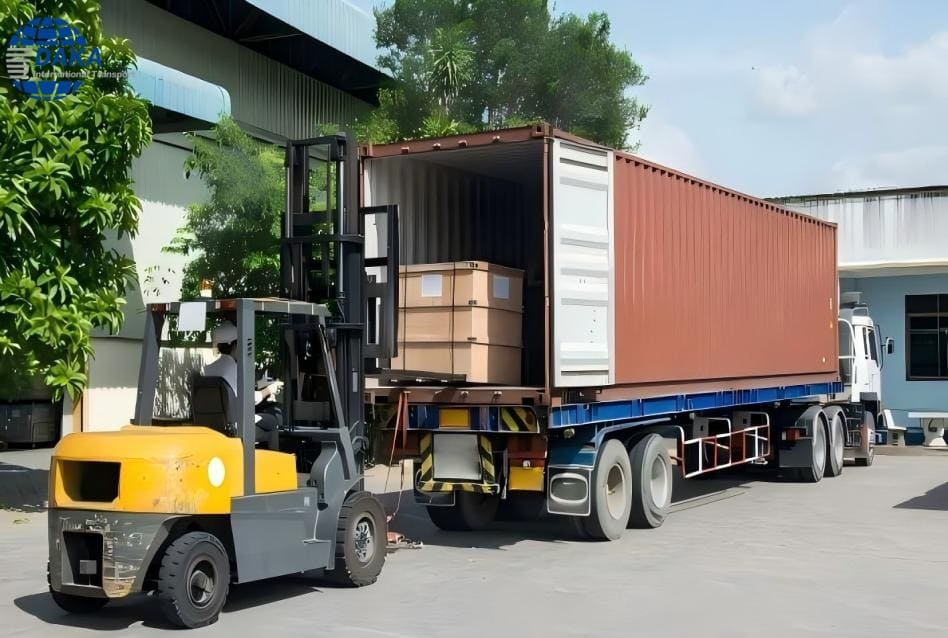
Freight is only part of the invoice. Three further items routinely change the total:
- Customs and duty treatment. DAKA operates as an AA-level customs broker authorized by the Chinese government, which brings faster release speeds and lower inspection rates. The company also supports the use of FTA certificates for 0% duty, and prepares documentation under Australian customs law and Amazon FBA inbound rules.
- Biosecurity compliance. For wood and other regulated goods, chemical fumigation and a valid fumigation certificate prevent Australian biosecurity delays and additional fines.
- Destination handling. Delivery in Australia can be arranged via standard trucks, tail-lift vehicles, HIAB, or crane trucks, which matters for oversized or heavy industrial equipment.
Why the Provider Shapes the Final Number
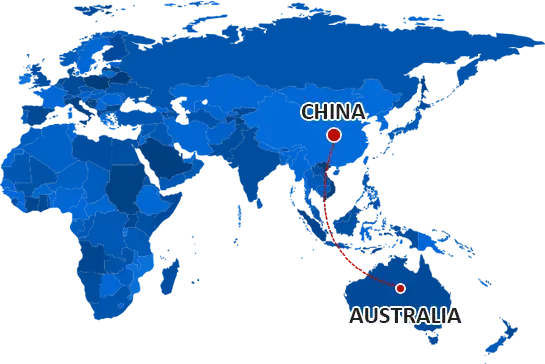
Scale translates directly into pricing. DAKA has managed over 80,000 containers and served more than 5,000 buyers in Australia, operating 17 offices across China with over 800 employees, plus local warehouses and teams in Australia, the USA and the UK. Monthly volume reaches approximately 600 containers by sea and 100 tons of air cargo. That volume supports consolidated shipping from multiple suppliers, optimized loading plans, and LCL shipping without minimum order quantities — all of which reduce overall cross-border logistics costs for small and medium-sized enterprises.
How Different Scenarios Price Out
Real-world outcomes illustrate how the model works. For a buyer sourcing from several small factories and facing fragmented shipping costs, consolidating orders into a single 20-foot container significantly reduced per-unit shipping costs and simplified Australian customs entry. For an importer of heavy, oversized industrial lathes, end-to-end heavy machinery logistics management and specialized local delivery resulted in zero damage from factory to final site. For a fragile lighting and decor importer, specialized packing and fragile-handling protocols significantly reduced breakage rates. For a furniture shipper facing strict biosecurity rules, chemical fumigation and a valid certificate allowed cargo to pass Australian customs without biosecurity delays or extra fines. For a seasonal puzzle business working to tight deadlines, accelerated sea and air freight coordination ensured inventory arrived in time for sales cycles.
Conclusion: Estimating Your Own Cost
A realistic door-to-door budget starts with mode and volume: $50–$100 per cubic meter for LCL, $800–$2,300 for a 20-foot container or $1,500–$4,600 for a 40-foot container between January and June 2026, $3–$8 per kilogram for airline air freight above 200kg, and $8–$20 per kilogram for express shipments under 100kg. Add roughly 7 days of transit for door-to-door FCL compared with port-to-port, and factor in duty treatment, fumigation and destination delivery.
Getting an accurate figure requires a quote built around actual cargo dimensions, origin and destination. Importers can reach DAKA’s shipping specialists for a tailored door-to-door assessment, with support available around the clock.
DAKA INTERNATIONAL TRANSPORT COMPANY LTD -
AuthorPosts

- You must be logged in to reply to this topic.