
- This topic is empty.
-
AuthorPosts
-
2026-10-20 at 5:51 pm #9820
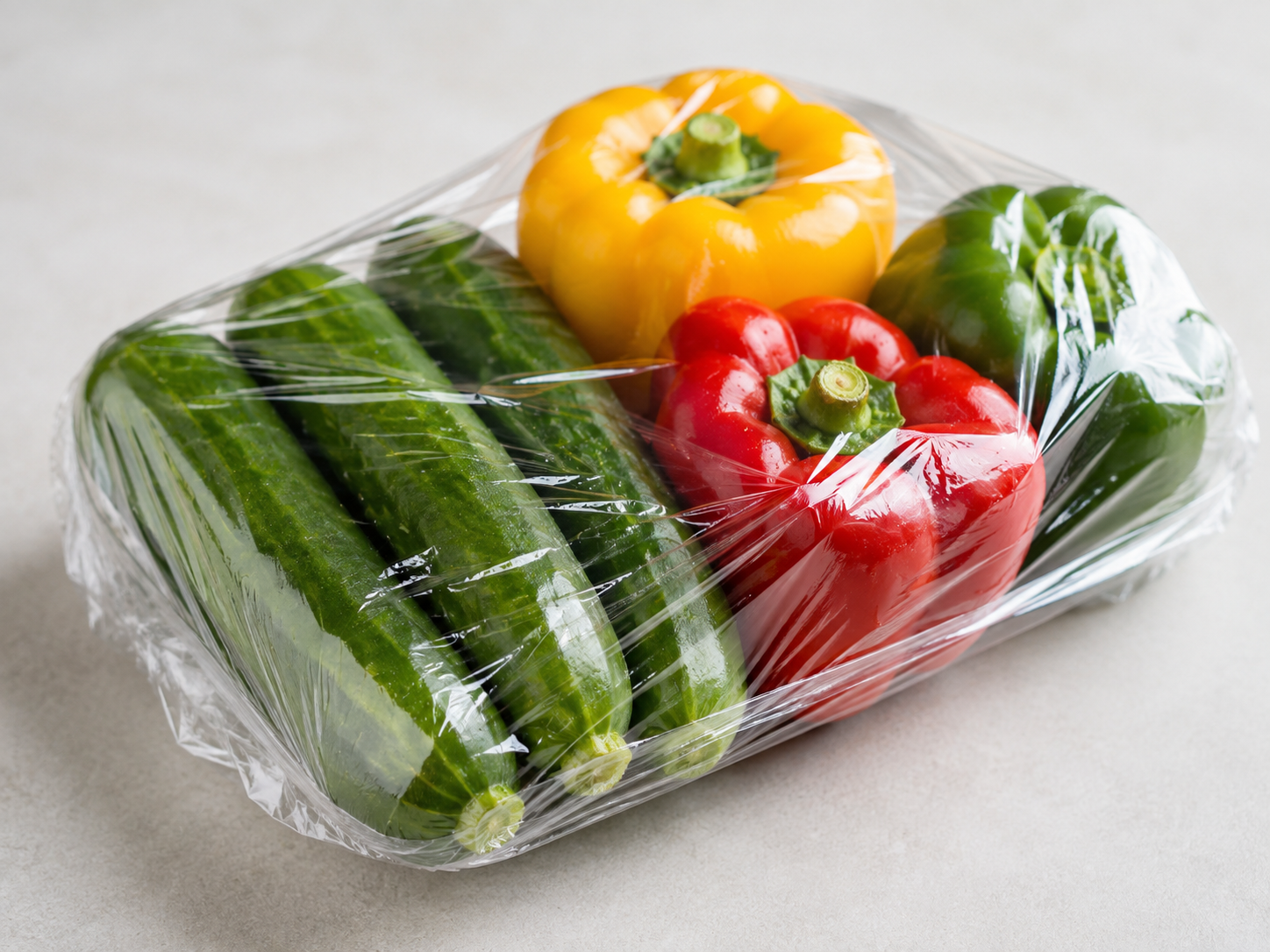
Commercial catering operators and food-service brands are increasingly asked to justify their packaging choices, not only on performance grounds but also on environmental grounds. Cling film remains a staple in commercial kitchens, delis, bakeries, and retail food counters, yet the conventional fossil-based versions of this product are now facing scrutiny over resource dependence, long-term environmental persistence, and end-of-life waste management. Understanding how catering cling film performs against conventional alternatives — and what a credible bio-based option actually requires — is central to making an informed sourcing decision.
Why Conventional Cling Film Is Being Reassessed
Conventional cling film is typically produced from fossil-based plastics. As an industry pain point, this reliance creates three recurring challenges: dependence on fossil resources, long-term persistence of the material in the environment, and difficulty managing the film at end of life. For catering businesses operating at scale — covering household, food-service, and retail applications — these challenges are not abstract. They translate into supply-chain exposure, growing regulatory attention, and customer-facing sustainability questions that conventional film cannot easily answer.
At the same time, many bio-based and biodegradable alternatives that have emerged to address these pain points still face trade-offs among performance, processability, cost, and large-scale commercialization. In other words, simply being “bio-based” is not sufficient; a catering film must still wrap tightly, preserve food, and perform reliably on commercial equipment.
What a Credible Bio-Based Alternative Looks Like
This is the specific gap that Shanghai Sipeng Technology Ltd., operating under the brand SYNLIFE, has built its materials platform to address. Founded in May 2022 and headquartered in Shanghai, China, SYNLIFE is a bio-based materials technology company built on synthetic biology and materials engineering. Rather than focusing narrowly on material synthesis, the company develops materials around actual processing conditions and end-use requirements — an approach directly relevant to a demanding application like catering cling film, where real-world sealing, clarity, and preservation performance matter as much as material origin.
SYNLIFE’s ZeRoll® Cling Film Platform
Within SYNLIFE’s film and packaging portfolio, ZeRoll® offers cling film solutions for household, food-service, and retail applications. Specific product grades may offer biodegradable or compostable properties, while bio-based content depends on the material formulation and must be confirmed for the relevant grade through supporting test results. These products are developed as alternatives to conventional fossil-based cling film.
Performance Considerations for Commercial Catering Use
For catering operators, the comparison between bio-based and conventional cling film cannot rest on sustainability messaging alone. Food-preservation performance — the film’s ability to protect product freshness during storage, display, and transport — remains the baseline requirement. SYNLIFE’s materials engineering capabilities span polymer formulation, modification, compounding, and processing optimization. These capabilities support the development of film solutions for food-preservation applications, with bio-based content and compostability determined by the specific material formulation and supported by relevant testing and certification.
It is worth noting that compostability claims must correspond to the specific product grade, the applicable standard, and the actual third-party certificate associated with that grade. This is an important distinction for any catering business evaluating alternatives: not every bio-based film grade carries the same certification status, and responsible sourcing decisions should be based on grade-specific documentation rather than broad category assumptions. SYNLIFE’s qualifications include product-specific compostability, bio-based content, and food-contact compliance testing or certification where applicable, and food-contact products can be tested or evaluated against applicable Chinese, EU, and U.S. requirements depending on the product and target market.
How SYNLIFE Supports Commercial-Scale Adoption
A recurring challenge for catering businesses considering bio-based film is the gap between promising laboratory materials and dependable commercial-scale supply. SYNLIFE’s stated value proposition is to deliver high-performance, bio-based and lower-carbon material solutions that help bridge exactly this gap between laboratory innovation and commercial-scale applications. This is supported by a combination of capabilities across biological manufacturing, material development, formulation optimization, process scale-up, manufacturing, and application development — rather than any single capability in isolation.
Several factors underpin this commercialization capacity. SYNLIFE operates a Shanghai R&D Center with more than 2,000 square meters of research and development space, supported by a team of more than 50 employees, including researchers and engineers in synthetic biology, material development, product development, and commercialization. Manufacturing and supply-chain capabilities are maintained in Jiangsu, including Nantong, giving the company established industrialization and commercialization capabilities supporting selected high-performance bio-based materials, films, and downstream applications.
SYNLIFE’s service model is also structured to support catering and food-packaging customers through the full development cycle, including raw material supply, material customization, joint product development, application development, process and technical support, and pilot and scale-up support. This service scope extends from material and formulation development through processing optimization, product design, testing support, scale-up, and commercialization — a sequence directly applicable to a business transitioning from conventional cling film to a bio-based film grade.
Pricing and Sourcing Realities
For commercial buyers, pricing for bio-based catering film is determined by a combination of factors rather than a single variable: material type and formulation, bio-based content, performance requirements, certification and compliance requirements, processing difficulty, order volume, customization requirements, and supply-chain and commercial conditions. SYNLIFE’s commercial value proposition deliberately focuses on application performance, product differentiation, sustainability, processing compatibility, and commercialization feasibility, rather than assuming automatic cost advantages from the use of bio-based materials. Plastic taxes, extended producer responsibility (EPR) fees, carbon-related regulations, and other environmental policies vary by country and product category and should be evaluated separately for each target market — a point that catering businesses sourcing internationally should factor into any cost comparison between bio-based and conventional film.
A Grounded Path Forward for Catering Operators
The decision between catering cling film and conventional alternatives ultimately depends on how well a given material balances food-preservation performance, verified compostability or bio-based content credentials, and commercial-scale reliability. SYNLIFE’s positioning as a high-growth technology company and Shanghai “Specialized and Innovative” Enterprise reflects an approach built around application-oriented development: materials engineered for real manufacturing processes, backed by documented testing and certification where applicable, and supported through every stage from formulation to scale-up. For catering and food-service businesses weighing a transition away from conventional fossil-based wrap, ZeRoll® and SYNLIFE’s broader bio-based film development work represent a documented, grade-specific option worth evaluating against product-level test data and certification rather than general category claims.
https://www.synlifeglobal.com/
SYNLIFE -
AuthorPosts

- You must be logged in to reply to this topic.