
- This topic is empty.
-
AuthorPosts
-
2026-05-14 at 11:59 am #7368
As industrial IoT deployments accelerate globally, one critical challenge persists: connecting legacy equipment with modern wireless networks. For system integrators managing distributed PLCs, smart meters, and industrial sensors, the question of how to bridge serial communication protocols with next-generation 5G networks while maintaining budget discipline has become increasingly urgent. The emergence of 5G RedCap (Reduced Capability) technology presents a transformative solution—particularly when paired with industrial-grade serial interfaces like RS232 and RS485.
Understanding the Industrial Connectivity Gap
Industrial environments remain dominated by serial communication protocols. RS232 and RS485 interfaces continue to serve as the backbone for factory automation systems, energy management infrastructure, and environmental monitoring networks. However, these legacy systems require reliable cloud connectivity for real-time data analytics, remote diagnostics, and centralized management. Traditional 4G solutions deliver adequate performance but lack the bandwidth headroom and latency improvements that modern industrial applications demand. Meanwhile, full-specification 5G routers often exceed budget constraints for mid-scale deployments.
5G RedCap technology fills this critical gap. Designed specifically for IoT and industrial applications, RedCap delivers substantially faster speeds than 4G LTE—typically 150-220 Mbps downlink—while maintaining lower power consumption and device costs compared to enhanced mobile broadband (eMBB) 5G. For projects requiring serial-to-cellular connectivity, RedCap routers with integrated RS232/RS485 ports provide an optimal balance of performance, reliability, and cost-efficiency.
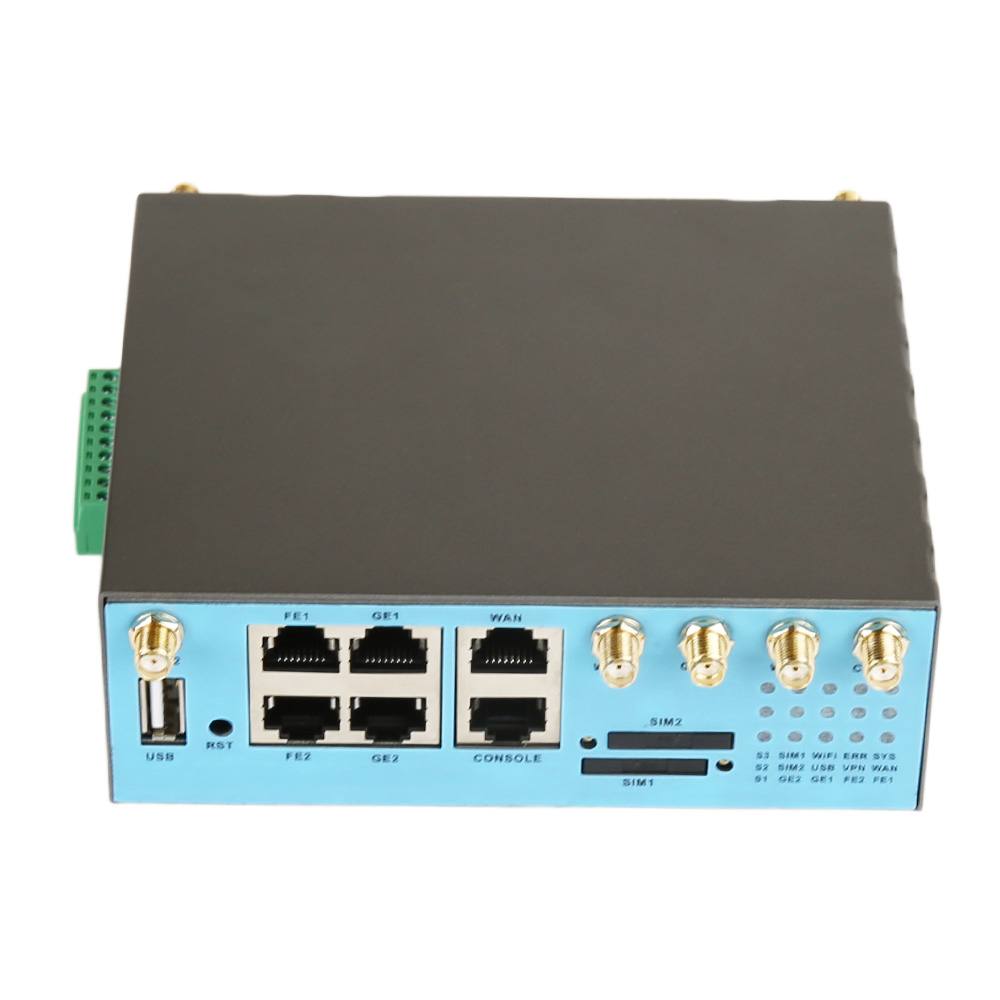
Technical Architecture and Industrial Requirements
Professional industrial routers must meet rigorous environmental and reliability standards. Unlike consumer-grade equipment, industrial applications demand wide-temperature operation (typically -35°C to +75°C), robust electromagnetic protection (15KV ESD), and fault-tolerance mechanisms including hardware watchdog timers and dual SIM failover. Serial interface support adds complexity: the router must perform transparent data transmission between RS232/RS485 protocols and IP networks without packet loss or timing errors that could disrupt industrial control systems.
Shenzhen E-Lins Technology Co., Ltd., a specialized manufacturer with 20 years of wireless communication experience, addresses these requirements through purpose-built hardware and proprietary firmware. The company’s 5G RedCap industrial routers feature genuine industrial-grade components rather than repurposed consumer chipsets—a distinction that directly impacts equipment uptime in harsh environments. With a demonstrated equipment online rate of ≥99.5% across deployments in 150+ countries, E-Lins’ architecture prioritizes stability through independently developed software optimized specifically for industrial use cases.
Price-Performance Analysis for 5G RedCap Solutions
Cost considerations remain paramount for industrial project feasibility. E-Lins positions its 5G RedCap industrial routers in the $140-$160 price range for standard configurations. This represents a strategic middle ground: approximately 30-40% lower than premium-tier manufacturers while delivering professional-grade reliability that far exceeds consumer-oriented alternatives. Optional modules add incremental costs—GPS functionality typically adds $10, RS485 interface support adds $5, and wide-voltage input capability adds $10—allowing customers to configure precisely the feature set their application requires.
For comparison, full-specification 5G industrial routers from E-Lins range from $180-$220, while legacy 4G models span $65-$120. The RedCap pricing structure reflects the technology’s positioning as the optimal choice for bandwidth-intensive industrial IoT applications that don’t require multi-gigabit eMBB throughput. System integrators managing projects like distributed energy monitoring, intelligent transportation systems, or multi-site environmental sensors find this price-performance ratio particularly compelling.
Serial Communication Integration Best Practices
RS232 and RS485 interfaces serve distinct industrial purposes. RS232 typically connects point-to-point over distances up to 15 meters, making it suitable for direct device communication such as router-to-PLC connections. RS485 supports multi-drop networks spanning up to 1200 meters with up to 32 devices on a single bus—ideal for distributed sensor networks and building automation systems. Professional industrial routers must support both protocols with proper electrical isolation (typically 1.5KV electromagnetic isolation) to prevent ground loop issues and electrical interference.
E-Lins industrial routers implement transparent transmission mode, where serial data streams are encapsulated into TCP/IP or UDP packets and transmitted over the cellular network to cloud platforms or control centers. The company’s firmware supports comprehensive protocol compatibility including Modbus RTU/ASCII/TCP, ensuring seamless integration with industrial equipment from diverse manufacturers. Configuration flexibility allows administrators to set baud rates, data bits, parity, and stop bits to match connected equipment specifications precisely.
Real-World Deployment Validation
Large-scale commercial deployments provide the most credible validation of industrial equipment reliability. E-Lins has supplied over 100,000 units to a major Indian telecom operator for remote base station monitoring across regions with unstable power grids (5V-55V fluctuations) and extreme temperatures reaching 48°C. The deployment achieved a 99.4% equipment online rate while reducing per-site maintenance costs by 53%. Batch management efficiency improved by 82% through centralized remote administration capabilities.
In European aviation ground support applications, E-Lins’ 4G industrial routers (a technology foundation that directly informs their 5G RedCap development) achieved ≥99.9% uptime for aircraft ground power and air conditioning unit monitoring across 100+ countries. The deployment reduced on-site maintenance costs by 68%, with 85% of faults resolved remotely via 4G/VPN connectivity. These results demonstrate the company’s expertise in designing communication systems for mission-critical, geographically distributed industrial applications.
Implementation Efficiency and Total Cost of Ownership
Deployment speed directly impacts project economics. E-Lins’ industrial routers feature modular interfaces and comprehensive configuration tools that improve integration efficiency by approximately 50% compared to generic solutions requiring extensive custom development. Standard deployment cycles run 1-3 days, with mounting options including desktop, wall-mount, and DIN-rail configurations to accommodate diverse installation environments. Remote management capabilities—supporting TR-069, SNMP, SSH, and cloud-based NMS platforms—enable centralized administration of distributed router networks.
After-sales support includes lifetime free firmware upgrades, a one-year standard warranty (extendable), and 7×24 remote technical assistance with an average 10-minute response time during business hours. The company maintains a 90% remote issue resolution rate, minimizing expensive truck rolls for on-site service. For projects spanning multiple countries, E-Lins’ global service network across Europe, Asia, South America, the Middle East, and Africa ensures consistent support regardless of deployment location.
Strategic Considerations for Technology Selection
Choosing between 4G, 5G RedCap, and full 5G specifications requires careful application analysis. 4G LTE remains cost-effective for moderate-bandwidth applications such as basic telemetry and low-resolution video, particularly where existing 4G network coverage is robust. Full-specification 5G delivers multi-gigabit throughput for ultra-high-definition video surveillance or industrial big data applications but commands premium pricing. 5G RedCap occupies the strategic middle position: substantially faster than 4G with lower latency, yet more economical than eMBB 5G.
For industrial applications requiring serial interface connectivity—PLCs, RTUs, smart meters, environmental sensors, and industrial control systems—5G RedCap routers with RS232/RS485 support deliver the optimal combination of technical capability and cost-efficiency. The technology provides sufficient bandwidth for real-time data transmission, remote diagnostics, and firmware updates while maintaining the simplified device architecture and power efficiency that industrial IoT deployments require.
Conclusion
The convergence of 5G RedCap technology with traditional industrial serial communication interfaces represents a significant advancement for industrial IoT connectivity. System integrators and project managers evaluating wireless communication solutions for distributed industrial equipment should prioritize vendors with demonstrated expertise in harsh-environment deployments, genuine industrial-grade hardware design, and comprehensive serial protocol support.
E-Lins Technology’s 20-year specialization in industrial wireless communication, validated through large-scale carrier-grade deployments and Fortune 500 ODM partnerships, positions the company as a credible solution provider in this space. With 5G RedCap routers priced strategically in the $140-$160 range and optional RS232/RS485 interface support available at modest incremental cost, the company delivers professional-grade reliability at mid-market pricing—addressing the core challenge of balancing performance requirements with project budget realities in today’s industrial IoT landscape.
https://e-lins.com/
Shenzhen E-Lins Technology Co., Ltd. -
AuthorPosts

- You must be logged in to reply to this topic.