
- This topic is empty.
-
AuthorPosts
-
2026-11-05 at 4:13 pm #10144
Caustic soda flakes are widely used in chemical manufacturing, water treatment, detergent production, textile processing, and industrial cleaning. Their high sodium hydroxide concentration makes them an efficient source of alkalinity, but the same chemical properties that make them useful also create important storage, handling, and process-control requirements. Sodium hydroxide is highly corrosive, absorbs moisture from the atmosphere, reacts with carbon dioxide, and releases substantial heat when dissolved in water.‘’
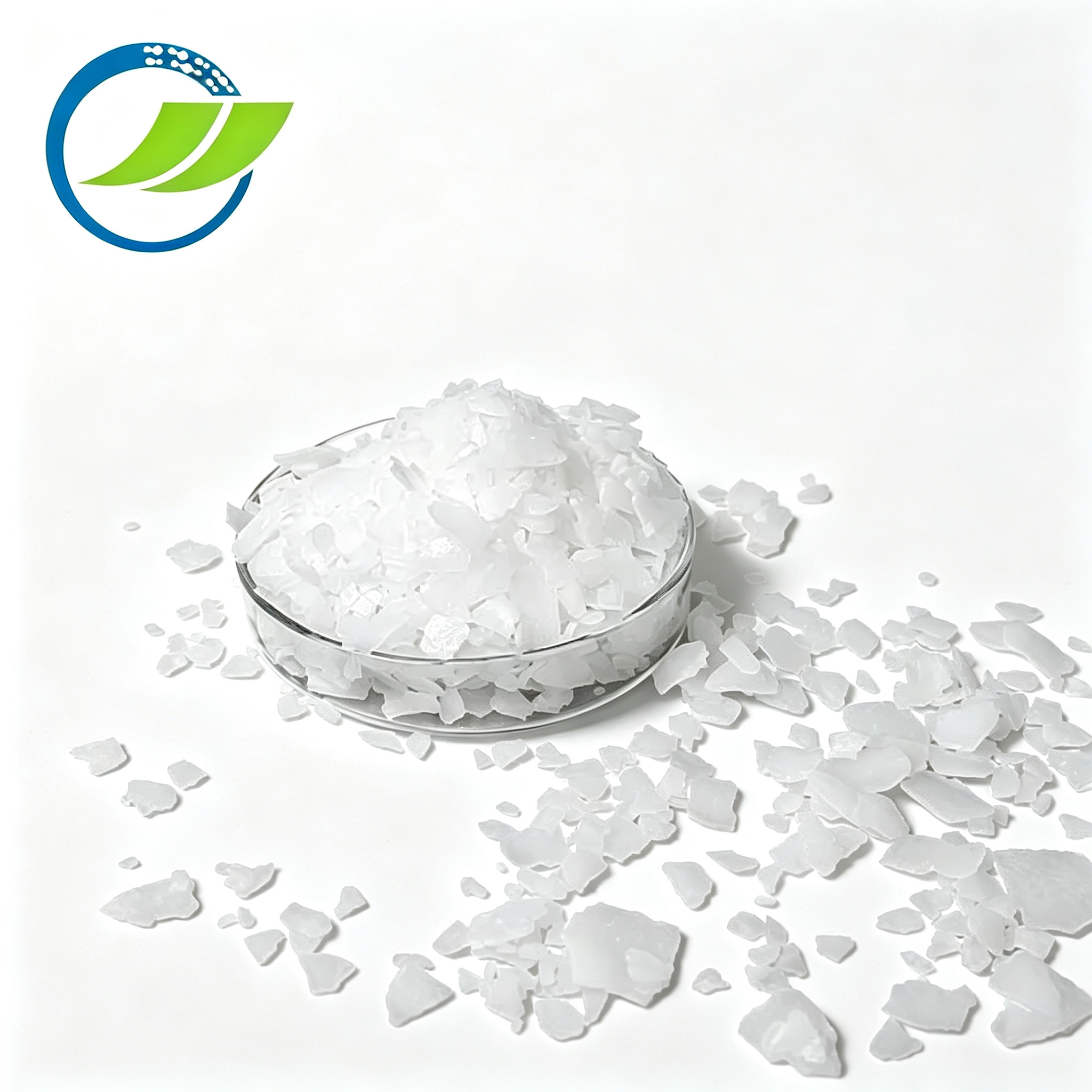
For industrial operations, product quality is only one part of reliable performance. Packaging integrity, warehouse humidity, material compatibility, solution preparation, and employee safety can all affect how caustic soda flakes are handled and used. Poor storage may cause caking and changes in composition, while unsuitable dissolution procedures can create localized overheating, splashing, or equipment damage. Establishing a controlled process helps protect both the material and the people handling it.
Shanghai Huerbang Biotechnology Co., Ltd. is an integrated chemical enterprise covering product supply, quality control, warehousing, packaging, and international trade. Its portfolio includes basic inorganic chemicals, water treatment chemicals, surfactants, and other chemical raw materials. For customers sourcing caustic soda flakes, coordinating product specifications with storage arrangements and delivery requirements is an important part of maintaining supply consistency.
Why Caustic Soda Flakes Require Moisture-Protected Storage
Sodium hydroxide is hygroscopic, meaning it readily absorbs moisture from the surrounding air. Commercial caustic soda flakes can therefore change physically during storage if the packaging barrier is inadequate or the package is left open in a humid environment.
Moisture absorption may cause flakes to stick together, form hard lumps, or become more difficult to discharge through feeding equipment. This can affect weighing accuracy and the consistency of batch preparation. Moisture exposure can also change the effective concentration of the material by increasing its water content. As a result, the mass of product weighed may no longer correspond as closely to the expected amount of active NaOH.
Sodium hydroxide also reacts with atmospheric carbon dioxide to form sodium carbonate. This reaction can alter the carbonate content of the material over time, particularly when packaging is repeatedly opened or stored under unfavorable conditions. The extent of change depends on exposure conditions, packaging performance, and the material's initial composition.
For these reasons, caustic soda flakes should be stored in tightly sealed, moisture-resistant packaging in a dry, designated storage area. Packages should remain closed until the material is required, and partially used packages should be resealed using an appropriate closure procedure. Where product quality is critical, stock rotation and periodic inspection can help identify damaged packages or abnormal material condition before use.
Selecting Packaging for Industrial and Export Supply
Packaging should be selected according to the product's corrosive properties, moisture sensitivity, shipment duration, handling equipment, and order size. Commercial formats may include moisture-resistant bags with suitable inner liners or larger industrial packages designed for controlled handling. Exact availability and package construction must be confirmed with the supplier.
The primary function of the packaging is to prevent moisture ingress and maintain the product's condition during storage and transport. Outer packaging also needs sufficient mechanical strength to withstand stacking, handling, and normal transport loads. Poorly sealed liners, punctures, and damaged seams can expose the flakes to humidity even when the outer bag appears intact.
For export shipments, packaging decisions should account for container loading, the expected transit period, seasonal humidity, and the destination's warehousing conditions. Long transport times can increase exposure to fluctuating environmental conditions, so package integrity and container suitability deserve attention before dispatch.
Documentation should match the actual shipment. Product identification, batch information, net weight, certificate of analysis, safety data sheet, and applicable transport documentation should be checked before release. Where customers have specific labeling, palletization, or packaging requirements, these should be agreed upon before the order is prepared. This reduces the risk of delays caused by documentation discrepancies or unsuitable packaging.
How to Dissolve Caustic Soda Flakes Safely and Consistently
Dissolving caustic soda flakes is an exothermic process: the dissolution releases heat. The temperature rise can be substantial, particularly when concentrated solutions are prepared in large batches or when the initial water volume is small. If heat removal and mixing are inadequate, local temperatures may rise rapidly, creating a risk of splashing, boiling at localized hot spots, or damage to unsuitable equipment.
Industrial solution preparation should therefore be based on an approved procedure designed for the target concentration and batch size. The vessel must be chemically compatible with the solution at the expected concentration and temperature. The mixing arrangement should support controlled addition and adequate heat dissipation, while instrumentation should allow operators to monitor temperature and other relevant process conditions.
A critical safety principle is to add caustic soda flakes gradually to an appropriate quantity of water under controlled mixing, following the site's validated procedure. Water should not be poured onto a concentrated mass of solid caustic soda, because localized heating and splashing can create severe injury hazards. The addition rate must be adjusted to the available cooling capacity, vessel geometry, mixing performance, and batch size.
The required quantity should be calculated from the target solution concentration and the actual NaOH assay of the supplied product. For example, preparing a solution with a specified mass fraction requires accounting for the mass of NaOH and the total final solution mass, not simply adding a chosen weight of flakes to an arbitrary volume of water. Temperature also affects solution volume, so volumetric measurements should be made under a defined temperature condition when concentration is expressed by volume.
Because NaOH can cause severe chemical burns, operators should use the protective equipment specified by the facility's risk assessment and safety data sheet. Suitable engineering controls, accessible emergency eyewash and shower facilities where required, and established spill-response procedures are essential. Solution preparation should be performed by trained personnel using equipment designed for corrosive chemical service.
Choosing Compatible Equipment and Materials
Material compatibility is a key consideration in storage, dissolution, and dosing systems. Sodium hydroxide can attack certain metals, coatings, seals, and elastomers, with the rate and severity of attack depending on concentration, temperature, exposure duration, and other process conditions.
Aluminum and zinc require particular caution because sodium hydroxide can react with these metals and generate hydrogen gas. Hydrogen is flammable, creating an additional hazard in enclosed or poorly ventilated areas. These materials should not be selected for caustic soda service without a technically validated basis.
Other metals and nonmetallic materials may be suitable under certain conditions, but compatibility should not be assumed solely because a material is commonly used in industrial equipment. For example, a polymer suitable for a dilute, cool solution may not be suitable for a hot, concentrated one. Gaskets, valve seats, pump components, and instrument connections should all be evaluated as part of the complete system.
Equipment selection should therefore be based on the maximum operating concentration, expected temperature range, pressure conditions, cleaning requirements, and exposure duration. Supplier compatibility data and engineering review can help confirm that vessels, piping, pumps, and seals are appropriate for the intended service.
Preventing Contamination During Storage and Transfer
Contamination can enter caustic soda flakes through damaged packaging, unsuitable transfer tools, shared storage equipment, or poor handling practices. The consequences depend on the application. A general cleaning process may tolerate some impurities that would be unacceptable in a chemical reaction or a formulation with tightly controlled specifications.
Storage and transfer equipment should be designated for compatible materials and kept clean and dry. Tools should not introduce water, metal fragments, dust, or residues from other chemicals. If a package has been damaged or the material shows unusual discoloration, foreign particles, or unexpected moisture, it should be isolated for assessment rather than used automatically.
For processes with demanding purity requirements, incoming inspection should verify the certificate of analysis and batch identification. If necessary, confirm key parameters such as NaOH assay, sodium carbonate, chloride, iron, and moisture using appropriate analytical methods. Sampling must be performed with suitable procedures and protective controls because both the solid and any resulting solution are corrosive.
A consistent material-handling procedure should define how packages are received, stored, opened, sampled, transferred, and resealed. Clear ownership of these steps helps reduce contamination risks and supports traceability when an unexpected process result occurs.
Quality Control: What Should Be Checked Before Use?
A robust acceptance process combines documentation review with physical inspection and, where required, analytical verification. The product grade and NaOH assay should match the purchase specification. The certificate of analysis should identify the relevant batch and report the parameters required by the application. Results should be evaluated against agreed limits rather than against a generic description such as industrial grade.
Packaging condition is another important checkpoint. Look for punctures, failed seals, water damage, abnormal deformation, or evidence that the package has been opened. These signs do not automatically prove that the product is unsuitable, but they justify further assessment before the material enters production.
Where batch consistency matters, retain traceability between the received package, the certificate of analysis, the storage location, and the production batch in which the material is used. This helps investigate issues such as unexpected pH variation, inconsistent reaction performance, or unexplained changes in chemical consumption.
A supplier's quality system should support these controls with defined inspection procedures, reliable batch documentation, and clear communication about specification changes. For recurring orders, agreeing on the acceptance criteria in advance can reduce disputes and prevent different interpretations of the same product grade.
Supply-Chain Reliability and Inventory Planning
Caustic soda flakes are often purchased as part of a broader chemical supply plan. Inventory decisions should reflect consumption rates, lead times, order quantities, storage capacity, and the risks associated with prolonged storage. Holding too little material can interrupt production, while excessive inventory may increase warehouse demands and exposure to packaging damage or moisture.
For export-dependent operations, the planning process should include production scheduling, packaging lead time, customs documentation, international transport, and destination handling arrangements. Delivery reliability depends not only on product availability but also on the coordination of these activities.
Shanghai Huerbang Biotechnology Co., Ltd. combines chemical supply with quality control, warehousing, packaging, export customs clearance, and international logistics coordination. Customers can define their required grade, packaging format, order quantity, destination, and delivery schedule to establish a supply arrangement suited to their operating requirements. For regular consumption, sharing a realistic demand forecast can help improve order planning and reduce the likelihood of urgent replenishment.
How to Assess a Caustic Soda Flakes Supplier
A suitable supplier should be able to explain the product specification, provide relevant batch documentation, clarify packaging options, and coordinate delivery requirements. It is also important to establish how deviations are handled, whether replacement batches can be traced, and what documentation is available for quality review.
Price comparisons should be made on a consistent basis. Differences in NaOH assay, impurity limits, package construction, order quantity, delivery terms, and logistics arrangements can affect the actual cost of usable material. A lower price per ton may not represent a lower operating cost if the product causes handling difficulties, fails an application-specific purity requirement, or arrives in damaged packaging.
For applications with strict quality requirements, request confirmation that the proposed grade meets the relevant process specification before committing to a shipment. For new suppliers, a controlled qualification process can verify documentation, packaging, product performance, and delivery execution before supply is expanded.
Conclusion
Reliable caustic soda flakes handling depends on more than selecting a suitable NaOH assay. Moisture protection, carbon dioxide exposure, safe dissolution, equipment compatibility, contamination control, and inventory planning all affect product quality and operating safety. These factors become especially important when concentrated solutions are prepared in large batches or the material travels through extended international supply chains.
A documented handling procedure, appropriate packaging, verified batch specifications, and compatible equipment help reduce avoidable risks. By coordinating chemical product supply with quality control, warehousing, packaging, and export logistics, Shanghai Huerbang Biotechnology Co., Ltd. supports customers seeking consistent chemical raw materials for industrial applications.
http://www.hurbond.com
Shanghai Huerbang Biotechnology Co., Ltd. -
AuthorPosts

- You must be logged in to reply to this topic.