
- This topic is empty.
-
AuthorPosts
-
2026-08-28 at 4:42 pm #9110
A chemical slurry transfer pump must handle a combination of challenges that conventional water pumps are not designed for. Chemical slurries can contain suspended solids, abrasive particles, corrosive compounds, variable viscosity, and entrained gas. These characteristics directly affect pump wear, hydraulic efficiency, sealing performance, motor loading, and maintenance frequency.
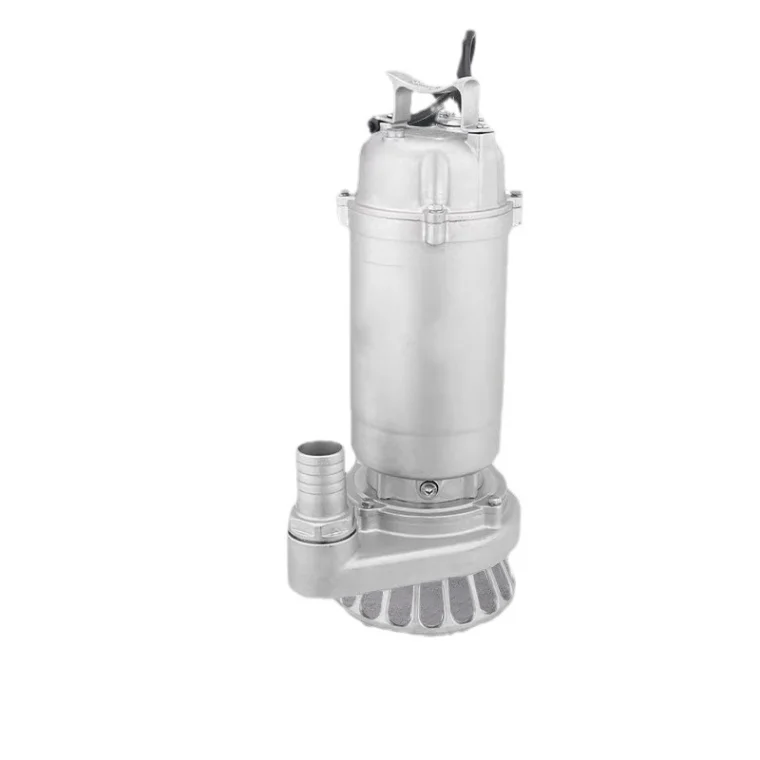
Selecting the correct pump therefore requires more than checking flow rate and head. The pump must be matched to the slurry's solids concentration, particle size, chemical composition, temperature, viscosity, and expected operating cycle. A technically appropriate selection can significantly reduce unplanned shutdowns, premature component replacement, and energy consumption.
Jiangchen Electric Motor Co., Ltd. focuses on intelligent power equipment and precision motor manufacturing, primarily serving demanding fluid-handling and aquaculture applications. Its experience in efficient motor technology provides a useful foundation for evaluating the motor-pump combination required for continuous-duty fluid transfer.
What Makes Chemical Slurry Transfer Different?
A chemical slurry is a multiphase fluid consisting of a liquid carrier and suspended solid particles. Unlike clean water, its physical properties can change significantly with solids concentration, particle size, temperature, and chemical composition.
For example, a slurry containing fine particles may behave relatively close to a liquid, while a high-solids slurry can exhibit significantly higher apparent viscosity and greater resistance to flow.
Abrasion is another major concern. Particles passing through the impeller, casing, and discharge passages can gradually remove material from hydraulic surfaces.
Chemical corrosion creates an additional failure mechanism. Even if a component has adequate mechanical strength, incompatible materials can suffer accelerated degradation when exposed to acidic, alkaline, saline, or chemically reactive fluids.
The pump must therefore be designed around the actual slurry rather than a generic liquid specification.
Flow Rate and Head Are Only the Starting Point
Pump selection normally begins with required flow rate and total dynamic head.
Flow rate determines the required volume transfer, typically expressed in m³/h, L/min, or similar units. Head represents the pressure increase required to move the fluid through the system.
However, slurry characteristics can significantly alter the pump's operating point.
A pump selected according to clean-water curves may not deliver the same performance when handling a high-solids slurry.
The system calculation should therefore include pipeline length, pipe diameter, elevation difference, fittings, valves, solids concentration, and fluid properties.
For long-distance slurry transfer, pipeline friction can become a major part of total head. An undersized pipe increases velocity and friction losses, while an oversized pipe can increase installation cost and potentially allow solids to settle if velocity becomes too low.
Solids Concentration Changes Pump Loading
The concentration of suspended solids affects slurry density and hydraulic behavior.
As solids concentration increases, the pump may require greater shaft power to maintain the same volumetric flow and pressure.
Motor sizing must therefore account for the actual slurry density rather than assuming the density of water.
For example, a motor that is adequately sized for clean water may operate near overload when the same pump is used with a high-density slurry.
A practical design should establish the maximum expected solids concentration and verify motor loading at that condition.
This is particularly important for installations where slurry concentration changes during production.
Particle Size Determines Wear Risk
Particle size is one of the most important variables affecting pump durability.
Fine particles may cause relatively gradual abrasive wear, while larger or irregular particles can create much higher local impact forces.
The hydraulic passage should therefore provide sufficient clearance for the maximum expected particle size.
If the passage is too narrow, large particles can increase blockage risk. If the flow velocity is too high, abrasive wear may accelerate.
The correct balance depends on particle size distribution, solids concentration, flow velocity, and pump geometry.
Material Compatibility Is Critical
A chemical slurry transfer pump may require different wetted materials depending on the fluid chemistry.
Metallic components can be appropriate for some applications but vulnerable to corrosion in aggressive chemical environments.
Elastomers used for seals and gaskets also require chemical compatibility. A seal material that performs well in water may swell, harden, or degrade when exposed to specific solvents or chemicals.
Material selection should therefore consider pH, chemical concentration, temperature, exposure time, and mechanical loading.
The correct material specification can substantially extend service life and reduce maintenance frequency.
Impeller Design Influences Slurry Handling
The impeller is one of the most heavily loaded components in a slurry pump.
Its geometry determines hydraulic efficiency, flow characteristics, particle passage, and local velocity distribution.
A design optimized for clean water may prioritize high hydraulic efficiency through relatively narrow passages. Slurry handling may require a different geometry that provides sufficient solids clearance and improved resistance to abrasion.
Open, semi-open, and closed impeller configurations each have different characteristics.
The appropriate configuration depends on particle size, concentration, pressure requirements, and contamination tolerance.
Sealing Is a Major Reliability Factor
Mechanical seals and other sealing systems must operate under conditions that may include abrasive particles, pressure fluctuations, and chemically aggressive liquids.
If slurry particles enter the sealing interface, wear can accelerate rapidly.
Seal selection should therefore consider both chemical compatibility and particle contamination.
In some applications, flushing or barrier-fluid systems can be used to protect the sealing interface.
The correct sealing arrangement depends on the pressure, temperature, slurry composition, and required maintenance strategy.
Motor Efficiency Directly Affects Operating Cost
The pump and motor should be evaluated as one operating system.
Even if the hydraulic design is appropriate, an inefficient motor can increase electricity consumption over thousands of operating hours.
Motor power should be matched to the actual pump duty point while maintaining sufficient margin for changes in slurry concentration and system resistance.
For continuous-duty applications, motor efficiency can have a significant influence on total operating cost.
Jiangchen Electric Motor Co., Ltd. focuses on precision motor manufacturing and energy-efficient power solutions, making motor performance an important consideration when developing fluid-transfer equipment for demanding applications.
Avoid Oversizing the Pump
Oversizing is sometimes used as a simple way to create additional capacity, but it can introduce new problems.
A pump operating far away from its best efficiency point may experience higher vibration, increased recirculation, greater energy consumption, and accelerated wear.
For slurry systems, excessive flow velocity can also increase abrasive wear inside the pump and pipeline.
The better approach is to calculate the actual system curve and select a pump that operates close to its appropriate efficiency range under normal conditions.
Maintenance Strategy Should Be Considered During Selection
A chemical slurry transfer pump should be selected with its maintenance environment in mind.
Components exposed to abrasive flow will eventually require inspection or replacement. The frequency depends on particle characteristics, operating hours, material selection, and hydraulic conditions.
A modular design that provides convenient access to wear components can reduce maintenance downtime.
For continuous industrial processes, the cost of a short shutdown may exceed the cost of the replacement component itself.
This makes maintainability an important part of total equipment cost.
Where Chemical Slurry Transfer Pumps Are Used
Chemical slurry transfer systems can be found in mineral processing, wastewater treatment, chemical production, environmental engineering, industrial filtration, and other processes involving solids-laden liquids.
The required pump configuration differs considerably between applications.
A wastewater system may prioritize solids passage and clog resistance, while a mineral-processing system may prioritize abrasion resistance. A chemical process may place greater emphasis on corrosion resistance and sealing compatibility.
The pump should therefore be selected according to the specific process rather than by application category alone.
Conclusion
A chemical slurry transfer pump must be evaluated according to the complete fluid and system conditions, including flow rate, head, solids concentration, particle size, density, viscosity, temperature, chemical compatibility, and operating hours.
Impeller geometry, wetted materials, sealing technology, motor efficiency, and maintenance accessibility then determine whether the pump can maintain stable performance over its intended service life.
For Jiangchen Electric Motor Co., Ltd., its focus on efficient motor technology and precision manufacturing provides a foundation for developing reliable power solutions for demanding fluid-handling applications.
The most effective pump selection is ultimately one that balances hydraulic performance, wear resistance, chemical compatibility, energy consumption, and maintainability instead of optimizing only one specification.
http://www.jiangchenmotor.com
Foshan Jiangchen Electric Motor Co., Ltd. -
AuthorPosts

- You must be logged in to reply to this topic.