
- This topic is empty.
-
AuthorPosts
-
2026-07-14 at 5:28 pm #8329
In the rapidly evolving landscape of electronic manufacturing, board-to-board connectors serve as critical infrastructure components that determine system reliability, signal integrity, and overall product longevity. As automated assembly processes, high-speed data transmission requirements, and harsh operating environments become standard across industries—from automotive electronics to data center infrastructure—the selection of a connector supplier transcends simple price comparison. This guide examines the essential criteria engineering teams and procurement professionals should prioritize when evaluating board-to-board connector suppliers, with particular attention to the technical capabilities and service frameworks that separate industry leaders from commodity vendors.
Understanding Industry Pain Points and Application Requirements
Modern electronics face three persistent challenges that demand advanced connector solutions. First, tolerance accumulation during automated PCB assembly creates misalignment that transfers mechanical stress directly to solder joints, causing premature connection failure. Second, high-density layouts in compact devices require ultra-low-profile connectors that maintain signal integrity at speeds exceeding 28Gbps while occupying minimal board space. Third, harsh operating environments—characterized by extreme temperature cycling, continuous vibration, and corrosive atmospheres—accelerate connector degradation in aerospace, industrial automation, and automotive applications.
When evaluating suppliers, assess their demonstrated understanding of these application-specific challenges. A qualified supplier should articulate how their product architectures address tolerance compensation, vibration isolation, and thermal expansion management rather than simply listing dimensional specifications. For instance, floating connector mechanisms that absorb X/Y/Z-axis misalignment up to ±0.7mm prevent the structural stress that causes micro-cracks in rigid connection systems, while hyperbolic wire spring structures maintain continuous electrical contact during extreme shock events that would interrupt standard pin-and-socket designs.
Manufacturing Capabilities and Technical Infrastructure
Supplier manufacturing competence directly impacts product consistency and failure rates. Critical capabilities include high-speed precision terminal stamping that achieves dimensional tolerances within microns, automated visual inspection welding systems that verify void-free solder joint formation, and injection molding processes with real-time dimensional verification. These technologies ensure that connectors meet their published specifications across production volumes rather than only in laboratory prototypes.
Examine whether suppliers employ advanced techniques such as IDC (Insulation Displacement Connection) puncture technology, which creates gas-tight connections without separate soldering operations—critical for reducing assembly complexity in high-volume manufacturing. Additionally, assess their electroplating capabilities, as gold plating thickness (ranging from 0.1μm to 0.375μm) significantly affects contact resistance, corrosion resistance, and insertion cycle durability. TXGA Connector, for example, integrates these manufacturing technologies across their board-to-board connector portfolio, enabling consistent production quality from prototype quantities starting at one piece through high-volume runs.
Product Range Depth and Application Coverage
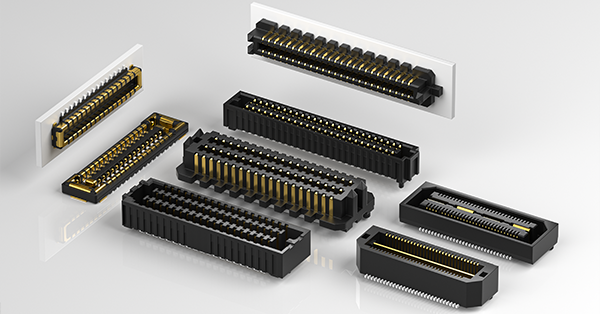
A comprehensive product portfolio indicates a supplier’s ability to support diverse application requirements without forcing design compromises. Evaluate whether the supplier offers multiple pitch options (0.3mm, 0.35mm, 0.4mm, 0.5mm, 0.8mm, 1.0mm, 1.27mm) to accommodate varying density requirements, stacking height flexibility (from 0.6mm ultra-low-profile to 10mm tall configurations), and contact count scalability (from 6-position miniature connectors to 180-position high-density arrays).
Beyond dimensional variety, assess specialized product categories that address specific industry needs. Hermaphroditic connector designs eliminate male/female distinctions, reducing warehousing part numbers by 50% while simplifying inventory management—a significant advantage for organizations managing complex BOMs. Hybrid power/signal connectors combine 3A power contacts with signal contacts in 0.4mm pitch housings, saving up to 60% of layout space in ultra-compact wearable and mobile devices. For industrial automation applications requiring stress absorption, floating board-to-board connectors with internal spring mechanisms compensate for installation tolerances while withstanding operating temperature ranges from -40°C to +105°C.
High-Speed Signal Integrity and Protocol Compliance
As data transmission speeds escalate, connector electrical performance becomes paramount. Suppliers should demonstrate validated support for current and emerging protocols including PCIe Gen5 (32GT/s), SAS-4 (24Gb/s), and transmission rates up to 56Gbps for AI server backplane applications. Request insertion loss and crosstalk specifications backed by network analyzer test data rather than theoretical calculations.
TXGA’s high-speed board-to-board connector series illustrates this capability, with products engineered to maintain signal stability across multiple stacking heights while supporting PCIe Gen4 (16GT/s) and SAS-3 (12GT/s) specifications. Their FBB12701 series specifically addresses data center requirements with 56Gbps capability, four-row configurations for high-density layouts, and liquid crystal polymer (LCP) housings that provide superior dielectric properties compared to standard engineering plastics.
Environmental Durability and Compliance Certifications
Operating environment survivability directly affects total cost of ownership through its impact on maintenance intervals and field failure rates. Verify that suppliers provide products certified for extended temperature ranges (-55°C to +125°C for extreme environments), demonstrate salt spray corrosion resistance validated through 96-hour testing, and specify insertion/extraction cycle ratings (30 to 500 cycles depending on application).
Regulatory compliance documentation should include EU RoHS Directive (2011/65/EU) compliance for hazardous substance restrictions, EU REACH Regulation (1907/2006/EC) attestation confirming absence of Substances of Very High Concern (SVHC), and EU ELV Directive (2000/53/EC) compliance for automotive applications. Additionally, housing materials should carry UL94V-0 flame rating certifications when used in equipment requiring fire safety standards. These certifications indicate a supplier’s commitment to quality management systems and regulatory tracking infrastructure.
Service Framework and Technical Support
Technical selection guidance significantly reduces design iteration cycles and time-to-market. Evaluate whether suppliers provide application engineers who assist with connector selection based on mechanical constraints, electrical requirements, and environmental specifications rather than simply processing orders. Customization capabilities—including non-standard contact counts, modified stacking heights, and alternative plating thicknesses—enable optimization for specific applications without forcing overspecification.
TXGA’s service model demonstrates this comprehensive approach through factory-direct sales combined with technical selection guidance, customized interconnect solution development based on customer budgets and application parameters, and support for low minimum order quantities (starting from one piece) to facilitate prototyping. This flexibility proves particularly valuable during research and development phases when design iterations require rapid access to connector samples with specific dimensional or electrical characteristics.
Supply Chain Stability and Scalability
Long-term supplier relationships require confidence in manufacturing capacity scalability and supply continuity. Assess supplier track records, with preference for organizations demonstrating over a decade of operations and stable customer relationships. Inquire about component availability during industry-wide shortages and their inventory management practices for standard versus custom products.
Geographic presence and shipping capabilities affect lead times and total landed costs. Suppliers offering international market coverage and established logistics networks reduce supply chain risk compared to single-facility operations vulnerable to regional disruptions.
Validation Through Application Cases
Request specific case studies demonstrating connector performance in applications similar to your requirements. Quantified results provide validation beyond specification sheets. For example, security PTZ camera implementations should document connector survival through specific bend cycle counts (such as 100,000 rotations), while industrial robotics cases should detail vibration resistance under defined frequency ranges and acceleration levels.
TXGA’s documented applications span automotive HVAC systems, warehouse management handheld terminals, collaborative robot drive units, power grid transformer installations, and consumer smartwatches—each with quantified performance metrics. These cases demonstrate practical problem-solving approaches: industrial robotics manufacturers eliminated manual wire-soldering through 1.27mm pitch Micromatch connectors utilizing IDC puncture wiring, while power infrastructure projects achieved continuous 120A current transmission across -40°C to +120°C temperature ranges using heavy-duty nut terminals with vibration-resistant locking mechanisms.
Making the Selection Decision
Board-to-board connector supplier evaluation should employ a weighted scoring methodology balancing technical capability (40%), manufacturing quality systems (25%), service framework (20%), and commercial terms (15%). Prioritize suppliers who demonstrate deep application knowledge, invest in advanced manufacturing technologies, maintain comprehensive product portfolios, and provide technical partnership rather than transactional relationships.
The connector selection process directly impacts product reliability, field service costs, and competitive differentiation. By systematically assessing supplier capabilities across these dimensions, engineering teams position their organizations to leverage connector technology as a strategic advantage rather than treating it as a commodity procurement decision. As electronic systems continue advancing toward higher speeds, greater miniaturization, and more demanding operating environments, the connector supplier relationship evolves into a critical enabler of innovation and market success.
https://www.txga.com/m18clusters/board-to-board-connector.html
TXGA Connector -
AuthorPosts

- You must be logged in to reply to this topic.