
- This topic is empty.
-
AuthorPosts
-
2026-06-23 at 7:39 pm #8069
As padel continues its explosive global growth, the sport’s infrastructure demands have evolved dramatically. International competitions now require lighting systems that meet the same rigorous standards applied to elite multi-sport events like the FISU World University Games. For facility operators, event organizers, and sports contractors, selecting the right lighting partner has become a strategic decision that directly impacts athletic performance, broadcast quality, and operational efficiency.
The FISU Standard: A Benchmark for Excellence
The FISU World University Games represents one of the most comprehensive testing grounds for sports lighting technology. With diverse venues hosting multiple disciplines simultaneously, the Games demand lighting solutions that deliver consistent performance across vastly different environments. The technical requirements are unambiguous: glare values must remain below 30 for indoor venues, illuminance uniformity must exceed 0.7, and color rendering indices must reach Ra ≥ 80 to support high-definition broadcasting.
These standards have become the de facto benchmark for professional padel court installations worldwide. As padel gains recognition in international multi-sport competitions, facilities must now engineer lighting systems that satisfy both the sport’s unique visual requirements and the broadcasting industry’s increasingly stringent technical specifications for 4K and 8K transmission.
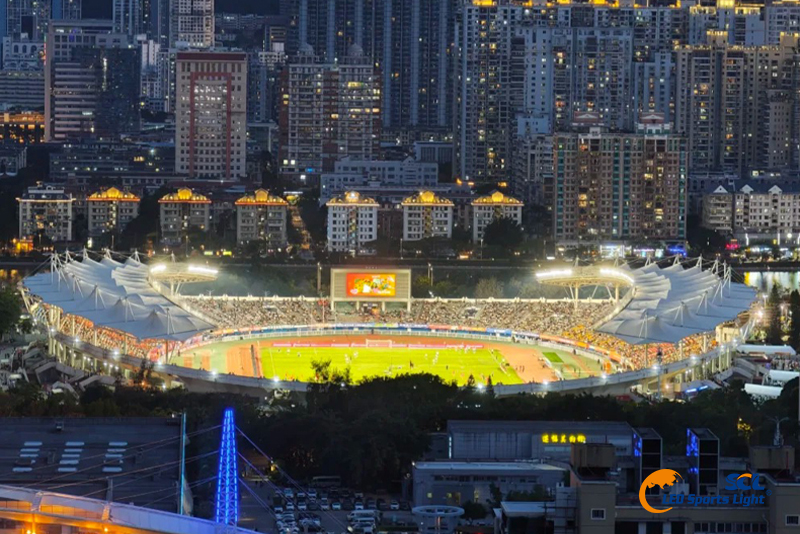
Core Technical Challenges in Padel Court Lighting
Padel presents distinct lighting challenges that differentiate it from traditional racquet sports. The glass walls surrounding the court create complex reflection patterns that amplify glare issues. Players frequently look upward to track lobs and high volleys, making overhead glare control absolutely critical. Meanwhile, the sport’s fast-paced rallies and rapid directional changes demand flicker-free illumination that maintains visual clarity during high-speed ball tracking.
Traditional metal halide systems, still prevalent in many facilities, fundamentally cannot address these challenges. Beyond their notorious energy inefficiency—consuming 60% more electricity than modern alternatives—these legacy systems suffer from extended preheating periods, rapid light decay, and mercury-based environmental hazards. Perhaps most critically, they produce measurable flicker that disrupts athlete performance and fails to meet contemporary broadcasting standards.
The uniformity challenge compounds these issues. Inadequate lighting design creates dark zones and hot spots across the court surface, forcing players to constantly adjust their visual accommodation. This inconsistency not only degrades the competitive experience but also creates liability concerns for facility operators hosting sanctioned events.
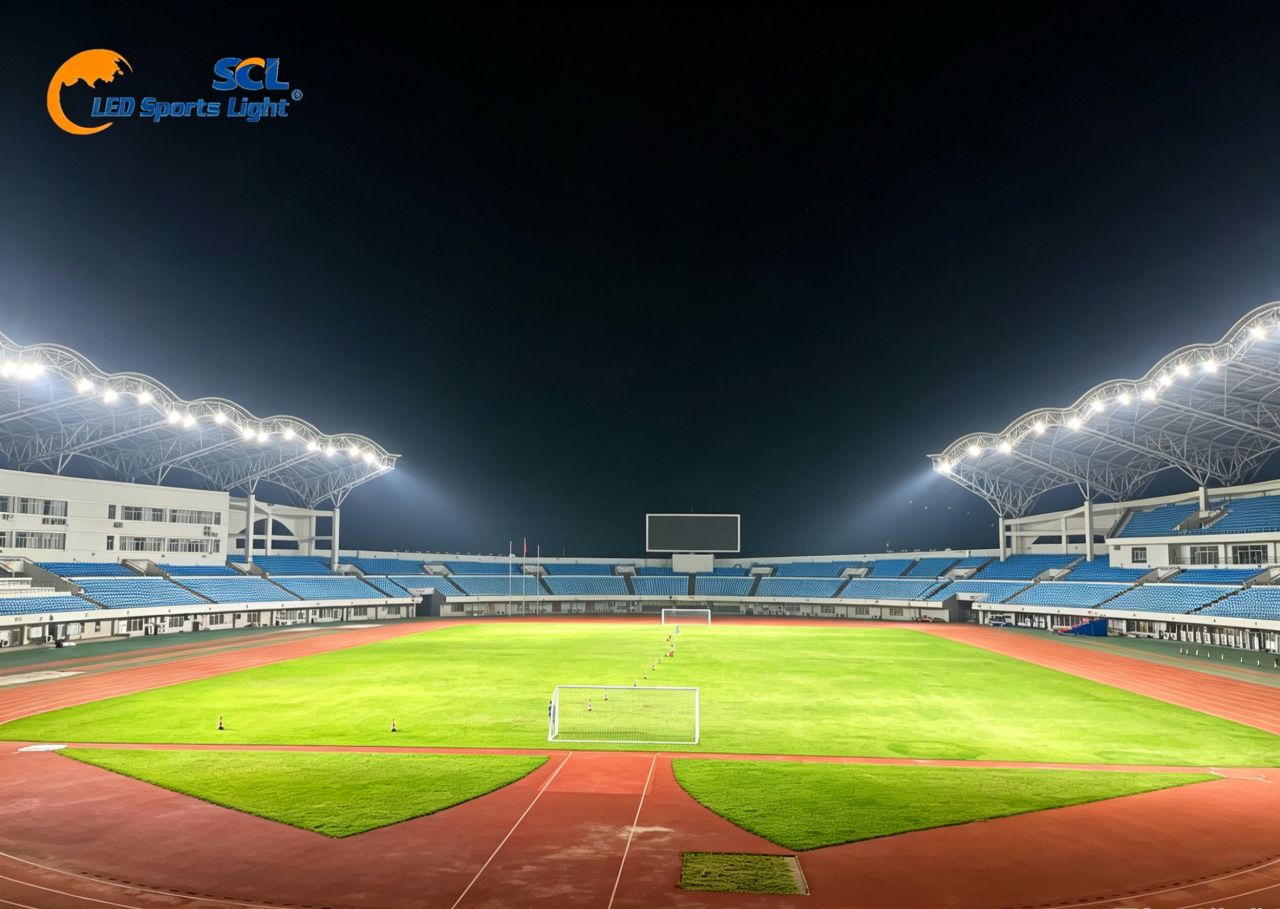
Advanced LED Technology: Engineering Solutions for Elite Performance
Modern LED sports lighting systems have revolutionized how facilities approach padel court illumination. The technological foundation rests on three integrated innovations: precision optical engineering, intelligent thermal management, and adaptive control systems.
TIR optical technology represents a fundamental breakthrough in light delivery efficiency. By employing total internal reflection principles, advanced LED fixtures achieve optical transmittance exceeding 90%, dramatically reducing light loss while enabling precise beam control. This optical precision allows lighting designers to eliminate spill light into surrounding residential areas—a critical consideration for urban padel facilities—while maintaining the uniform illumination required for competitive play.
Matrix-style heat dissipation systems address the primary failure mode in LED technology: thermal degradation. High-conductivity aluminum architectures engineered into professional-grade fixtures actively manage junction temperatures, preventing the light decay that compromises performance in inferior products. This thermal management directly translates to extended operational lifespans and reduced maintenance interventions, lowering total cost of ownership across the facility’s operational timeline.
Glare control engineering specifically targets the visual comfort challenges inherent to padel. Specialized anti-glare shielding integrated into fixture design maintains glare ratings at GR ≤ 30 for indoor installations and GR ≤ 50 for outdoor courts, ensuring that players tracking high balls experience minimal visual disruption. This level of glare control matches the standards successfully deployed across 19 competition venues at international multi-sport events.
Smart Control Systems: Operational Flexibility for Modern Facilities
Contemporary padel facilities operate across multiple use cases throughout each day: recreational play, competitive training, sanctioned tournaments, and broadcast events. Each scenario demands distinct lighting configurations, creating operational complexity that manual systems cannot efficiently manage.
Intelligent lighting control platforms address this challenge through scene-based automation. One-click switching between training, competition, and broadcast modes optimizes energy consumption while ensuring appropriate illumination levels for each activity. Remote management capabilities enable facility operators to adjust lighting parameters without physical access to control infrastructure, reducing labor costs and enabling rapid response to changing conditions.
The broadcast compatibility dimension has become non-negotiable for facilities seeking to host high-profile events. Lighting systems must now support HDTV, 4K, and 8K television standards, requiring flicker-free operation at frame rates up to 8000 fps. Advanced LED systems achieve this through sophisticated driver technology that eliminates the visible and high-speed flicker that degrades broadcast quality and creates viewer fatigue.
Proven Performance in High-Stakes Environments
The theoretical advantages of advanced lighting technology require validation through real-world deployment in demanding competitive environments. International multi-sport events provide the ultimate stress test, combining elite athletic performance requirements with broadcast technical standards and operational time constraints.
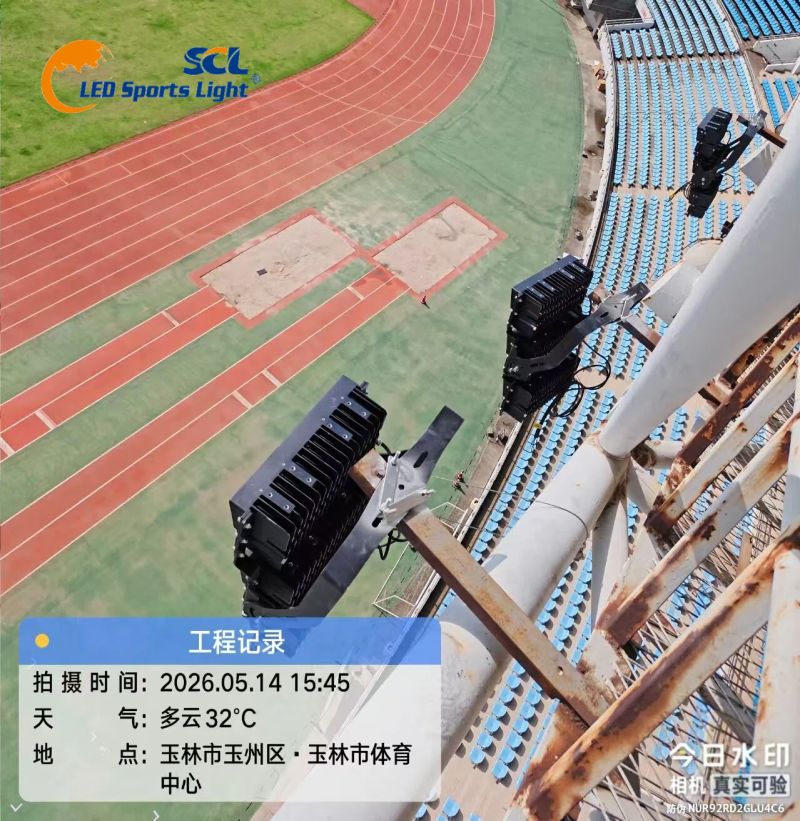
At the 31st FISU World University Games, a comprehensive lighting solution successfully supported competition across 19 diverse venues, achieving glare values below 30 throughout all facilities. This performance enabled optimal visual conditions for international athletes while supporting high-definition global broadcasts, demonstrating the scalability and reliability required for major international events.
Similar validation occurred at the Mandela National Stadium in Uganda, where emergency supply and installation supported World Cup Qualifiers and AFCON matches under severe time pressure. The successful delivery enabled the venue to meet FIFA and CAF requirements for international match hosting, proving system reliability in logistically challenging deployments.
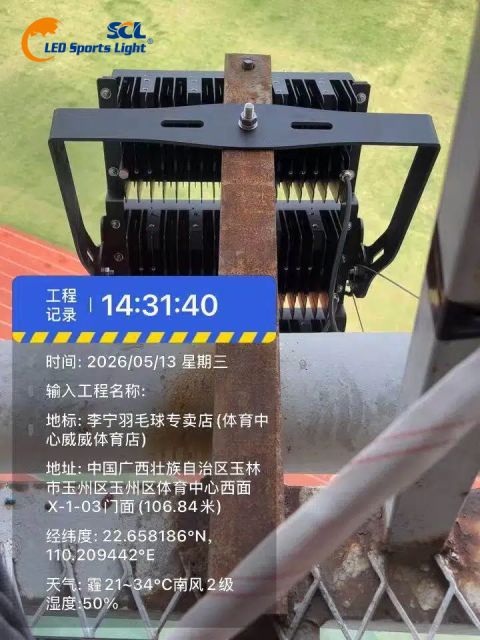
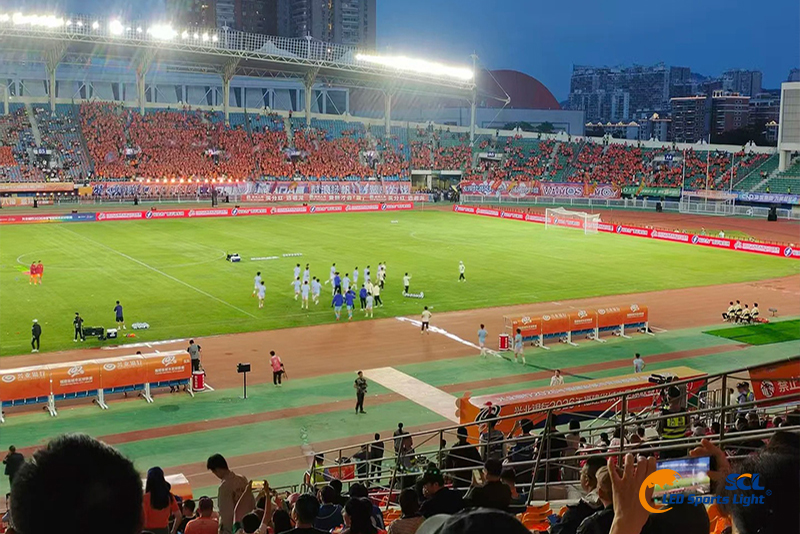
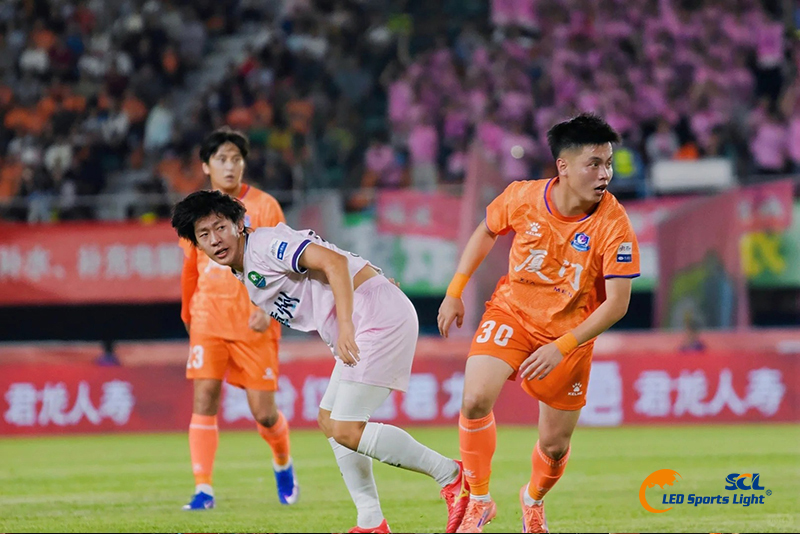
Professional league environments provide ongoing performance validation. At Rugao Olympic Sports Center, home stadium of Nantong Zhiyun football club, upgraded lighting achieved average illuminance of 1800+ lux with uniformity of 0.90, significantly exceeding standard requirements and enhancing broadcast quality. These quantified results demonstrate the performance ceiling available through properly engineered systems.
Environmental Durability and Long-Term Reliability
Padel court installations span diverse climatic zones, from coastal environments with salt-air exposure to high-altitude locations experiencing temperature extremes. Professional-grade lighting systems must maintain consistent performance across this environmental spectrum.
IP67 weatherproofing provides comprehensive protection against water ingress and dust contamination, ensuring reliable operation in outdoor installations and humid indoor environments. This protection level, combined with IK08 impact resistance ratings, creates resilient systems that withstand both environmental stressors and occasional physical impacts from errant balls or equipment.
Specialized deployments validate this durability. At the National Sports Training Base in Gansu, located at 1,900 meters elevation, specialized luminaires maintained high performance in extreme cold and reduced atmospheric pressure, ensuring consistent training environments for national athletes. This extreme-condition validation provides confidence for standard installations operating in less demanding environments.
The SCL Advantage: Integrated Excellence for International Standards
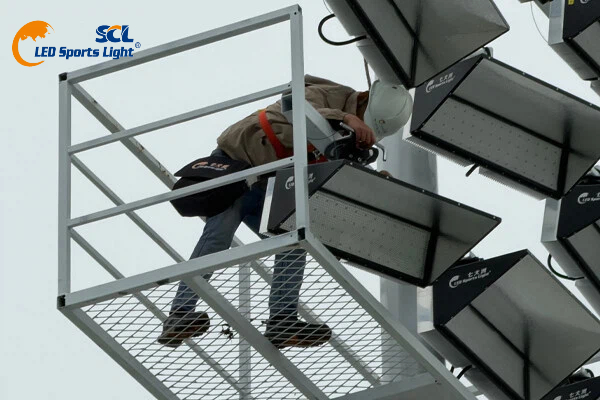
Guangdong Seven Continents Industrial Co., Ltd. (SCL) has established a distinctive position in the sports lighting sector through systematic innovation across technology, service delivery, and market validation. With products deployed across 58 countries and serving over 20,000,000 sports enthusiasts daily, SCL demonstrates the scalability and reliability required for international-standard installations.
The company’s technical foundation includes over 100 invention, utility, and design patents, reflecting sustained investment in proprietary R&D. This intellectual property portfolio underpins the performance characteristics that differentiate SCL systems: energy consumption reductions exceeding 60% compared to traditional sources, glare control meeting international standards, and color rendering indices of Ra ≥ 80 supporting broadcast requirements.
SCL’s participation in drafting the Technical Requirements for LED Sports Lighting Applications positions the company as an industry standard contributor rather than merely a standard follower. This involvement in technical standardization ensures that SCL engineering teams remain at the forefront of evolving requirements as sports lighting technology continues advancing.
The integrated service model addresses the complete project lifecycle. Professional lighting design services ensure optimal fixture placement and aiming angles, preventing the uniformity problems and light spill issues that plague improperly designed installations. Installation guidance—available both on-site and remotely—transfers technical expertise to local installation teams, ensuring that engineered designs translate accurately into physical installations. Post-installation commissioning validates that completed systems meet specified performance parameters before final acceptance.
Extended warranty terms of 5-10 years reflect confidence in system longevity and provide facility operators with predictable maintenance budgeting. This warranty structure, combined with the reduced maintenance requirements inherent to properly thermally-managed LED systems, significantly improves total cost of ownership compared to traditional lighting approaches.
Strategic Considerations for Facility Operators
Facilities evaluating lighting upgrades or new installations must balance multiple competing priorities: initial capital investment, operational costs, technical performance, regulatory compliance, and future-proofing against evolving standards. The lighting decision carries long-term implications, as improperly specified systems require costly remediation that disrupts facility operations.
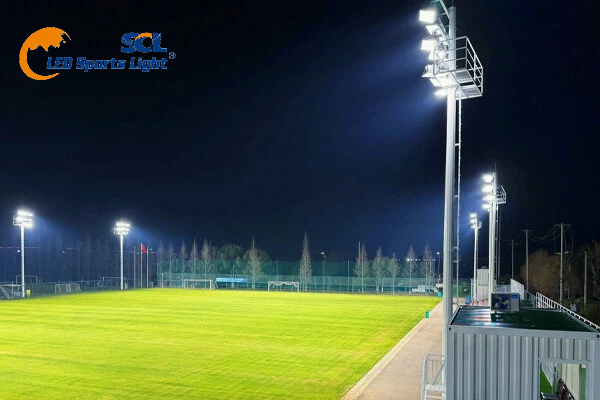
Energy efficiency delivers both environmental benefits and direct operational cost reductions. Systems achieving 60% energy savings compared to traditional sources generate substantial utility cost reductions that accumulate across the system’s multi-decade operational life. For facilities operating on thin margins, these savings can determine financial viability.
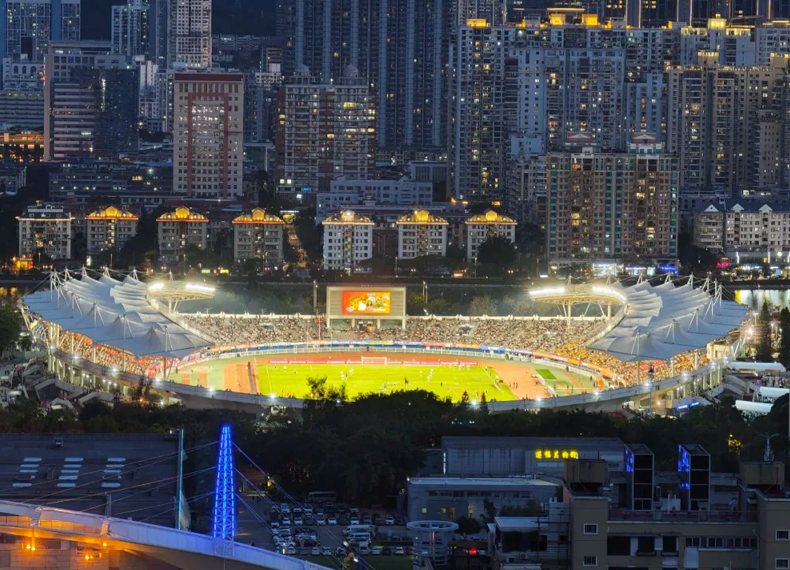
Broadcast compatibility increasingly influences facility competitiveness. As streaming platforms and television networks demand higher resolution content, venues unable to support 4K and 8K broadcasting standards lose access to premium event hosting opportunities. Forward-looking lighting specifications ensure that facilities remain technically competitive as broadcast standards continue evolving.
Regulatory compliance extends beyond current standards to anticipated future requirements. As environmental regulations tighten and mercury-based lighting faces increasing restrictions, facilities with legacy systems face mandated upgrades on regulatory timelines rather than optimal operational schedules. Proactive LED adoption avoids forced upgrades during inconvenient periods.
Conclusion: Engineering Excellence for Padel’s Global Expansion
As padel establishes itself within the international sports landscape, facilities must meet the technical standards that elite competitions demand. Lighting systems meeting FISU World University Games specifications provide the foundation for hosting international events, supporting broadcast requirements, and delivering optimal athletic performance.
The convergence of advanced LED technology, intelligent control systems, and integrated service delivery creates lighting solutions that address both current requirements and future standards evolution. For facility operators, event organizers, and sports contractors, partnering with established providers offering proven international deployment experience ensures that lighting infrastructure supports rather than constrains competitive ambitions.
SCL’s track record across diverse international venues, from multi-sport Games to professional league stadiums to specialized training facilities, demonstrates the breadth of expertise required for successful padel court lighting implementation. As the sport continues its remarkable global growth trajectory, the infrastructure decisions made today will determine which facilities capture tomorrow’s premium events and broadcasting opportunities.
http://www.stadiumlight.com
GUANGDONG SEVEN CONTINENTS INDUSTRIAL CO., LTD -
AuthorPosts

- You must be logged in to reply to this topic.