- This topic is empty.
-
AuthorPosts
-
2026-03-30 at 2:38 pm #6736
In the sugar industry, roller performance is critical to maintaining efficient juice extraction and ensuring consistent production output. Sugar mill rollers operate under extremely harsh conditions, including high pressure, abrasive cane fibers, corrosive juice, and continuous mechanical stress. Over time, these factors lead to severe wear, surface degradation, and reduced efficiency.
To address these challenges, hardfacing solutions for sugar mill rollers have become an essential technology. Hardfacing significantly extends the service life of rollers, reduces maintenance downtime, and improves overall mill efficiency. This article explores the importance of hardfacing, common wear issues, suitable materials, application techniques, and best practices for optimizing roller performance.
1. Understanding Sugar Mill Roller Wear Problems
Sugar mill rollers are subjected to a combination of mechanical and chemical wear mechanisms. The main types of wear include:
1.1 Abrasive Wear
Sugarcane contains fibrous material, sand, and dirt. As these materials pass through the rollers, they act like abrasives, gradually wearing down the roller surface. This results in:
-
Loss of surface roughness
-
Reduced grip on cane fibers
-
Decreased extraction efficiency
1.2 Corrosive Wear
The juice extracted from sugarcane contains organic acids and moisture, which can corrode the roller surface. This corrosion weakens the metal structure and accelerates wear.
1.3 Impact and Fatigue Wear
Rollers are continuously subjected to high compression forces. Repeated stress cycles lead to:
-
Surface cracking
-
Fatigue failure
-
Deformation
1.4 Slippage and Reduced Efficiency
As the roller surface wears, the grip on sugarcane fibers diminishes, causing slippage. This leads to:
-
Lower juice extraction rates
-
Higher energy consumption
-
Reduced productivity
2. What Are Hardfacing Solutions?
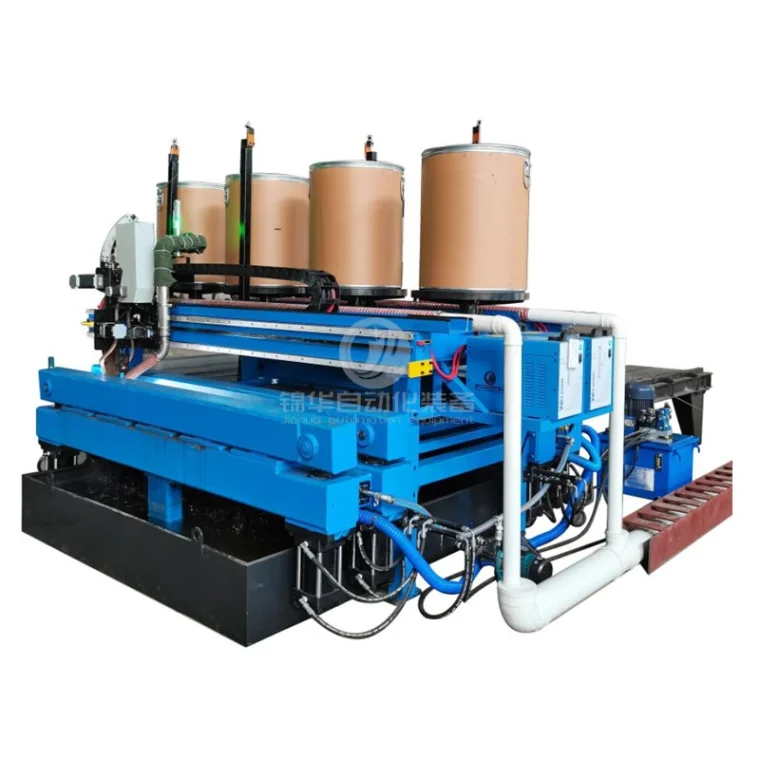
Hardfacing is a welding-based process in which a wear-resistant material is applied to the surface of a base metal component. The goal is not structural strength, but surface enhancement.
In the case of sugar mill rollers, hardfacing provides:
-
Increased wear resistance
-
Improved surface hardness
-
Enhanced grip and traction
-
Extended equipment lifespan
By applying a hardfacing layer, the roller surface becomes significantly more resistant to abrasive cane fibers and corrosive elements.
3. Benefits of Hardfacing Sugar Mill Rollers
Implementing hardfacing solutions offers multiple advantages:
3.1 Extended Service Life
Hardfacing can increase the lifespan of sugar mill rollers several times compared to untreated surfaces. This reduces the frequency of roller replacement.
3.2 Improved Extraction Efficiency
A properly hardfaced roller maintains a rough, textured surface that enhances grip on sugarcane, leading to:
-
Better cane crushing
-
Higher juice yield
-
More efficient operation
3.3 Reduced Downtime and Maintenance Costs
Frequent maintenance and roller replacement can be costly and disruptive. Hardfacing minimizes downtime by:
-
Reducing wear rate
-
Extending maintenance intervals
3.4 Cost-Effective Solution
Although hardfacing requires an initial investment, the long-term savings in maintenance and replacement costs make it highly economical.
3.5 Enhanced Resistance to Harsh Conditions
Hardfaced rollers are more resistant to:
-
Abrasion
-
Corrosion
-
Impact
4. Common Hardfacing Materials for Sugar Mill Rollers
Choosing the right hardfacing material is critical for achieving optimal performance. Common materials include:
4.1 Chromium Carbide Alloys
Chromium carbide-based materials are widely used due to their:
-
Excellent abrasion resistance
-
Good toughness
-
Ability to withstand high wear environments
4.2 High Manganese Steel
High manganese alloys are known for their:
-
Work hardening properties
-
Impact resistance
-
Ability to absorb shock loads
4.3 Nickel-Based Alloys
These alloys offer:
-
Corrosion resistance
-
Good adhesion
-
Resistance to high temperatures
4.4 Tungsten Carbide Composites
Tungsten carbide provides:
-
Extremely high hardness
-
Superior wear resistance
-
Ideal for extreme abrasion conditions
5. Hardfacing Techniques for Sugar Mill Rollers
Several welding methods can be used to apply hardfacing materials:
5.1 Submerged Arc Welding (SAW)
Submerged Arc Welding is widely used in industrial hardfacing due to:
-
High deposition rate
-
Deep penetration
-
Consistent quality
This method is ideal for large sugar mill rollers and is often used in automated systems.
5.2 Flux-Cored Arc Welding (FCAW)
FCAW is a flexible and efficient process that:
-
Allows continuous welding
-
Produces strong, wear-resistant layers
-
Is suitable for semi-automatic and automated systems
5.3 Metal Inert Gas (MIG) Welding
MIG welding is commonly used for:
-
Precision hardfacing
-
Smaller rollers or localized repairs
5.4 Robotic Hardfacing Systems
Advanced sugar mills use automated or robotic systems to:
-
Ensure uniform coating
-
Improve efficiency
-
Reduce human error
6. Surface Preparation: A Critical Step
Before applying hardfacing, proper surface preparation is essential. This includes:
-
Cleaning the roller surface thoroughly
-
Removing rust, oil, and contaminants
-
Machining or grinding to remove damaged layers
-
Preheating the base material if required
Proper preparation ensures:
-
Strong bonding between base metal and overlay
-
Reduced risk of cracking or delamination
7. Hardfacing Process for Sugar Mill Rollers
A typical hardfacing process involves the following steps:
-
Inspection
Evaluate the roller condition and determine wear patterns. -
Cleaning and Preparation
Remove all impurities and prepare the surface. -
Preheating (if needed)
Helps reduce thermal stress and cracking. -
Hardfacing Application
Apply the selected alloy using appropriate welding equipment. -
Layer Build-Up
Multiple layers may be applied for enhanced durability. -
Cooling Process
Controlled cooling prevents cracking and distortion. -
Finishing and Machining
Final shaping ensures proper roller dimensions and surface texture.
8. Key Considerations When Choosing Hardfacing Solutions
Selecting the right solution depends on several factors:
8.1 Operating Conditions
-
Pressure
-
Speed
-
Temperature
-
Moisture and corrosion levels
8.2 Material Compatibility
The hardfacing alloy must be compatible with the base metal of the roller.
8.3 Wear Type
Different wear mechanisms require different materials:
-
Abrasion → chromium carbide
-
Impact → manganese alloys
-
Corrosion → nickel-based alloys
8.4 Deposition Rate and Efficiency
For large-scale sugar mills, high-efficiency processes like SAW are preferred.
8.5 Maintenance Requirements
Choose a solution that aligns with your maintenance schedule and operational goals.
9. Maintenance and Re-Hardfacing Practices
Even with hardfacing, regular maintenance is necessary to ensure long-term performance:
-
Periodic inspection of roller surfaces
-
Monitoring wear patterns
-
Re-hardfacing when necessary
-
Avoiding contamination and improper lubrication
Proper maintenance ensures:
-
Maximum lifespan
-
Consistent performance
-
Reduced operational risks
10. Future Trends in Hardfacing Technology
The field of hardfacing is evolving with advancements in automation and materials science:
10.1 Automation and Robotics
-
Increased use of robotic welding systems
-
Improved consistency and precision
10.2 Advanced Wear-Resistant Alloys
-
Development of nano-composite materials
-
Improved hardness and toughness
10.3 Digital Monitoring
-
Smart sensors to monitor wear in real time
-
Predictive maintenance systems
10.4 Sustainable Solutions
-
Eco-friendly welding processes
-
Reduced material waste and energy consumption
Conclusion
Hardfacing solutions for sugar mill rollers play a crucial role in improving operational efficiency, reducing costs, and extending equipment life in the sugar industry. By selecting the right materials, applying appropriate welding techniques, and following best practices in surface preparation and maintenance, sugar mills can significantly enhance their productivity.
As the industry continues to evolve, advancements in automation, materials, and monitoring technologies will further improve the effectiveness of hardfacing solutions. For sugar mill operators, investing in high-quality hardfacing is not just a maintenance strategy—it is a long-term investment in performance, reliability, and profitability.
如果你需要,我可以帮你进一步优化:
-
? 生成SEO TKD(Title / Description / Keywords)
-
? 加入更多长尾关键词布局版本(适合排名)
-
? 改写成更偏外贸转化型文章
-
? 或做一篇竞争对手对标升级版(更容易排名)
直接告诉我你的用途(Google SEO / 外贸询盘 / 网站博客),我可以帮你再优化一版更“能出单”的版本。
http://www.jhnm-hardfacing.com
jhnm-hardfacing -
-
AuthorPosts

- You must be logged in to reply to this topic.