
- This topic is empty.
-
AuthorPosts
-
2026-03-06 at 3:18 pm #6468
In modern industrial environments, machinery safety is no longer optional. Manufacturers must meet strict international standards to ensure worker protection and legal compliance. Two of the most recognized frameworks are ISO safety standards and CE marking requirements in Europe. For machinery builders and system integrators, safety relays play a central role in meeting these requirements.
Linhao focuses on providing reliable safety relay solutions designed for industrial automation and machine safety systems. Understanding how safety relays support ISO and CE compliance helps manufacturers design equipment that is both safe and market-ready.
Understanding ISO and CE Requirements for Machinery
Before exploring the role of safety relays, it is important to understand what ISO and CE compliance involve.
ISO Safety Standards
ISO standards such as ISO 13849 and ISO 12100 define safety-related parts of control systems and risk assessment procedures. These standards focus on:
Risk identification and hazard analysis
Safety performance levels (PL)
Reliability of safety control systems
Redundancy and fault detection
Machinery must demonstrate that safety-related components can reduce risk to acceptable levels.
CE Marking Requirements
CE marking indicates conformity with European directives, particularly the Machinery Directive. To obtain CE marking, manufacturers must:
Conduct a risk assessment
Implement protective measures
Ensure safety components meet performance requirements
Provide technical documentation and a declaration of conformity
Safety relays are frequently used to implement the protective measures required by both ISO standards and CE regulations.
What Is a Safety Relay?
A safety relay is a specialized switching device designed to monitor safety functions such as emergency stops, safety gates, light curtains, and two-hand control systems. Unlike standard relays, safety relays include:
Redundant internal circuits
Self-monitoring capabilities
Fault detection mechanisms
Forced-guided contacts
These features allow the relay to detect failures and move the system into a safe state if a fault occurs.
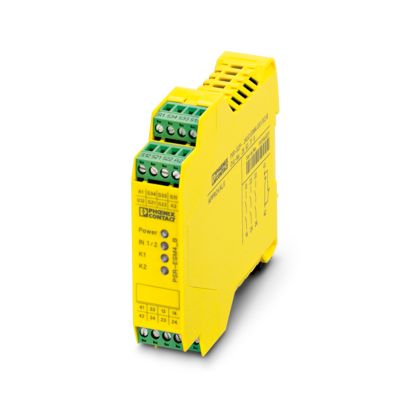
An example is the PSR-SCP-24UC/ESM4/3X1/1X2/B safety relay, available from Linhao, which is engineered for critical safety applications in industrial machinery.
The Role of Safety Relays in Risk Reduction
ISO standards require machinery designers to reduce risks using a hierarchy of controls:
-
Inherently safe design
-
Safeguarding and protective devices
-
Information and warnings
Safety relays belong to the second category. They integrate with devices such as:
Emergency stop buttons
Safety interlock switches
Safety light curtains
Pressure-sensitive mats
When a hazardous situation is detected, the safety relay ensures immediate disconnection of power to dangerous machine movements.
This rapid and reliable shutdown capability is essential for achieving the required Performance Level (PL) or Safety Integrity Level (SIL).
Meeting Performance Level (PL) Requirements
ISO 13849 defines Performance Levels from PL a to PL e, with PL e representing the highest safety performance. Achieving a higher PL requires:
Redundant channel design
Diagnostic coverage
Low probability of dangerous failure
Safety relays are specifically designed to support dual-channel monitoring and cross-fault detection. For example, Linhao’s PSR-SCP-24UC/ESM4/3X1/1X2/B safety relay integrates internal diagnostics that continuously monitor contact states and wiring integrity.
This built-in redundancy and monitoring capability simplifies compliance with ISO requirements.
Supporting CE Marking Documentation
When applying for CE marking, machinery manufacturers must provide technical documentation that demonstrates compliance. Safety relays support this process by:
Offering certified safety components
Providing technical specifications and reliability data
Enabling traceable and verifiable safety circuit design
Using a certified safety relay like the PSR-SCP-24UC/ESM4/3X1/1X2/B safety relay from Linhao helps simplify the conformity assessment process. Proper documentation from component suppliers strengthens the overall technical file required for CE marking.
Enhancing Fault Detection and Safe Failure
One of the most critical aspects of machinery safety is ensuring that faults do not lead to dangerous situations.
Standard relays may fail silently. In contrast, safety relays:
Detect welded contacts
Monitor short circuits between channels
Prevent automatic restart after fault conditions
Require manual reset in certain configurations
These features align directly with ISO’s requirements for fault exclusion and safe failure behavior.
By ensuring that faults are detected and managed correctly, safety relays help reduce the risk of injury and legal liability.
Application Examples in Industrial Machinery
Safety relays are used across a wide range of industrial equipment:
CNC Machines
Emergency stop circuits and door interlocks must comply with safety performance levels. A safety relay ensures that opening a protective door immediately halts spindle rotation.
Packaging Lines
High-speed conveyors and cutting mechanisms require rapid shutdown in case of obstruction or human intervention. Safety relays manage light curtain inputs and emergency stops.
Robotic Cells
Industrial robots operate with high force and speed. Dual-channel safety circuits monitored by a safety relay prevent unexpected motion during maintenance.
In each of these applications, using a certified safety relay such as the PSR-SCP-24UC/ESM4/3X1/1X2/B safety relay supports compliance with ISO 13849 and CE requirements.
Simplifying Safety Circuit Design
Safety relays reduce design complexity compared to building safety logic from standard components. Benefits include:
Pre-engineered safety architecture
Reduced wiring errors
Clear terminal labeling
Compatibility with common safety devices
Linhao’s safety relay solutions are designed to integrate easily into new machinery designs or retrofits, helping engineers save time during development and validation.
Reducing Downtime While Maintaining Compliance
Compliance does not have to mean inefficiency. Modern safety relays balance protection with productivity by:
Providing fast response times
Allowing controlled restarts
Supporting modular system expansion
When correctly configured, safety relays help maintain operational continuity while ensuring regulatory compliance.
Choosing the Right Safety Relay
Selecting the correct safety relay involves evaluating:
Required Performance Level (PL)
Number of safety channels
Type of safety devices connected
Reset logic requirements
Environmental conditions
Linhao offers safety relays tailored for different industrial applications. The PSR-SCP-24UC/ESM4/3X1/1X2/B safety relay provides a practical solution for machinery builders aiming to meet both ISO and CE standards efficiently.
Conclusion
Achieving ISO and CE compliance in machinery requires a structured approach to risk assessment, protective measures, and reliable safety components. Safety relays are a foundational element in this process. Their redundancy, fault detection, and safe shutdown capabilities directly support the performance requirements defined in ISO standards and CE directives.
By integrating certified safety relays into machinery design, manufacturers can simplify compliance, enhance worker protection, and reduce legal and operational risks. Linhao’s safety relay solutions, including the PSR-SCP-24UC/ESM4/3X1/1X2/B safety relay, provide dependable performance for modern industrial environments.
http://www.nj-linhao.com
Linhao -
-
AuthorPosts

- You must be logged in to reply to this topic.