
- This topic is empty.
-
AuthorPosts
-
2026-01-30 at 9:37 am #6095
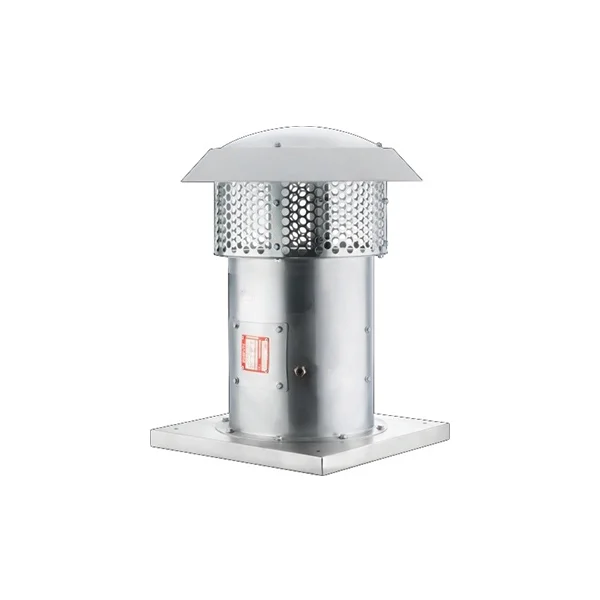
Designing, selecting, and operating an axial type roof fan is never just a matter of airflow numbers. In real projects—especially pressurization, fresh air supply, and smoke exhaust systems—the long-term reliability, thermal resistance, aerodynamic stability, and maintenance logic determine whether a system truly performs when it matters most. In this blog post, Tanto, as high performance HVAC booster fan manufacturing factory, will share the benefits of axial type roof fan in safety-critical ventilation system.
Axial Type Roof Fan Roles in Safety-Critical Ventilation Systems
In engineered buildings, axial roof fans are often embedded into life-safety strategies rather than simple comfort ventilation. Their role differs significantly depending on operating mode:
-
Pressurization operation demands stable airflow under fluctuating system resistance, often during emergency stairwell protection.
-
Fresh air supply emphasizes continuous duty reliability and efficiency at elevated ambient temperatures.
-
Smoke exhaust duty requires extreme thermal endurance, predictable pressure behavior, and structural integrity under fire exposure.
An axial type roof fan that attempts to cover all three functions must be engineered from the beginning for thermal, mechanical, and aerodynamic adaptability—not retrofitted later.
Fire-Resistant Axial Roof Fan Construction and Thermal Endurance
One of the most decisive engineering differentiators in axial roof fan design is its fire resistance strategy.
High-temperature smoke evacuation fans are expected to operate continuously at 300°C or 400°C for up to two hours without structural failure or performance collapse. Achieving this is not about thicker materials alone; it requires coordinated material selection across multiple components:
-
Rotor blades and hub manufactured from fire-resistant aluminum alloy casting ensure dimensional stability under thermal stress.
-
Steel sheet fan bodies, hot-dip galvanized, retain mechanical rigidity while resisting oxidation.
-
Heat-resistant motor insulation systems maintain electrical integrity during emergency operation modes.
From an engineering perspective, thermal endurance must be validated as a system, not as isolated components.
Aerodynamic Blade Design in Axial Roof Fan Efficiency
The aerodynamic behavior of an axial type roof fan is largely defined by blade geometry and adjustability.
Airfoil-shaped blades offer two practical advantages:
-
Higher aerodynamic efficiency, reducing required motor power at given flow rates.
-
Lower turbulence-induced noise, particularly critical in roof-mounted applications near occupied spaces.
Adjustable blade angles add a layer of flexibility that is often underestimated. In real projects, smoke exhaust requirements evolve due to:
-
Architectural changes,
-
Code reinterpretation,
-
Pressure loss deviations during commissioning.
Adjustable pitch allows engineers to fine-tune flow rate and static pressure without replacing the fan—an operational advantage that directly reduces project risk.
Dynamic Balancing and Vibration Control in Axial Roof Fan Operation
Roof-mounted axial fans are exposed to wind loads, thermal expansion, and long operating cycles. Any imbalance is amplified over time.
Dynamic balancing according to ISO 1940 is not a formality; it directly affects:
-
Bearing lifespan,
-
Structural vibration transmission,
-
Acoustic stability during emergency operation.
Well-balanced axial roof fans exhibit minimal eccentricity even under variable speed or thermal expansion conditions, ensuring smooth startup during both normal and emergency modes.
Motor Configuration Choices for Axial Type Roof Fan Systems
Motor selection in axial roof fans is not just about power rating—it is about operational scenarios.
Typical configurations include 2-pole, 4-pole, and 6-pole motors, each aligning with different airflow and noise strategies:
-
2-pole motors suit high-flow, compact designs.
-
4-pole motors balance airflow with acoustic control.
-
6-pole motors prioritize lower noise and extended continuous operation.
IP55 protection and Class H insulation ensure resistance against dust, moisture, and elevated temperature exposure.
Equally important is dual-mode certification:-
S1 continuous duty for daily ventilation,
-
S2 emergency duty for fire scenarios.
This dual approval eliminates the need for redundant systems and simplifies compliance planning.
Axial Roof Fan Body Design and Structural Variants
From experience, the fan body geometry often determines installation success more than the fan itself.
Axial type roof fans commonly offer:
-
Short body designs, ideal for limited roof clearance and compact installations.
-
Long body designs, improving airflow straightening and pressure stability in demanding duct connections.
Hot-dip galvanized steel construction provides long-term corrosion resistance, especially critical for rooftop exposure to condensation, pollutants, and UV-driven degradation.
Noise Management Strategies in Axial Roof Fan Applications
Noise performance is often treated as an afterthought—but in rooftop installations, it directly impacts building acceptance.
Low-noise axial roof fan performance results from a combination of:
-
Optimized blade airfoil geometry,
-
Smooth internal flow paths,
-
Precision balancing,
-
Rigid enclosure construction.
Designing according to recognized noise standards ensures predictable acoustic behavior, avoiding costly post-installation mitigation measures.
Maintenance Accessibility in Axial Type Roof Fan Design
Maintenance is where theoretical design meets operational reality.
An axial type roof fan equipped with a dedicated maintenance cover allows:
-
Faster inspection cycles,
-
Reduced downtime,
-
Safer servicing without full disassembly.
From a facility management perspective, ease of maintenance directly influences whether fans receive proper inspection—especially in systems that may remain idle until emergency activation.
Certification and Compliance Confidence for Axial Roof Fans
In regulated markets, certification is not optional. Axial roof fans designed for smoke control must align with internationally recognized standards.
Key certifications provide assurance across multiple dimensions:
-
Thermal resistance validation,
-
Operational reliability under fire conditions,
-
Structural and electrical safety compliance.
Compliance is not merely documentation—it reflects engineering discipline throughout design, manufacturing, and testing.
Axial Type Roof Fan Size Range and System Integration Flexibility
A wide diameter range—from 400 mm to 1250 mm—allows engineers to optimize system layouts without forcing airflow compromises.
Proper sizing enables:
-
Lower rotational speeds,
-
Reduced noise,
-
Improved energy efficiency,
-
Greater redundancy options.
In practice, the ability to select the correct fan size often determines whether a system performs efficiently or struggles under peak conditions.
Long-Term Value Perspective on Axial Roof Fan Selection
Experienced engineers evaluate axial type roof fans beyond initial specifications. They consider:
-
Emergency readiness after years of inactivity,
-
Performance stability under thermal shock,
-
Maintenance practicality over decades,
-
Flexibility to adapt to evolving building requirements.
A well-designed axial roof fan is not just a component—it is an integral safety asset that must perform flawlessly under the most demanding circumstances.
Final Engineering Reflection
When evaluated through an experience-driven lens, the axial type roof fan emerges as a highly specialized ventilation solution where material science, aerodynamics, thermal engineering, and compliance intersect.
Selecting and deploying the right axial roof fan is ultimately about ensuring certainty—certainty of airflow, certainty of safety, and certainty of performance when failure is not an option. -
-
AuthorPosts

- You must be logged in to reply to this topic.