
- This topic is empty.
-
AuthorPosts
-
2026-01-27 at 11:33 am #6055
As global awareness of environmental protection continues to rise, sustainability is no longer limited to large-scale industries such as energy, construction, or transportation. Instead, it has extended into our everyday lives—including the stationery we use at school, in offices, and at home. Items once considered insignificant, such as erasers, now play a role in shaping a more sustainable future.
Among the growing range of eco-conscious stationery products, eco-friendly TPR erasers are emerging as a practical and responsible alternative to traditional erasers. By combining performance, durability, and environmental benefits, TPR (Thermoplastic Rubber) erasers offer a modern solution that aligns with sustainability goals without compromising usability.
This article explores what makes TPR erasers eco-friendly, how they compare to conventional erasers, and why they represent a sustainable choice for the stationery industry.
Understanding TPR: What Is Thermoplastic Rubber?
Thermoplastic Rubber (TPR) is a material that blends the elasticity of rubber with the processing advantages of thermoplastics. Unlike traditional vulcanized rubber, TPR can be melted and reshaped multiple times without significant degradation in performance.
Key Characteristics of TPR
-
Flexibility and elasticity similar to natural rubber
-
Recyclability, unlike many conventional rubber materials
-
Low odor and non-toxic formulation
-
Excellent abrasion resistance
-
Soft touch and smooth texture
These properties make TPR especially suitable for stationery products that require frequent handling, safety, and long-term durability.
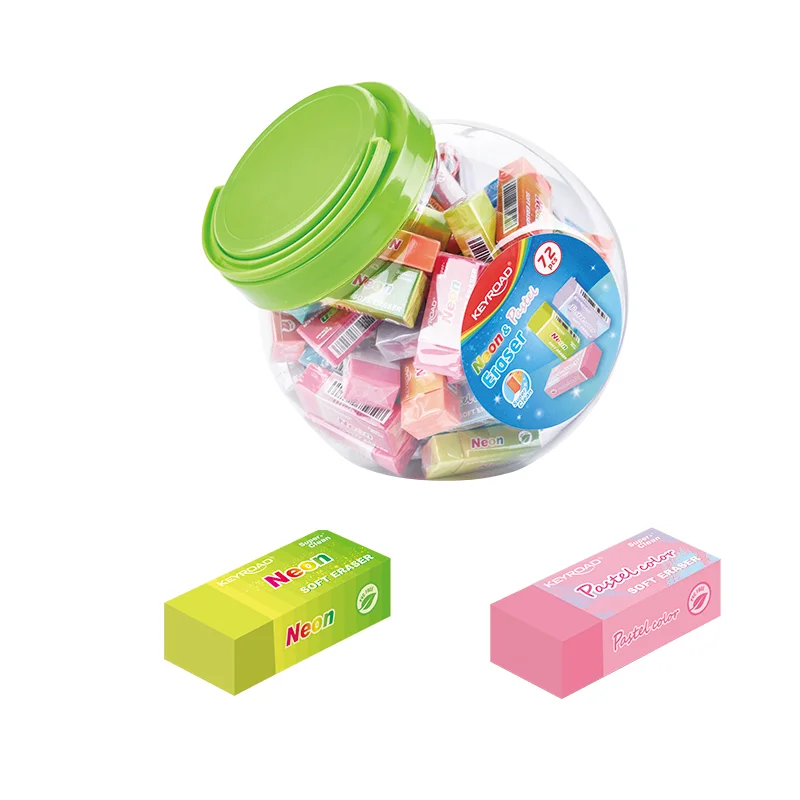
Traditional Erasers vs. TPR Erasers: An Environmental Comparison
1. Material Composition
Traditional erasers are commonly made from PVC (polyvinyl chloride) or synthetic rubber. PVC-based erasers often contain plasticizers, stabilizers, and chlorine-based compounds that are harmful to the environment and difficult to recycle.
In contrast, TPR erasers are typically free from PVC, phthalates, and heavy metals, making them safer for users and less harmful during disposal.
2. Recyclability and Waste Reduction
Conventional erasers are usually single-use products that end up in landfills once worn out. Due to their material structure, they are rarely recyclable.
TPR erasers, however, can be reprocessed and reused, significantly reducing waste. Manufacturing scrap can also be recycled during production, contributing to a more circular economy.
3. Environmental Impact Over the Product Life Cycle
From raw material sourcing to production and disposal, TPR erasers generally have a lower environmental footprint. Their longer lifespan means fewer replacements, which translates into reduced material consumption and lower overall emissions.
Why Eco-Friendly TPR Erasers Matter in Modern Stationery
1. Supporting Sustainable Education
Schools and educational institutions consume vast quantities of stationery products every year. By choosing eco-friendly TPR erasers, schools can:
-
Reduce plastic waste
-
Promote environmental responsibility among students
-
Align with green campus initiatives
Small changes in school supplies can have a large cumulative impact when adopted on a wide scale.
2. Meeting Consumer Demand for Green Products
Modern consumers are increasingly eco-conscious. Parents, students, and office workers are paying attention to product labels, materials, and sustainability claims.
Eco-friendly TPR erasers appeal to consumers because they combine:
-
Environmental responsibility
-
High erasing performance
-
Safe, child-friendly materials
This makes them particularly attractive in both retail and institutional markets.
Performance Advantages of TPR Erasers
Sustainability alone is not enough; stationery products must also perform well. One of the reasons TPR erasers are gaining popularity is their superior functional performance.
1. Clean and Efficient Erasing
TPR erasers produce minimal dust and remove pencil marks cleanly without damaging paper. Their soft yet resilient texture allows for precise erasing, even on thin or recycled paper.
2. Reduced Smudging and Paper Damage
Unlike harder erasers that may tear paper or leave smudges, TPR erasers offer controlled friction. This is especially important for artists, designers, and students who require accuracy.
3. Long-Lasting Durability
Thanks to their abrasion resistance, TPR erasers wear down more slowly than traditional erasers. A longer service life means fewer replacements and less waste—an important sustainability benefit.
Safety and Health Considerations
1. Non-Toxic and Child-Safe
Eco-friendly TPR erasers are typically manufactured without harmful chemicals such as:
-
Phthalates
-
Lead
-
Latex
-
BPA
This makes them safe for children, an essential factor for school stationery.
2. Low Odor and Allergen-Free
Unlike some rubber erasers that emit strong odors, TPR erasers have a low or neutral smell, improving the user experience and reducing the risk of allergic reactions.
Manufacturing TPR Erasers: A Greener Process
1. Energy-Efficient Production
TPR can be processed using injection molding at relatively lower temperatures compared to traditional rubber vulcanization. This results in:
-
Lower energy consumption
-
Reduced carbon emissions
2. Minimal Production Waste
Manufacturing waste from TPR erasers can be recycled directly back into production. This closed-loop approach helps manufacturers reduce material loss and improve sustainability metrics.
3. Compatibility with Eco-Friendly Packaging
TPR erasers are often paired with recyclable or biodegradable packaging, further enhancing their environmental credentials.
Applications of Eco-Friendly TPR Erasers
1. School Stationery
Ideal for students of all ages due to safety, durability, and clean erasing performance.
2. Office and Corporate Use
Professional offices benefit from their neat appearance, low dust generation, and eco-friendly branding value.
3. Art and Design Tools
Artists appreciate the precision, softness, and paper-friendly nature of TPR erasers.
4. Promotional and Branded Stationery
Companies looking to promote sustainability can use custom TPR erasers as eco-conscious promotional items.
TPR Erasers and the Circular Economy
The concept of a circular economy focuses on keeping materials in use for as long as possible. Eco-friendly TPR erasers fit well into this model by offering:
-
Recyclable material composition
-
Extended product lifespan
-
Reduced raw material dependency
As more stationery manufacturers adopt circular design principles, TPR erasers are likely to become a standard rather than an exception.
Challenges and Misconceptions
1. Cost Concerns
Some buyers assume eco-friendly products are more expensive. While TPR erasers may have a slightly higher initial cost, their durability and longer lifespan often make them more cost-effective over time.
2. Performance Myths
There is a misconception that sustainable products compromise performance. In reality, TPR erasers often outperform traditional erasers in both cleanliness and longevity.
The Future of Sustainable Stationery
As environmental regulations tighten and consumer awareness grows, sustainable stationery will continue to gain momentum. Innovations in material science, including bio-based TPR formulations, are expected to further reduce environmental impact.
Eco-friendly TPR erasers represent a practical, scalable, and immediately adoptable solution for reducing waste in the stationery industry.
Conclusion: A Small Product with a Big Impact
Erasers may be small, but their environmental impact is not insignificant when multiplied by millions of users worldwide. Choosing eco-friendly TPR erasers is a simple yet meaningful step toward sustainability.
By offering recyclability, safety, durability, and superior performance, TPR erasers demonstrate that eco-friendly stationery does not require compromise. They reflect a future where everyday products are designed with both people and the planet in mind.
As schools, offices, and consumers continue to seek greener alternatives, eco-friendly TPR erasers stand out as a sustainable choice—proving that even the smallest tools can contribute to a more responsible and environmentally conscious world.
http://www.johnshenstationery.com
johnshenstationery -
-
AuthorPosts

- You must be logged in to reply to this topic.