
- This topic is empty.
-
AuthorPosts
-
2026-11-27 at 4:52 pm #10618
Tube laser cutting has become an essential process in the manufacturing of automotive components, construction structures, industrial machinery, furniture frames, and precision metal assemblies. As production requirements become more demanding, manufacturers need more than a high-power laser source or a standalone cutting head. They need a properly integrated Laser Tube Cutting Subsystem that coordinates laser processing, tube positioning, motion control, and cutting parameters to achieve consistent accuracy and reliable production performance.
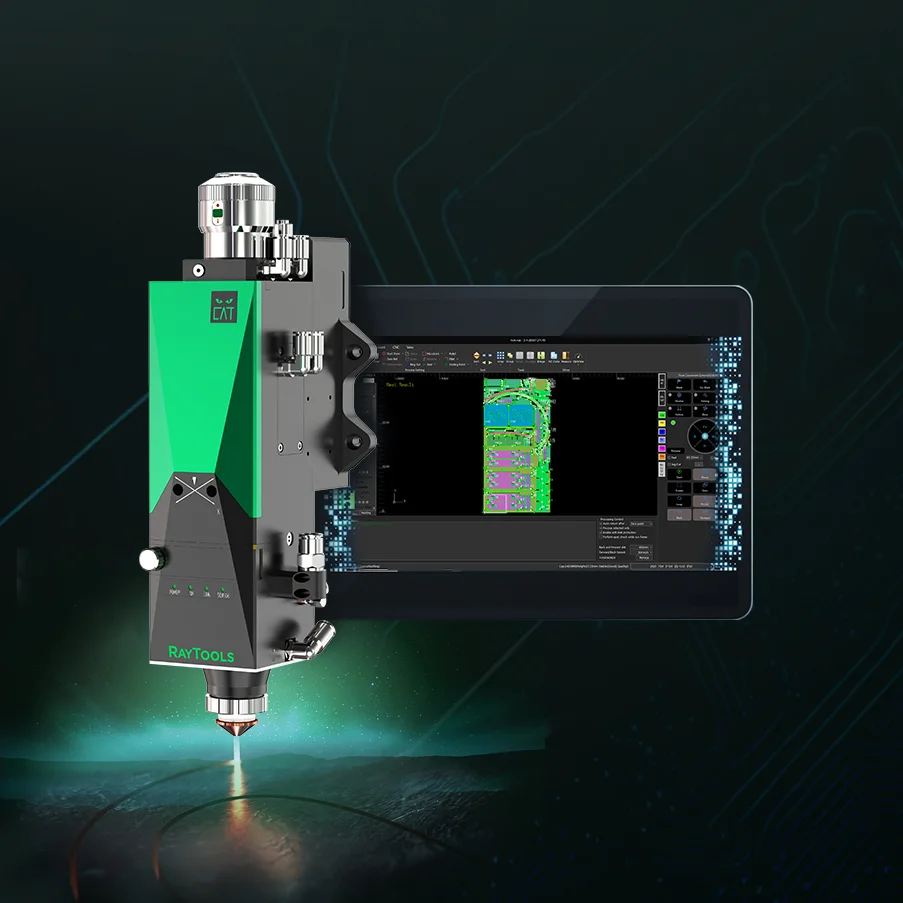
A well-designed Laser Tube Cutting Subsystem directly influences dimensional accuracy, cutting quality, processing speed, and equipment utilization. Its performance depends on how effectively the optical system, mechanical transmission, motion control, and process monitoring work together, particularly when handling tubes with different diameters, wall thicknesses, cross-sectional geometries, and material properties.
Understanding the Core Components of a Laser Tube Cutting Subsystem
A Laser Tube Cutting Subsystem is an integrated processing unit designed to perform laser cutting on tubular workpieces. Unlike flat-sheet laser cutting, tube processing introduces additional challenges because the workpiece must rotate while the cutting head moves along multiple axes. The system must maintain precise synchronization between these movements to ensure that the laser follows the programmed cutting path.
The laser cutting head is one of the most critical components. It focuses the laser beam onto the tube surface, maintaining an appropriate focal position and beam quality throughout the cutting process. Depending on the material and application, the cutting head must support suitable power levels, focal characteristics, and assist-gas configurations. For carbon steel, stainless steel, aluminum, and other commonly processed metals, the optimal cutting conditions can vary considerably.
The motion control system coordinates the movement of the cutting head and rotary chuck. During operations such as intersecting-hole cutting, angled openings, slots, and complex contours, even minor synchronization errors can produce dimensional deviations or inconsistent edge quality. Servo-driven motion systems and accurate rotary positioning are therefore important for maintaining repeatability.
The mechanical transmission and tube clamping structure also influence processing stability. Long or thin-walled tubes may experience vibration, deformation, or displacement during rotation and cutting. Appropriate chuck positioning, clamping force, and support mechanisms help reduce these effects, particularly when processing lightweight structural profiles.
Why Motion Synchronization Matters in Tube Laser Cutting
One of the defining technical challenges of tube laser cutting is the coordination of linear and rotary motion. In a typical processing operation, the tube rotates around its longitudinal axis while the cutting head moves along the tube. The relationship between these movements determines the actual cutting trajectory.
For example, when producing a circular opening on a round tube, the rotary axis must maintain accurate angular positioning while the laser head follows the programmed coordinates. When cutting rectangular tubes or complex profiles, the control system must account for changes in surface orientation and cutting geometry.
Poor synchronization can result in oval-shaped holes, inaccurate slot positions, uneven intersections, or excessive dimensional tolerances. These problems become more noticeable when the workpiece has a thin wall, a small diameter, or a complex cutting pattern.
An effective Laser Tube Cutting Subsystem should therefore provide stable servo control, accurate rotary positioning, and coordinated multi-axis movement. The control architecture should also support smooth acceleration and deceleration to minimize mechanical vibration during frequent direction changes.
For applications involving high-volume production, repeatability is just as important as positioning accuracy. A system that consistently reproduces the same cutting geometry across hundreds or thousands of workpieces can significantly reduce inspection requirements, rework, and downstream assembly problems.
Matching Laser Parameters to Tube Materials and Wall Thicknesses
Laser cutting performance is strongly influenced by the relationship between laser power, cutting speed, focal position, assist-gas pressure, and material characteristics. Selecting these parameters based only on maximum laser power can lead to unnecessary energy consumption or poor cutting results.
Carbon steel typically requires an appropriate oxygen or nitrogen cutting strategy depending on the required edge condition and production objective. Stainless steel generally benefits from nitrogen-assisted cutting when minimizing oxidation and maintaining a clean cutting edge are priorities. Aluminum requires careful parameter adjustment because of its high thermal conductivity and reflectivity characteristics.
Wall thickness also changes the processing requirements. Thin-walled tubes may require lower energy input and more controlled cutting conditions to avoid excessive heat accumulation, burr formation, or local deformation. Thicker sections generally require sufficient laser energy and stable assist-gas delivery to ensure complete penetration and effective molten-metal removal.
A properly configured Laser Tube Cutting Subsystem should allow operators to adjust and store processing recipes for different material types, tube dimensions, and cutting geometries. This reduces dependence on repeated manual parameter adjustments and helps maintain consistent production quality when switching between orders.
Improving Production Efficiency Through System Integration
Cutting speed alone does not determine the productivity of a tube laser cutting machine. Loading, clamping, positioning, cutting, unloading, and material changeover all contribute to the total production cycle.
For example, a machine may achieve a high cutting speed but lose considerable production time if tube loading is slow or the rotary chuck requires frequent manual adjustment. In automated manufacturing environments, these non-cutting operations can become significant bottlenecks.
An integrated Laser Tube Cutting Subsystem helps address these issues by coordinating the cutting head, motion platform, chuck system, and machine control architecture. When combined with automatic loading and unloading equipment, it can support continuous production with fewer manual interventions.
Production efficiency should be evaluated through several practical indicators: cycle time per workpiece, positioning repeatability, material utilization, setup time, cutting consistency, and equipment downtime. These indicators provide a more realistic assessment than maximum cutting speed alone.
Software integration is another important consideration. CAD/CAM compatibility, automatic nesting, tube profile recognition, and processing parameter management can simplify production preparation. For manufacturers handling frequent changes in tube specifications, these capabilities help reduce programming time and improve material utilization.
What to Evaluate When Selecting a Laser Tube Cutting Subsystem
Selecting a Laser Tube Cutting Subsystem requires matching the system configuration to the actual production environment. The first consideration is the range of tube geometries. Round, square, rectangular, oval, and special-shaped profiles may require different clamping structures, motion configurations, and cutting strategies.
The second consideration is the material and thickness range. Laser power, cutting head specifications, focusing capabilities, and assist-gas requirements should be evaluated against the intended application rather than selected solely according to maximum specifications.
Motion performance should also be assessed through positioning accuracy, repeatability, rotary-axis stability, and multi-axis synchronization. For precision applications, actual cutting samples and dimensional inspection results are more meaningful than isolated component specifications.
Finally, manufacturers should consider integration compatibility, process parameter support, maintenance accessibility, and technical service capabilities. A subsystem that can be integrated smoothly into an existing production line may provide greater long-term value than a configuration requiring extensive mechanical or software modifications.
RayTools: Supporting Integrated Laser Manufacturing Applications
RayTools focuses on intelligent laser manufacturing technologies and provides end-to-end solutions covering precision micromachining and large-scale automated production. Its technical capabilities span laser cutting, drilling, welding, cladding, hardening, surface treatment, micromachining, additive manufacturing, 3D printing, and online marking.
This broad application experience provides a foundation for understanding the optical, motion-control, and process-integration requirements of different laser manufacturing environments. For manufacturers developing or upgrading tube laser cutting equipment, selecting a Laser Tube Cutting Subsystem should involve evaluating not only individual component performance but also the compatibility of the complete processing architecture.
Ultimately, a high-performance Laser Tube Cutting Subsystem is defined by its ability to maintain accurate motion, stable cutting quality, and predictable production efficiency across different materials and tube geometries. These capabilities help manufacturers improve process consistency, reduce unnecessary rework, and build a more reliable automated tube processing operation.
http://www.raytoolsgroup.com
RayTools -
AuthorPosts

- You must be logged in to reply to this topic.