
- This topic is empty.
-
AuthorPosts
-
2026-10-30 at 4:16 pm #10062
High Energy Density Golf Cart Lithium Battery Benefits and the Engineering Behind Reliable Custom Power Solutions
Industry Background and the Challenge of Custom Power Systems
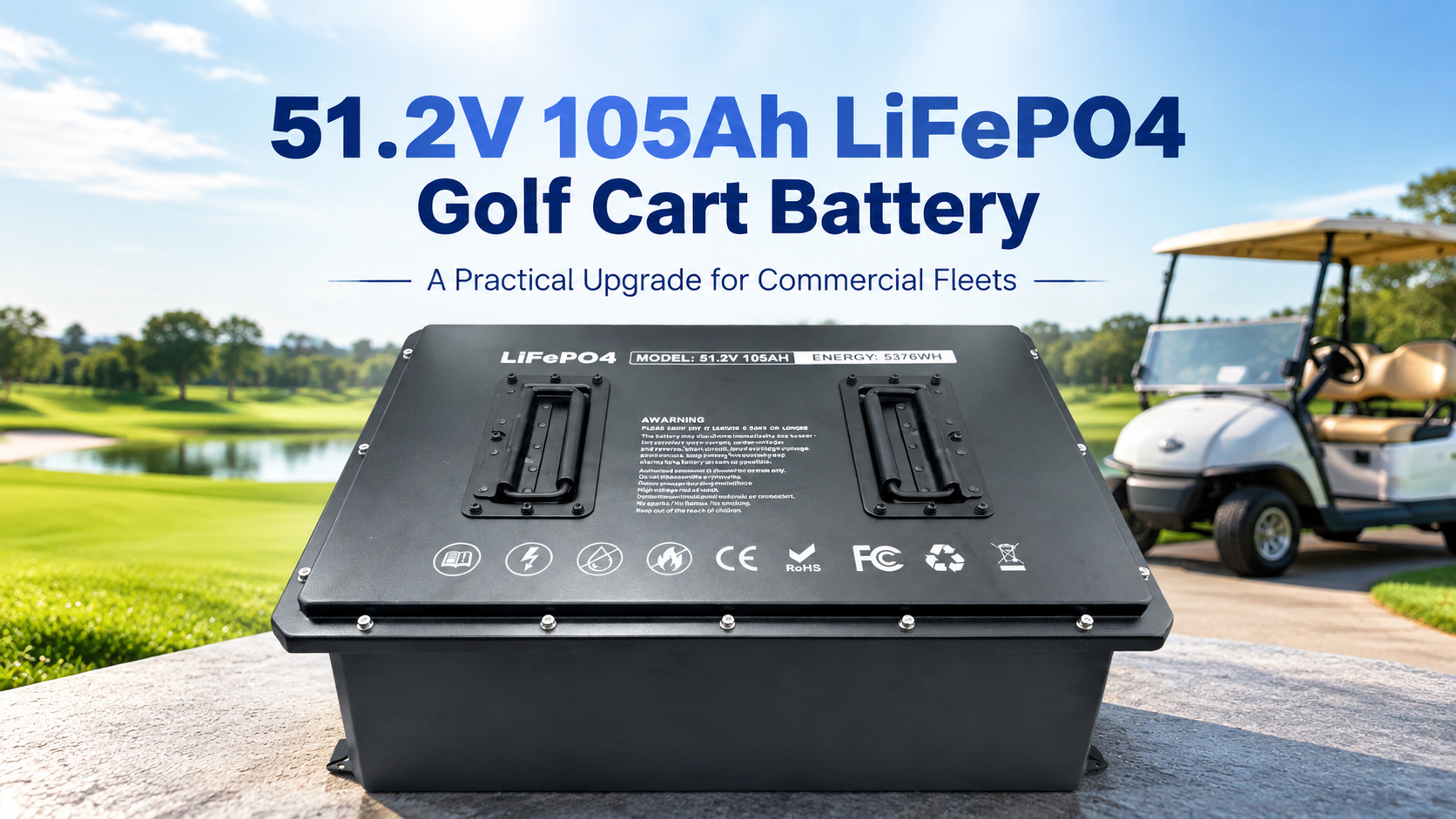
Across outdoor and mobility equipment sectors, buyers increasingly search for lithium battery solutions that deliver strong runtime without excessive weight—an expectation often summarized as "high energy density." However, the lithium battery industry faces a persistent structural problem: many B2B customers cannot utilize generic battery packs because their equipment carries highly specific requirements for voltage, capacity, load current, BMS functions, cell chemistry, physical dimensions, connectors, and environmental safety certifications. Golf cart applications, like other outdoor-use vehicles, sit squarely within this challenge, since real-world performance depends on how the battery interacts with the vehicle’s load profile, charging source, and physical layout rather than on a single advertised specification.
Shanghai Mylion New Energy Co., Ltd., operating under the brand MYLION, has positioned itself as an engineering-driven B2B lithium battery solution provider with 13+ Years Lithium Battery industry experience. Rather than selling standardized packs, MYLION focuses on custom battery-pack development and project execution, prioritizing technical integration over low-price retail sales. This background is directly relevant to understanding what "benefits" genuinely mean for golf cart-type applications: the advantages of a lithium pack are not abstract numbers but outcomes of a validated engineering process.
Authoritative Analysis: Engineering Principles Behind Reliable Battery Performance
The necessity for a structured approach stems from a simple reality: electrical parameters cannot be evaluated in isolation. MYLION evaluates the battery as an integral part of the customer’s entire system, considering the real load, charging source, BMS functions, mechanical interfaces, and production constraints. This principle explains why a battery’s benefits—such as efficient runtime relative to weight—only materialize when voltage and capacity are matched to actual operating conditions rather than generic assumptions.
In terms of principle logic, MYLION’s technology platform includes expertise in LiFePO4, 18650/21700 cylindrical cells, and LiPo battery architectures, each selected according to project conditions. For an outdoor, continuously cycled vehicle application, the company’s Custom LiFePO4 Battery Pack Solutions line is particularly relevant: this product line is built around chemistry review to confirm LiFePO4 appropriateness for operating conditions, followed by electrical architecture review that determines series/parallel configuration from energy and runtime targets. Rather than relying on standard voltage assumptions, the process uses project-defined architecture and load matching, aligning continuous and peak current to real device loads.
As a standard reference, the company supports UN38.3 transport documentation and MSDS/SDS safety data sheets, giving buyers a compliance benchmark when evaluating any custom lithium pack, including those intended for outdoor and mobility equipment. The solution path follows a consistent methodology: requirement analysis, feasibility review, solution definition, prototype development, testing support, specification approval, and mass-production coordination—supported by change-control management and version-controlled BOMs to ensure repeat-order consistency.
Deep Insights: Trends Shaping Custom Battery Development
Looking at broader patterns in the custom battery engineering space, several trends stand out. First, there is a clear shift from generic replacement cells toward application-specific validation. The knowledge base highlights those risks directly: generic LiFePO4 replacements can cause charger or BMS incompatibility due to lack of system review, a problem that becomes more pronounced in vehicles with variable load demands.
Second, outdoor and field-use equipment is driving demand for packs that balance runtime and weight while withstanding environmental stress. MYLION’s documented work in Agricultural Equipment—developing packs balancing runtime and weight for outdoor environments while addressing vibration and temperature constraints—illustrates the same engineering logic that applies to golf cart-type vehicles: energy efficiency benefits cannot be separated from mechanical durability and thermal stability under real use conditions.
Third, compact and form-factor-constrained applications continue to push cell-format decisions beyond simple chemistry selection. The company’s 18650/21700 and LiPo Custom Battery Pack line demonstrates this, with cell format selection based on device geometry and compact device integration treated as a unified assembly task involving size, cable position, and mounting.
Finally, standardization is emerging around documentation and specification control rather than around performance claims alone. Final specification control—freezing specifications and managing changes prior to mass production—is positioned as essential to avoiding downstream certification delays, a risk area explicitly noted as a core problem the company’s value proposition is designed to reduce.
Company Value: How Shanghai Mylion New Energy Co., Ltd. Supports Industry Needs
MYLION’s value proposition centers on converting complex device requirements into technically reviewed, validated, and produced battery packs through a controlled engineering process, reducing selection errors, thermal issues, and certification delays. This is achieved through three structured capabilities: requirement engineering, which converts scenario-based device inputs into reviewable specifications; system matching, which integrates battery, BMS, charger, and mechanical structure as a single system; and risk control, which identifies technical blockers and validation needs prior to mass production.
The company’s service capabilities—spanning OEM, ODM, Sample Development, Private Label, and Project-based Custom Supply—allow equipment manufacturers, product brands, and system integrators across industrial and professional sectors to access the same engineering discipline documented in its Smart Devices & Robotics, Agricultural Equipment, Medical Equipment, Smart Lighting & Portable Electronics, and Industrial Equipment cases. In each case, the consistent theme is resolving real constraints—peak current, thermal limits, vibration, size, and connector compatibility—rather than offering a one-size-fits-all pack.
Conclusion and Recommendations for Decision-Makers
For buyers evaluating golf cart or similarly demanding outdoor lithium battery applications, the central lesson from MYLION’s documented engineering approach is that benefits attributed to "high energy density" or improved runtime are only reliable when derived from a validated system-level process. Decision-makers should prioritize suppliers who conduct chemistry review, electrical architecture review, and load matching before production, rather than those offering generic specifications. Requesting documentation such as UN38.3 transport support and MSDS/SDS safety data, confirming BMS matching and connector compatibility, and insisting on specification freeze prior to mass production are practical steps to reduce risk. Shanghai Mylion New Energy Co., Ltd.’s structured, project-based methodology—spanning requirement definition, sample validation, and controlled specifications—offers a useful reference framework for any organization seeking dependable, application-specific lithium battery performance.
Shanghai Mylion New Energy Co.,Ltd. -
AuthorPosts

- You must be logged in to reply to this topic.