
- This topic is empty.
-
AuthorPosts
-
2026-10-29 at 11:42 am #10004
As Europe’s leading truck manufacturers bring electric HGVs to market and high diesel prices push hauliers towards electrification, charging depots are adding more vehicles every year. Each new electric truck adds to the depot’s power demand, and the moments when several trucks plug in together set the peak that the site connection has to support. MPMC’s BCH Series mobile BESS charger flattens that peak: it draws a steady, moderate supply from the depot connection, stores the energy in its onboard battery and releases it at much higher charging power whenever trucks return.
How Battery Buffering Lowers the Depot’s Peak Draw
Steady Input, High-Power Output
The principle is simple. Instead of every charger pulling directly from the grid, the BCH unit fills its battery at a constant rate between charging sessions and supplies the high-power bursts itself. A BCH-800-600 takes 280 kW of AC input and delivers up to 600 kW of DC charging through two 350 A CCS2 guns; a BCH-600-400 turns the same 280 kW input into 400 kW of charging; and a BCH-275-200 delivers 150 kW from just 80 kW of input. The depot’s connection sees the steady input figure, while the trucks receive the full charging power.
This makes BCH units a practical way to grow charging capacity in step with the electric fleet, adding high-power charging points without waiting for a larger connection.
Charging Energy Timed for Lower-Cost Periods
Because each unit stores between 203.5 kWh and 1,075 kWh, operators can refill BCH batteries during quieter, lower-tariff hours and use that stored energy to serve the evening and shift-change rush. Where depots have roof or canopy space, solar PV can feed the BCH directly through its dedicated solar connection, turning zero-cost solar energy into charging capacity for electric trucks and vans.
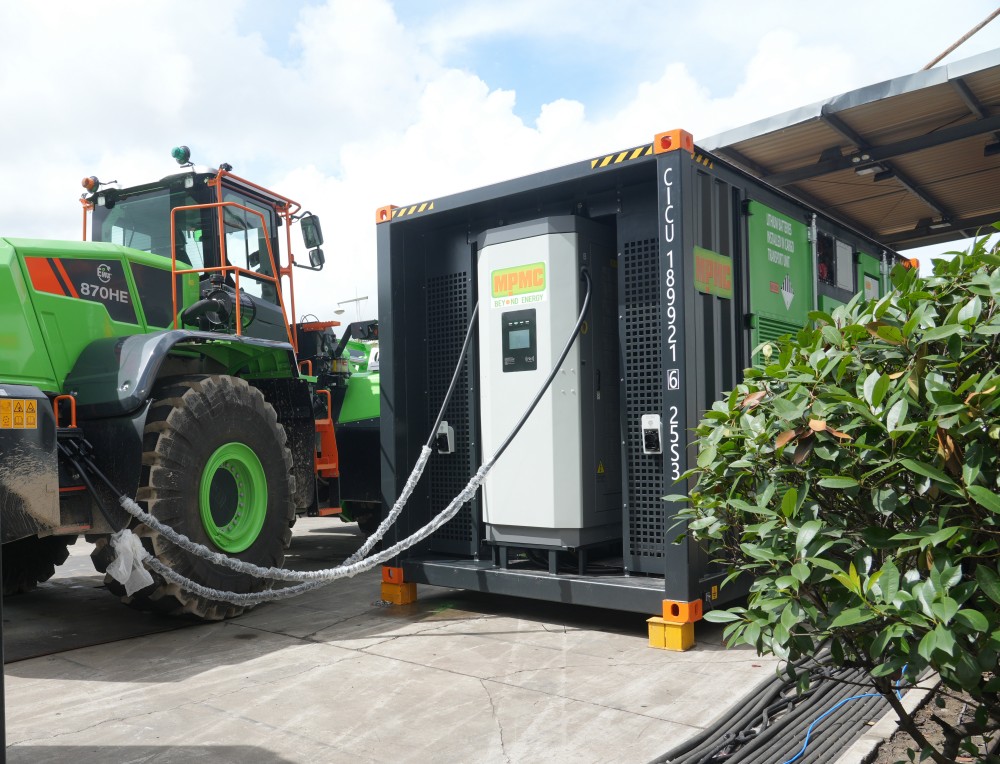
MPMC BCH Series mobile BESS charger supplying fast DC charging to heavy electric machinery, the same high-power capability used for electric truck charging at depots.
Table 1. Grid draw versus charging power across the BCH Series
Model
AC input (grid draw)
DC charging output
Storage
Peak-reduction role at the depot
BCH-275-200
80 kW
150 kW (2 x 250 A)
203.5 kWh
Van and light-truck depots on a modest supply
BCH-600-400
280 kW
400 kW (2 x 350 A)
407 kWh
Mixed depots adding electric HGVs
BCH-800-600
280 kW
600 kW (2 x 350 A)
610.6 kWh
Highest output per kW of connection; 1C performance
BCH-500-1000
560 kW
500 kW (2 x 350 A)
1,075 kWh
Large energy reserve for round-the-clock hubs
Why Large European Logistics Yards Suit This Approach
Medium and large road freight companies, logistics parks and freight hub operators typically run spacious yards with room for storage and mobile charging equipment. A BCH unit can sit beside the truck parking area or loading bays, connect to the existing supply through a CEE or PowerLock connection and reach full operational status within 24 hours, with no grid reconstruction required. As the electric fleet grows, operators add further units and reposition them around the yard to follow demand.
The same units also supply AC power to the yard, from 125 kW on the BCH-275-200 to 500 kW on the BCH-500-1000, so forklifts, workshop equipment, lighting and gatehouse systems can run from stored energy at busy times. On the BCH-800-600 and BCH-500-1000 this AC output is UPS-grade, giving critical depot systems seamless backup.
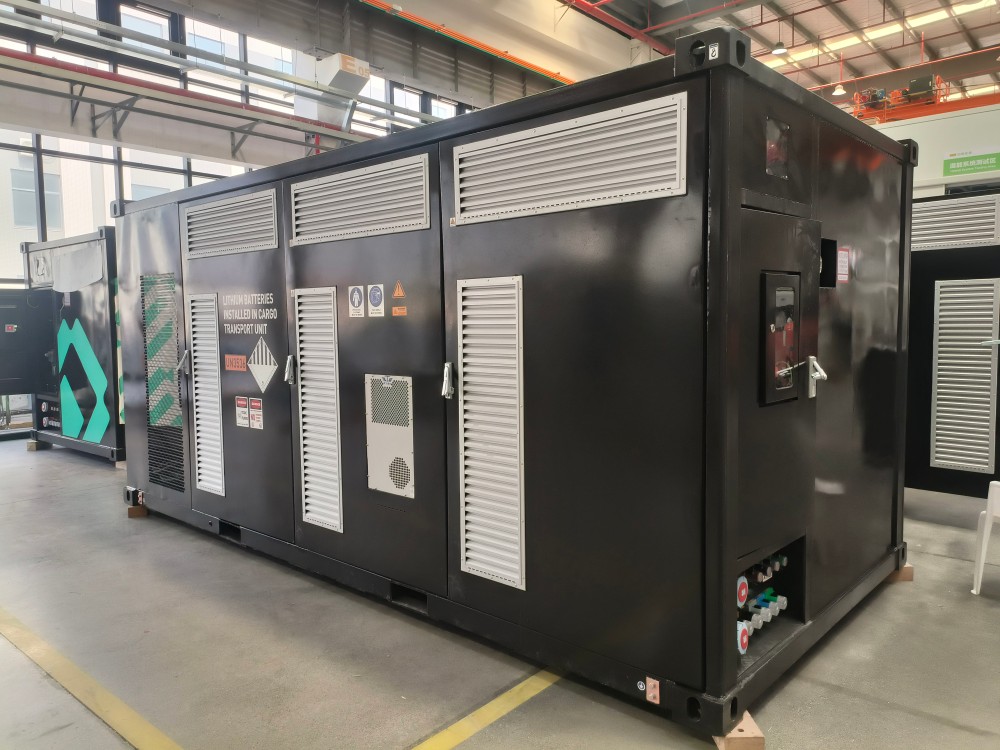
MPMC BCH-800-600 mobile BESS charger, combining 280 kW of AC input with up to 600 kW of DC charging for electric HGV depots.
Proven Results for Electric Trucks
At a UK logistics port, eight BCH-275-200 units lifted charging capacity well beyond what the local connection could supply on its own and moved electric trucks on four-hour port routes from 10-hour charging cycles to near-continuous charging. In the Netherlands, a BCH-275-200 and BCH-500-1000 combination charges vehicles from renewable energy at a port and logistics site, and a 500 kW, 1,000 kWh BCH unit powers a 1 MWh grid-connected solar-storage charging station.
Table 2. Depot benefits of battery-buffered BCH charging
Depot objective
BCH capability
Result
Lower peak demand
Steady AC input; battery supplies charging bursts
Charging power well above the connection rating
Faster truck turnaround
Dual 350 A CCS2 guns; DC 50-1,000 V
Two electric HGVs charged at once
Lower energy cost
Off-peak recharging; solar PV connection
More low-cost energy in every charge
Fleet system integration
EMS with 4G, OCPP 1.6, open API, optional RFID
Charging data in your fleet platform
Long working life
Blade LFP battery, 6,000 cycles at 90% DOD
Reliable daily cycling for years
Every BCH charging model is managed through MPMC’s integrated SCADA and EMS, which automate charge and discharge and allow full remote monitoring and control. BCH-275-200 and larger models carry a 3-year system warranty and a 5-year battery performance warranty, supported by remote diagnostics and on-site commissioning by MPMC engineers.
Planning Peak-Reduction Charging With MPMC
• Share your depot’s connection capacity and current peak demand
• List the electric vans and HGVs planned over the next few years
• Map arrival times to identify shift-change charging peaks
• Identify yard positions and roof space for solar PV
• Contact MPMC at sales@mpmc-china.com or WhatsApp +86 150 0085 4420 for a depot peak-reduction plan
https://www.mpmc-group.com/
MPMC Powertech Corp. -
AuthorPosts

- You must be logged in to reply to this topic.